Get Full Government Meeting Transcripts, Videos, & Alerts Forever!
Get email alerts on the Plastic Waste Reduction topic
No spam. Unsubscribe anytime.
Glendale hears wide feedback on proposed plastic‑waste ordinance after vendor outreach; businesses ask for more incentives
Summary
Staff and a consultant summarized two rounds of outreach to restaurants and food businesses on a proposed ordinance to phase out certain single‑use plastics and require compostable/recyclable or reusable alternatives; businesses praised changes but requested more incentives, phased implementation and clearer product guidance.
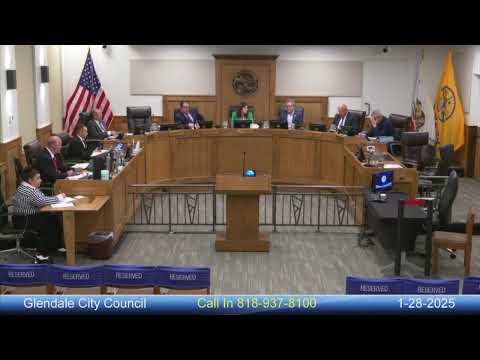
City sustainability staff and an outside consultant presented a proposed plastic‑waste reduction ordinance and outreach findings to the Glendale City Council on Jan. 28, emphasizing compromises made after two rounds of direct engagement with local food and beverage businesses.
David Jones, Glendale’s sustainability officer, outlined the ordinance’s goals: minimize single‑use plastics and encourage reuse or certified compostable/recyclable alternatives. He said the proposed rules would generally prohibit non‑compliant single‑use items and require compostable or recyclable materials for many to‑go containers, with phased timelines. Rebecca Allen of Recreate Waste Collaborative summarized two outreach rounds: staff visited and surveyed businesses, held webinars and a vendor fair, and created a QR‑linked list of compliant products.
Allen reported that, after staff revised the proposal (notably removing a customer cup charge and allowing recyclables as an interim option), business support increased in the subset surveyed. “From round 1 to round 2 the support increased by 13%,” Allen said, noting that confidence in implementation also rose. Cost and perceived product performance for compostable materials remained the primary concerns. Restaurants that rely heavily on takeout told outreach teams they preferred a phased implementation and requested help sourcing compliant products.
Public comment included a mix of support and concern. Several Pearl‑area and downtown business owners and representatives urged more and larger incentives, cooperative purchasing, and practical options for small kitchens that lack space for dishwashers. Rebecca Allen and other speakers described candidate incentives staff identified: (a) a one‑time purchase assistance program (example: $500 per qualifying small establishment, staff‑recommended $50,000 per year for two years) to offset higher initial costs for compliant products; and (b) a capital improvement fund (staff example: $100,000 per year for two years) to help pay for plumbing or dishwasher installations needed to use reusables.
Several community speakers urged ambitious action to reduce plastic litter and health risks from microplastics. Others, including small independent operators, urged caution and asked for detailed, item‑level cost comparisons and staged timelines so businesses could adapt. A number of speakers urged that the city coordinate with neighboring jurisdictions (Burbank was cited repeatedly) to avoid disrupting businesses that operate in multiple cities.
Staff did not bring a final ordinance vote at the Jan. 28 meeting. Instead, councilmembers asked staff to return with more detailed implementation materials: specific incentive program designs (including cooperative purchasing/bulk procurement options and grant or rebate program parameters), clearer product lists and procurement guidance, and examples of capital‑assistance programs to retrofit small kitchens. Staff also noted state law constraints (for example, AB 1276, which restricts automatic inclusion of utensils) and said it would propose an implementation timetable and education plan to reduce compliance burdens.
Ending: The item was presented as an action item for introduction and discussion; public comment and council questions prompted staff to gather more detailed incentive options and cost estimates and return with a refined draft ordinance and implementation plan before final adoption.