Get Full Government Meeting Transcripts, Videos, & Alerts Forever!
Get email alerts on the Post Wildfire Flood Mitigation topic
No spam. Unsubscribe anytime.
Coconino County details watershed restoration and new storm infrastructure after repeated post-wildfire floods
Summary
County presenters and partners described a three-part strategy of watershed restoration, neighborhood flood mitigation and highway protections, cited funded projects and said engineered work limited damage during recent high-intensity storms.
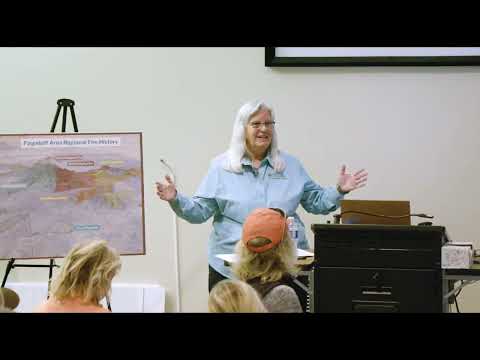
Coconino County officials and federal partners on a virtual tour described ongoing watershed restoration and large storm-drain projects intended to reduce post-wildfire flooding in Flagstaff-area neighborhoods damaged by the Schultz and Pipeline fires.
County officials said the work combines forest and watershed restoration with traditional flood mitigation in neighborhoods and along state highways because, they argued, reducing sediment and debris from burned slopes is needed before neighborhood or highway protections can succeed.
The presentation summarized how repeated fires and subsequent heavy rain have increased flood volumes and damaged homes, outlined the engineering steps taken on national forest land and in neighborhoods, and described federal and state funding that county officials say has made the projects possible.
Speakers described decades of wildfire and flooding damage in Coconino County, including three fires that produced “devastating, severe, and repetitive post wildfire flooding,” and cited the loss of roughly 62 homes and several households still living in motels. A county presenter said, “we have spent since 2010, over $150,000,000 in post wildfire response and mitigation,” and emphasized that watershed restoration is the “game changer” because it reduces sediment transported downstream.
Alan Hayden, identified as an ecologist and project planner for Natural Channel Design, described the objectives of on-forest work: reconstructing alluvial fans and transition channels so runoff spreads across fan surfaces, slows, drops sediment, and recharges soil rather than transporting boulders and debris into neighborhoods. Hayden said crews “slow the water down, we spread it out, put more of it in the ground, and carry a whole lot less sediment downstream to the houses below us.” He described ripping compacted soil, applying native seed and mulch, and noted that if the treated area is allowed to establish, “this will become a big grass meadow” and eventually reforest over decades.
Matt McGrath, district ranger for the Flagstaff Ranger District on the Coconino National Forest, said the Forest Service partners with the Coconino County Flood Control District on post-fire mitigation. He described the Burned Area Emergency Response (BAER) program as the Forest Service’s immediate post-fire responsibility and said the forest provides land and environmental clearances while the flood control district supplies hydrological engineering and construction management.
A video segment with resident Danny Cobb, a retired firefighter from Anchorage, described the experience of post-fire floods. Cobb said the first flood event “was unnerving” and that he built about “3,000 or so sandbags” by county recommendation; he described logs and debris carried into yards and windows by floodwaters.
Project specifics presented include the recent construction of transition channels, terminal trenches and large storm drains in the Copeland corridor and other floodways. County presenters said contractors installed two large storm-drain alignments in one corridor — including a 10-foot-high pipe that can transport roughly 1,500–1,800 cubic feet per second — and that between the two alignments more than 9,000–10,000 feet of pipe will be installed. The county reported that a corridor upgraded in late June/July performed as designed during a July 30, 2023 storm that produced about 3 inches of rain in an hour, and that observers recorded “0 damage” in that event.
Funding and partnerships were highlighted repeatedly. Presenters named multiple funding sources and grants cited in the meeting: a Department of Transportation Emergency Relief grant of about $6,700,000 used to construct a detention facility in 2015 after the Schultz fire; a Protect grant from the federal highway administration of about $20,000,000 to expand that facility and do additional highway work; NRCS funding for on-forest work; a state grant match of $10,800,000 from DFFM (described as a grant match for NRCS funding); and additional congressional allocations, including a congressionally directed amount and broader disaster funding included in an omnibus appropriations package. The presenters summarized those and other awards and said, “we're up over 121,000,000” for the package discussed at the meeting. They also pointed to wider congressional and federal assistance cited for related disasters (presenters referenced EWP funding and other national disaster allocations).
County officials and partners repeatedly credited interagency leadership and long-term partnerships: the Coconino County Flood Control District, the Coconino National Forest, USDA/NRCS, state transportation agencies, and congressional offices. The presenters described the Good Neighbor Authority and a proposed memorandum of understanding for a knowledge-sharing body (IPIC) intended to accelerate replication in other jurisdictions.
Presenters framed the work as replicable in many places, with caveats that local conditions vary. They cited modeling done for the upper Rio to Flagstaff watershed showing an estimated economic impact of as much as $2.8 billion if certain high-risk areas were not treated, and a Forest Service estimate that treating the identified high-priority areas would cost about $83 million. County presenters said they have invested more than $15,000,000 in a flood-control district forest restoration initiative to date.
The presentation emphasized that much of the watershed restoration work occurs on national forest land and therefore depends on federal approvals and interagency agreements. Officials described dozens of required private drainage easements secured to build neighborhood mitigation and noted the community outreach and contractor work required to limit private-property impacts.
Looking ahead, presenters said a large corridor project is expected to be finished by mid-July (year not specified in the presentation) before the next monsoon season, and they urged continued investment in forest restoration and interagency collaboration to reduce the frequency and severity of post-wildfire floods.