Get Full Government Meeting Transcripts, Videos, & Alerts Forever!
Get email alerts on the Education topic
No spam. Unsubscribe anytime.
House higher education panel advances extension and eligibility changes to Georgia College Completion Grant
Summary
The Georgia House Higher Education Committee heard results from the Georgia College Completion Grant program and voted to advance House Bill 38, which lowers completion thresholds for eligibility on two‑ and four‑year programs and would extend the program's sunset date.
At a meeting of the Georgia House Committee on Higher Education, lawmakers heard a presentation on the Georgia College Completion Grant program and voted to advance House Bill 38 (LC 610053), a measure that would lower eligibility thresholds for the grant and extend the program’s sunset.
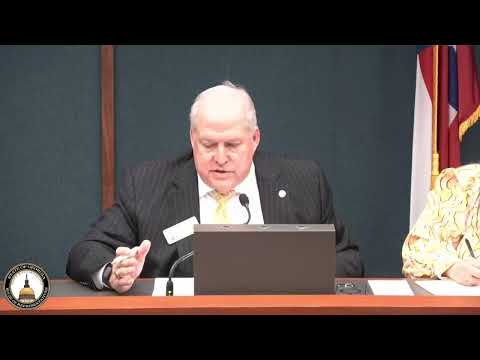
The committee heard from Lynn Riley, president of the Georgia Student Finance Commission, who reviewed three years of program data and described barriers that have limited full utilization of the grant. “This is strictly based on a unmet financial need to get the student across that finish line to complete their credential,” Riley said. She told the committee the program has a lifetime maximum award per recipient of $25,100 and that award funds are paid directly to institutions rather than to students.
The committee’s action followed Riley’s summary of fiscal-year results and institutional feedback. Riley said the program awarded $7.3 million in FY2023 (the program’s first year) and that in FY2024—after a $2.7 million carryover—institutions awarded $10.9 million to 8,860 students. She reported that recipients earned credit at high rates (about 94.6% of attempted hours in the first year and roughly 93% in the second) and that about 58% of recipients completed their credential during the award year. Riley told lawmakers the program was enacted as a three‑year pilot that will sunset June 30, 2025, and that Governor Kemp’s FY2026 budget recommends $10 million to continue the program.
Committee members and institutional representatives told the committee an 80% completion threshold in the original statute hindered participation—especially at Technical College System of Georgia (TCSG) institutions, where many programs run one to two years and students often do not reach the 80% mark until too late to benefit. “To get to 80% completion of a 1‑year program … you would never meet that 80 percent threshold to be able to be an award recipient,” Riley said.
House Bill 38, as presented by Chairman Chuck Martin and Vice Chairman Carter Barrett, would change eligibility by lowering the completion threshold for four‑year programs from 80% to 70% and setting a 45% threshold for two‑year programs. The bill also would extend the program’s statutory sunset (current law sunsets the grant June 30, 2025); sponsors discussed extending the sunset to allow additional years of data collection before considering a permanent authorization. The bill retains the existing $25,100 lifetime cap and the statutory $10 million annual appropriation cap; Riley said the program’s appropriation is capped and the commission reports that unused allocations have rolled forward and been reallocated among institutions.
Members asked how the grant’s direct‑cost limitation is applied. Riley said current program rules limit awards to direct costs of attendance but that administrative or statutory direction could change that. Representative Lydia Glaes asked whether the $25,100 may be used for indirect costs; Riley replied, “Today, the program limits the application of the awards to direct cost of attendance.”
Representatives and outside witnesses urged the committee to move the bill. Corinne Schooley of Achieve Atlanta, a nonprofit that provides scholarships and completion support, said her organization’s internal completion grant has produced an 87% completion rate for students who received the private grant, and she told lawmakers the state program would extend similar aid statewide. Ashley Young of the Georgia Budget and Policy Institute said the group supports HB38 but urged lawmakers to consider additional aid that could begin in students’ first year and be renewable to address overall college affordability.
After public comment, the committee voted by voice to report the bill favorably. Members also approved the committee’s internal rules—revising the quorum requirement from 13 members to nine—by unanimous voice vote earlier in the meeting.
Why it matters: Supporters characterized this as a narrowly targeted “last mile” intervention intended to keep students who are close to finishing from dropping out for lack of funds. Riley and advocates said the grant has a strong record of earned credit among recipients and that adjusting the completion thresholds would improve participation from technical colleges and broaden access for students in programs of varying lengths.
Votes at a glance: The committee approved the 2025 Committee Rules (quorum reduced from 13 to 9) by unanimous voice vote; it voted by voice to report House Bill 38 (LC 610053) favorably to the next stage of consideration. No roll‑call tallies were recorded in the transcript.