Get Full Government Meeting Transcripts, Videos, & Alerts Forever!
Get email alerts on the Chronic Wasting Disease topic
No spam. Unsubscribe anytime.
Georgia Department of Natural Resources confirms first chronic wasting disease case; designates Lanier and Berrien counties as CWD zone
Summary
The Georgia Department of Natural Resources confirmed a chronic wasting disease (CWD) positive deer last week after routine surveillance; the agency described surveillance, hunter outreach and next steps and gave a high-level overview of DNR divisions and budget sources.
The Georgia Department of Natural Resources confirmed last week that a hunter-harvested white-tailed deer tested positive for chronic wasting disease, the agency's commissioner said, and DNR has designated Lanier and Berrien counties as the agency's initial CWD zone.
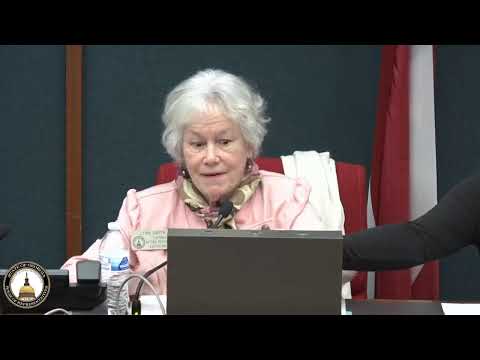
Commissioner Walter Raven told the House Natural Resources & Environment Committee that the positive result came from routine surveillance and was confirmed by the U.S. Department of Agriculture's National Veterinary Services Laboratory. "It was our routine efforts that identified this disease," Raven said, adding that the sampled animal was harvested near the Lanier and Berrien County line.
The discovery joins Georgia with other states and provinces that report CWD, Raven said. He described ongoing surveillance and outreach: "Since 02/2 our wildlife resources division has been working on statewide surveillance for this disease, and we sampled about 1,800 deer, annually around the state since 02/2," Raven said. He emphasized that the agency will expand hunter education and requested that hunters and residents report any sick or abnormal deer so samples can be collected and tested. Raven also told the committee that public guidance and FAQs are available at georgiawildlife.com/cwd.
Raven addressed public concern about human health risks. "At this time while the CDC does not recommend eating a deer that has tested positive for CWD, there has never been a case where CWD has been contracted to a human being," he said, citing the long history of the disease since it was first identified elsewhere in 1967. He added that deer hunting in Georgia will continue and that the state will work to educate hunters and landowners.
The commissioner used the session to give a high-level overview of DNR operations and finances. He said DNR manages more than 1.2 million acres of public lands, about 16,000 miles of streams and more than 500,000 acres of impoundments with partners. He described DNR's divisions — Coastal Resources, Law Enforcement, State Parks and Historic Sites, Wildlife Resources and a new Communications, Education and Outreach section — and summarized duties such as permitting, habitat science and park management. Raven said roughly 40% of DNR's budget comes from state dollars, about 25% from federal dollars and the remainder from user revenues, park fees and donations.
Raven and committee members identified outreach to hunters and landowners as central to early detection and management. He said the agency will provide additional briefings to the committee and make division directors available for deeper technical presentations.
Votes at the meeting: the committee adopted its 2025 House rules unchanged. A motion and second were recorded and a voice vote returned ayes; no opposed votes were announced. Exact roll-call counts were not specified in the transcript.
The committee chair thanked DNR staff and noted the session would include more detailed division briefings in later meetings. Raven said DNR will continue surveillance, testing and outreach through the winter and spring hunting seasons and invited legislators to contact the department for more information or district-specific materials.