Get Full Government Meeting Transcripts, Videos, & Alerts Forever!
Get email alerts on the Tax Policy topic
No spam. Unsubscribe anytime.
Riley County weighs adopting written policy for tax abatements after disaster damage under KSA 79-1613
Summary
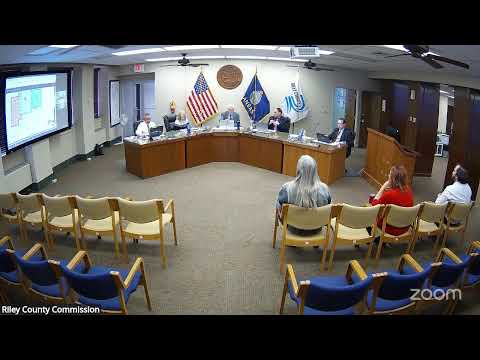
Anne Berson, an appraiser's office staff member, told the Riley County Commission on Jan. 30 that KSA 79-1613 allows the board to abate property taxes for buildings destroyed or substantially damaged by disaster or fire, and staff asked whether the commission wants a written policy to guide such abatements.
Anne Berson, an appraiser's office staff member, told the Riley County Commission on Jan. 30 that Kansas law treats property values as of Jan. 1 for that tax year and that KSA 79-1613 allows a county to abate taxes where a building is destroyed or substantially damaged.
“The statute permits the abatement of taxes for buildings or improvements that are destroyed or substantially damaged by natural disasters or fire,” Berson said, explaining that qualifying restoration costs must equal or exceed 50% of the market value before the damage.
The briefing explained that under Kansas’s annual (in-arrears) tax system, a change to a property’s condition after Jan. 1 generally does not alter the appraised value or taxes for that calendar year. Berson said Riley County has historically declined to grant abatements on equity grounds and that there is currently no formal written county policy addressing the statute.
Commissioners and staff discussed several practical issues the statute raises, including how to define a “catastrophic event,” whether insurance payouts should affect abatement decisions, and how to calculate the portion of a tax bill tied to an individual structure on a parcel. Berson and county staff said other counties use application forms requiring photos and repair estimates and that the commission has discretion under the statute to grant abatements on a case-by-case basis.
County staff asked the commission whether it wished to revisit the county’s unwritten approach. Staff proposed preparing a short (roughly three-page) summary of policies from other jurisdictions, legal guidance from the statute, and a draft policy the commission could review. No vote was taken; commissioners directed staff to research options and return with draft language and a summary of other counties’ procedures.
The office noted the administration and record-keeping implications of adding a discretionary abatement process and flagged the trade-offs between case-by-case relief and equity across taxpayers. Staff said they would work with the appraisal, treasurer and budgeting offices in preparing the materials.
If the commission instructs staff to draft a policy, staff said they would include: (1) criteria for qualifying events; (2) evidence requirements (photos, cost estimates); (3) whether insurance recoveries would be considered; and (4) a formula to prorate abatement where a building was unusable for part of the year.
The commission did not adopt a policy on Jan. 30; staff will return with the requested summary and proposed options for further consideration.