Get Full Government Meeting Transcripts, Videos, & Alerts Forever!
Get email alerts on the Nonprofit Funding topic
No spam. Unsubscribe anytime.
Surry County adopts formal policy to guide nonprofit appropriations; applications to run through Neighborly portal
Summary
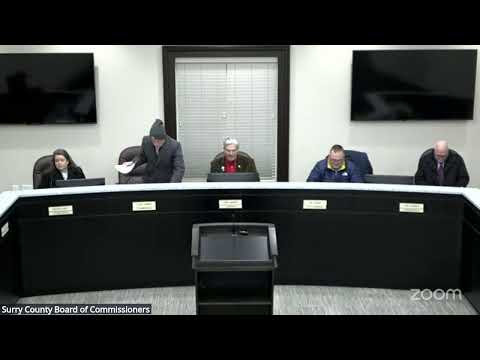
The Surry County Board of Commissioners on Jan. 21 adopted a public-purpose appropriation funding policy that sets eligibility rules for nonprofit grants, requires contracts and quarterly reimbursement reporting, and directs applications through the Neighborly online portal.
The Surry County Board of Commissioners on Jan. 21 adopted a draft public-purpose appropriation funding policy that sets eligibility rules, reporting requirements and an online application process for nonprofit organizations seeking county funding.
The policy, approved unanimously, defines eligible organizations as those with 501(c)(3) or other 501(c) designations that primarily serve Surry County residents and operate projects within county limits. It requires a contract approved by the board before funds are released and calls for quarterly performance and expenditure reports showing invoices, receipts and finance statements. Applications and reporting will be managed through the Neighborly online portal beginning in February.
County finance officer Laura Neely told commissioners the policy was developed over about a year and was intended to “promote partnerships between Surry County and nonprofit organizations serving a public purpose” while ensuring compliance with state and IRS requirements. She said the policy states funding amounts will be set during the board’s annual budget process and that payments will be distributed on a quarterly reimbursement basis for costs actually incurred and paid in accordance with the approved budget.
During discussion, commissioners pressed staff on residency and eligibility definitions, asking whether recipients must be domiciled in Surry County for a specified period. Neely said the policy does not set those exact parameters and invited the board to define measurable residency criteria if it wishes. Several commissioners suggested some groups (for example, libraries or organizations that serve residents from multiple jurisdictions) might be considered for recurring allocations outside this program. County staff said training resources will be available for smaller or newer nonprofits that need help with the online application process.
County staff member Denise Brown, who participated in drafting the policy, explained that the policy also establishes a review process: staff and subject-matter experts will screen applications for completeness and eligibility and then make recommendations to the board. Legal counsel—identified in the meeting only as Ed—reminded the board that the definition of “public purpose” can be clarified later if a court challenge arises and noted that prior determinations were placed in the minutes when questions surfaced.
Commissioners voted to adopt the policy after debate about how strictly to define “Surry County resident” for eligibility. The motion to approve was made by Commissioner Van Tucker and seconded by Commissioner Bill Goins; the vote was recorded as unanimous.
The board was also shown a separate informational list of prior budget requests that had been placed in general-fund contingency during the last budget cycle. Staff said that list is informational only and that allocations would be decided in the separate budget process.
The new policy will use the Neighborly portal to accept applications and supporting documentation and is intended to provide more standardized oversight and reporting for nonprofit appropriations going forward.