Get Full Government Meeting Transcripts, Videos, & Alerts Forever!
Get email alerts on the Seasonal And Avian Influenza topic
No spam. Unsubscribe anytime.
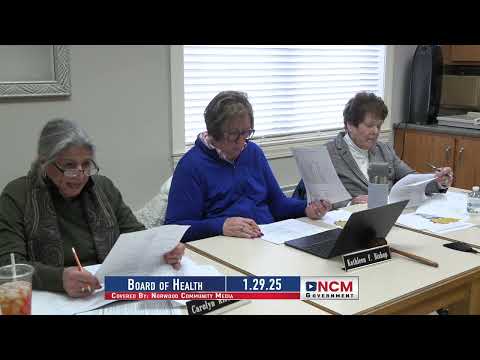
Norwood sees seasonal flu rise; health officials discuss avian-flu monitoring and local vaccine access
Summary
Public health staff reported a rise in seasonal influenza cases in Norwood during January and described state testing for influenza A strains; officials also outlined when to report large bird die-offs and guidance for backyard poultry owners.
Town of Norwood public-health staff told the Board of Health on Jan. 29 that seasonal influenza activity in Norwood rose from 18 reported cases in December to about 150 in January, based on data from clinicians' reports. Staff advised residents who have not been vaccinated that flu shots — both regular and high-dose senior formulations — remain available at the town health department.
The board discussed avian (bird) influenza after members raised recent media reports of large bird die-offs in the region. Public Health Director Stacy said state agencies (Massachusetts Wildlife and the Department of Agriculture) are monitoring highly pathogenic avian influenza among waterfowl and that the town posts a reporting form for large die-offs (defined locally as five or more dead birds) on the health department website.
Stacy noted that human influenza tests reported as "flu A" may be further typed by state labs to detect strains of concern, and that test specimens from high‑risk or confirmed avian-flu suspects are forwarded to the state for additional typing. Board members and staff emphasized routine precautions: stay home when feverish, wear masks around immunocompromised household members, and seek testing through a clinician for definitive influenza diagnosis. Staff also described the availability and cost of combined home test kits for flu and COVID and said those tests are commercially available but often expensive.
On backyard poultry, staff said permit holders receive biosecurity guidance when they register flocks, including steps to avoid introducing disease from visits to other flocks, and to watch for wild waterfowl contact. The board reiterated that most avian flu events have involved waterfowl and that owners should report large die-offs to state agencies.
No board action was taken; the discussion was informational.