Get Full Government Meeting Transcripts, Videos, & Alerts Forever!
Get email alerts on the Insurance topic
No spam. Unsubscribe anytime.
Carroll County reviews ICAP insurance renewal; board considers cyber coverage and vehicle policy
Summary
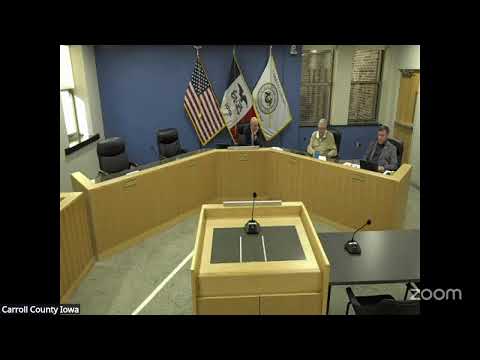
At a meeting of the Carroll County Board of Supervisors, county officials reviewed the county’s renewal with the Iowa Communities Assurance Pool and discussed optional coverages and vehicle-insurance policy changes.
At a meeting of the Carroll County Board of Supervisors, county officials reviewed the county’s renewal with the Iowa Communities Assurance Pool and discussed optional coverages and vehicle-insurance policy changes.
The county’s insurance agent, Josh Axeman of Mid Iowa Insurance and Real Estate, told the board the renewal package covers county buildings, contents, equipment and vehicles and that the overall premium is “up about a little under 3% this year.” He said property values on the schedule are on full replacement cost and that ICAP applies a 2% annual inflation guard to cover rising costs.
Why it matters: County property and fleet insurance are recurring, budgeted expenses; changes in values, deductibles or new coverages could affect the county’s budget and risk exposure.
Axeman said ICAP is a member-owned pool that covers many Iowa counties and municipalities and that the pool is conducting building inspections for higher-value properties that could result in higher insured values next year. “They’ll come up with some probably higher values than we’ve currently got,” Axeman said, warning that updated valuations could increase future premiums.
He summarized key coverages and options for the board: a $5,000,000 liability limit that includes auto and public-officials liability; replacement-cost schedules for buildings and equipment; and several deductible options. Axeman said ICAP quoted a cyber liability policy at about $8,500 as an optional add-on to cover hacking, ransomware and invoice-phishing losses. “That would cover like, basically, if we had a cyber hacking attack or something like that,” he said.
Board members discussed the county’s vehicle-coverage practice and whether to remove full physical-damage coverage from older, low-value vehicles. Axeman proposed developing a policy for removing full coverage from vehicles after a defined age (for example, 10–15 years) and offered to provide the county’s vehicle list so department heads can review which vehicles might be eligible. He also offered a cost comparison for raising auto comp/collision deductibles: moving from the county’s current $500 comp / $1,000 collision to $2,500 comp/collision would produce an estimated annual premium savings of about $12,500, he said, but cautioned that savings depend on the county’s annual number of auto claims.
County staff and supervisors agreed to follow up. The board directed staff to notify department heads and to consult the county IT director about the cyber quote; supervisors asked to place discussion of cyber coverage and any recommended deductible changes on next week’s agenda.
The agent also noted ICAP’s administrative breakdown is shown separately on member statements (rather than being hidden inside premiums) and explained that when vehicles are added midyear, ICAP credits members and adjusts premiums on renewal rather than charging pro rata mid-year additions.
What’s next: Staff will send the vehicle list and consult the IT director about cyber liability; the board scheduled further consideration at the next meeting.