Get Full Government Meeting Transcripts, Videos, & Alerts Forever!
Get email alerts on the Education topic
No spam. Unsubscribe anytime.
Task force debates audits, triggers and $20 million pilot to curb out‑of‑district special‑education cost spikes
Summary
Members of the Special Education Task Force discussed sudden year‑to‑year tuition increases for out‑of‑district and approved private placements, debated audits versus a rate‑setting board, and agreed to keep a $20 million pilot to incentivize in‑district programs while recommending a lower excess‑cost threshold for in‑district services.
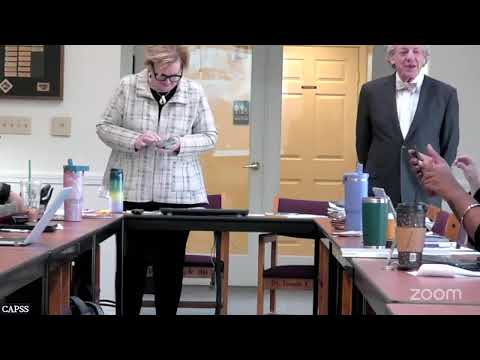
At a meeting of the Special Education Task Force, members highlighted large, unpredictable tuition increases for students placed outside local schools and discussed tools to increase accountability and predictability for district budgets.
The concern was illustrated by a task force member who shared figures from one district showing steep increases for the same students year‑to‑year: “it went from 86,000 plus to a 146,000 plus,” and other examples with charges rising from “92 up to a 153” and “140 to 176,” she said. The speaker added that the sample covered about 41 students and that superintendents had repeatedly reported that “the increases are… just crazy,” leaving districts unable to budget reliably.
Why it matters: sudden tuition jumps for approved private placements and regional education service centers (RESCs) can destabilize municipal budgets and force midyear requests for additional local funding. Task force members said the lack of shared, comparable data makes it hard to discern whether increases reflect legitimate changes in student needs or systemic pricing trends.
Discussion points and evidence
- Data and limits of oversight: A member noted that state approval regulations for approved private placements already require submission of financial information, but the group debated whether that submission is enough. As one member warned, “You can't just say audit without providing standards as to what's appropriate, what's inappropriate.”
- Triggered review: Several members proposed a “trigger” mechanism that would prompt the State Department of Education (SDE) to review any tuition increase above a set threshold when services themselves did not change. A speaker urged a modest trigger, for example a rise “more than 10%,” to prompt an inquiry rather than an automatic sanction.
- Audits versus rate setting: The group discussed whether the state auditor would be the right entity to examine price reasonableness. One member said she was skeptical the auditor would look at “the reasonableness of the rates set by these organizations,” and suggested that a rate‑setting board could be the appropriate forum — though creating and running such a board would be an extensive undertaking.
- Comparability problems: Members cautioned that interstate comparisons are misleading because Connecticut counts students educated in another public district as “out‑of‑district” placements; that inflates Connecticut’s outplacement totals compared with states that exclude similar placements. A member noted, “we're measuring apples to oranges with other states.”
Task force direction and near‑term decisions
- Pilot funding and excess‑cost threshold: Members agreed to retain a proposal for a $20,000,000 pilot to incentivize development of in‑district programs and to reduce the excess‑cost reimbursement threshold for in‑district programs from 4.5 times per‑pupil expenditure to 3 times (while retaining 4.5 for out‑of‑district placements). One member framed the change as a way to “preserve an incentive to keep kids in district.” The wording agreed on in the meeting described the $20 million as a pilot and the 3× threshold as an incentive for building in‑district capacity.
- Trigger for review: The task force favored recommending a reporting/trigger mechanism that would alert SDE (or another designated state entity) when tuition for the same services for the same student rose above a chosen percentage, prompting follow‑up rather than immediate rate caps. Members did not finalize a specific percentage in the meeting but discussed thresholds in the 5–10% range.
- Audits and future work: Members generally favored additional scrutiny and public disclosure of provider financials but declined to conclude in this meeting that a statewide rate‑setting system should be recommended. One member said, “I hate to propose that we propose another task force, but… looking at whether rate setting is an appropriate outcome is something that would take a lot of work by another group.”
Quotes (selected, verbatim)
- Fran, Task force member: “There were 41 students… it went from 86,000 plus to a 146,000 plus.”
- Fran, Task force member: “I have heard over and over and over again from superintendents that the increases are, are just crazy, and that they can't… keep track of them from year to year.”
- Unidentified task force member: “You can't just say audit without providing standards as to what's appropriate, what's inappropriate.”
- Task force member: “We're measuring apples to oranges with other states.”
Ending
The task force left several key design details for later work — including the precise trigger percentage and exactly what an SDE investigation would entail — while agreeing to recommend a $20 million pilot to expand in‑district capacity and to lower the excess‑cost threshold for in‑district services to 3× per‑pupil expenditure. Members also signaled that further technical work (and possibly another group) would be needed to evaluate a rate‑setting system’s costs and benefits.