Get Full Government Meeting Transcripts, Videos, & Alerts Forever!
Get email alerts on the Homelessness Policy topic
No spam. Unsubscribe anytime.
Council endorses study-backed homelessness funding framework; providers urge coordinated investment to meet 10-year goals
Summary
The council approved a resolution directing staff to explore sustainable funding and partnerships for the homeless-response system, following presentations from ECHO and providers. Supporters urged steady investment in shelter, supportive housing and workforce programs; one public commenter criticized equity outcomes.
The Austin City Council voted Jan. 30 to direct the city manager to explore sustainable funding sources, partnerships and strategies to support a coordinated homelessness response, approving a resolution grounded in modeling produced by Ending Community Homelessness Coalition (ECHO) and discussed in the council's Public Health Committee.
ECHO representatives told the council their modeling shows a path by which focused investments in emergency shelter, permanent supportive housing, diversion, rapid rehousing and supportive services could substantially reduce unsheltered homelessness in Austin within a decade. Kate Moore, ECHO's vice president for homelessness-response strategy, called the model "a living blueprint" and urged unified financial and policy commitments from city, county, health and philanthropic partners.
"We know from our analysis that Austin, despite recent investments, is still playing catch-up," Moore said. "Our providers know how to do this work; they need the funding and coordination to scale programs to serve more people."
Matt Malika of ECHO said the proposal outlines a multi-year funding trajectory that community providers and public agencies can use to align decisions, and he warned that recent federal uncertainty has left providers scrambling for resources. "This resolution provides the framework to end this reality for good," he told council members.
Speakers representing service providers and community organizations urged council to fund shelter beds, permanent supportive housing and workforce development programs. Chris Baker of The Other Ones Foundation, speaking on behalf of a consortium of providers, said the group is conducting a gap analysis and noted operating-cost shortfalls for existing shelter capacity; he urged that new capital must be paired with operating funding.
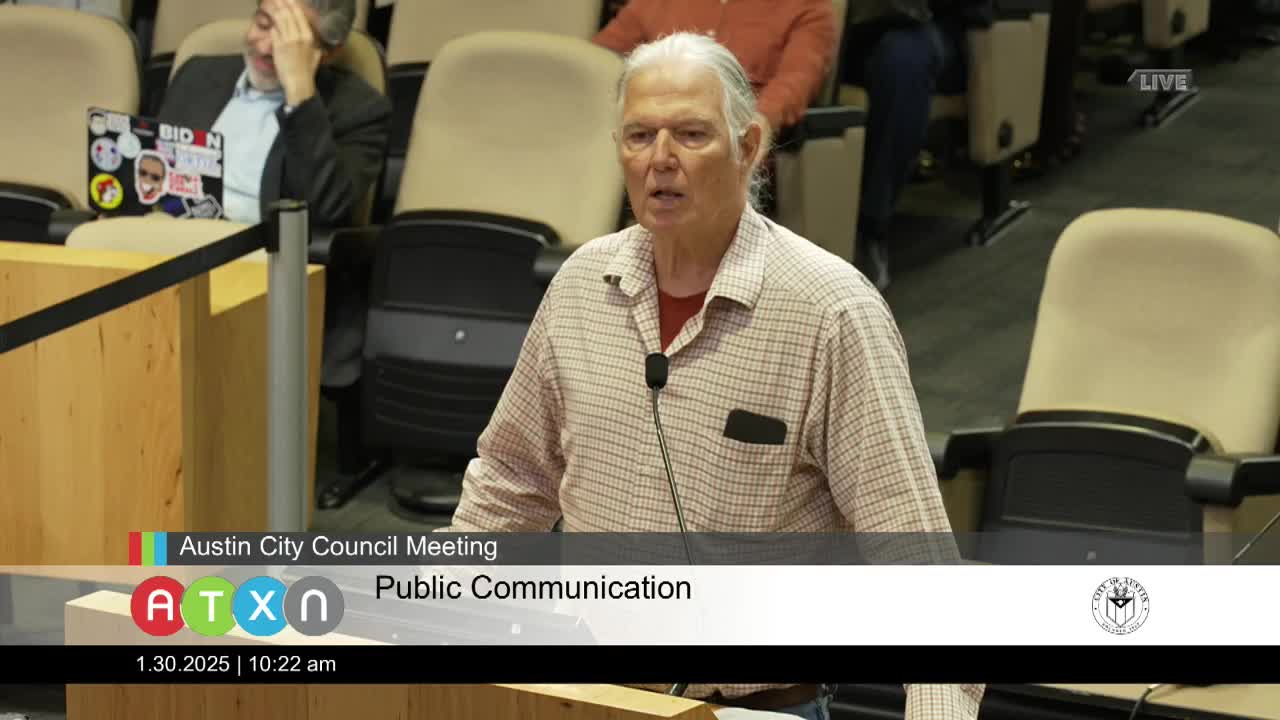
Not all comments were supportive. Zenobia Joseph, who testified under Title VI concerns, said the data and plans still reflected inequities and asked council to ensure outcomes address racial disparity in the homelessness system.
Councilmembers amended the staff-requested motion to clarify that the modeling will remain a "living" document subject to ongoing community input and to direct staff to coordinate with county and other partners. The motion passed with one abstention recorded (Councilmember Duchin).
Why it matters: The resolution aligns Austin with national models that emphasize housing-first investments and system planning rather than ad hoc responses. Providers say predictable multi-year funding is essential because capital projects and shelter capacity require recurring operating dollars to be effective.
What to watch next: Staff will report back with options for sustainable revenue sources and partnership approaches to support the model, and the budget process this year will be closely watched by providers and advocates seeking operating funds to accompany planned capital investments.