Get Full Government Meeting Transcripts, Videos, & Alerts Forever!
Get email alerts on the Enforcement topic
No spam. Unsubscribe anytime.
Board adopts legal report, debates unlicensed-activity penalties and revocation thresholds
Summary
The board adopted a legal report covering dozens of cases and debated whether the existing $1,000 agreed-citation ceiling and revocation practices sufficiently deter repeated unlicensed activity; staff will present the agreed-citation schedule for review in February.
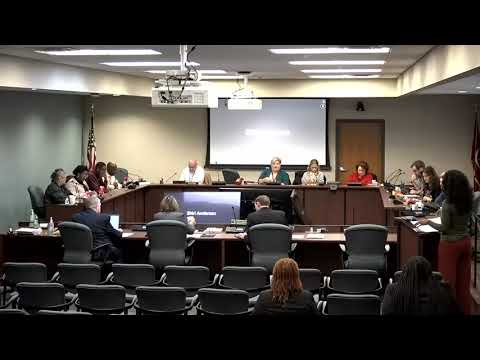
The Cosmetology and Barber Examiners Board voted to adopt a legal report covering 76 items and spent an extended portion of its Dec. 2 meeting discussing enforcement strategies for recurring unlicensed activity and whether penalties and revocation policies are properly deterring repeat offenders.
Board attorney Michael Underhill presented the legal report, noting it included 57 cosmetology matters, nine barber matters and ten other items. The board voted to adopt the report.
Discussion focused on repeat unlicensed activity and on the board’s long-standing agreed-citation process, which the board established in 2014 and which sets a civil penalty level for many violations. Under the agreed-citation approach, a civil penalty for unlicensed activity has typically been set at $1,000 per incident. “That moved about 46% of our complaint volume” into a streamlined process, Roxanna Gamusio said, reducing workload for full legal action.
Board members and counsel discussed whether the current penalty structure and the sequence of escalating enforcement actions — warnings, citations, then, for persistent or egregious cases, formal hearings seeking license revocation — are sufficient. Several members pointed to cases where individuals or shops repeatedly allowed unlicensed people to provide services, or where shop staff “ran out the back door” during inspections. The board described one case where an inspector found six clients receiving services and three licensed individuals present; the inspector recommended returning to re-inspect because people dispersed quickly.
Counsel said a high repeat-offense record strengthens a legal case for revocation. “I think if I can show three straight times that this is the third offense, I think at that point…that’s a lot better case to prove and get revocation,” Michael Underhill said.
The board also discussed statutory limits. Under state statute, counsel said, the administrative process cannot exceed $1,000 per incident in the agreed-citation framework; that limit creates some constraints on upward adjustments for single incidents but does not prevent assessing $1,000 for multiple unlicensed individuals found in one inspection. Board members asked staff to bring the agreed-citation materials and a proposal for reevaluating tiers or penalty scaling to the February meeting.
Other enforcement notes included: - Revocation remains a last resort but has been pursued where inspections show repeated, egregious unlicensed activity or deliberate avoidance of inspectors. - When civil penalties remain unpaid, an applicant’s new-license application may be held until outstanding penalties are resolved. - The board’s complaints division handles many cases via agreed citations; matters that do not settle proceed to legal review and board action.
Why it matters: Repeated unlicensed activity can pose health and consumer-protection risks and erode professional standards. The board is weighing whether current penalties and enforcement steps provide adequate deterrence.
Next steps: Staff and counsel will circulate the agreed-citation documentation and present options to the board in February for possible revision or clarification of citation tiers and enforcement pathways.