Get Full Government Meeting Transcripts, Videos, & Alerts Forever!
Get email alerts on the Zoning topic
No spam. Unsubscribe anytime.
Committee backs zoning text amendment to create Neighborhood Design Districts
Summary
The Planning and Economic Development Committee voted to recommend approval of a zoning text amendment (TA‑24‑824) that would add a Neighborhood Design District (NDD) to city zoning, introducing form‑based standards, a build‑to line, higher residential densities and parking maximums to implement recent comprehensive‑plan concepts.
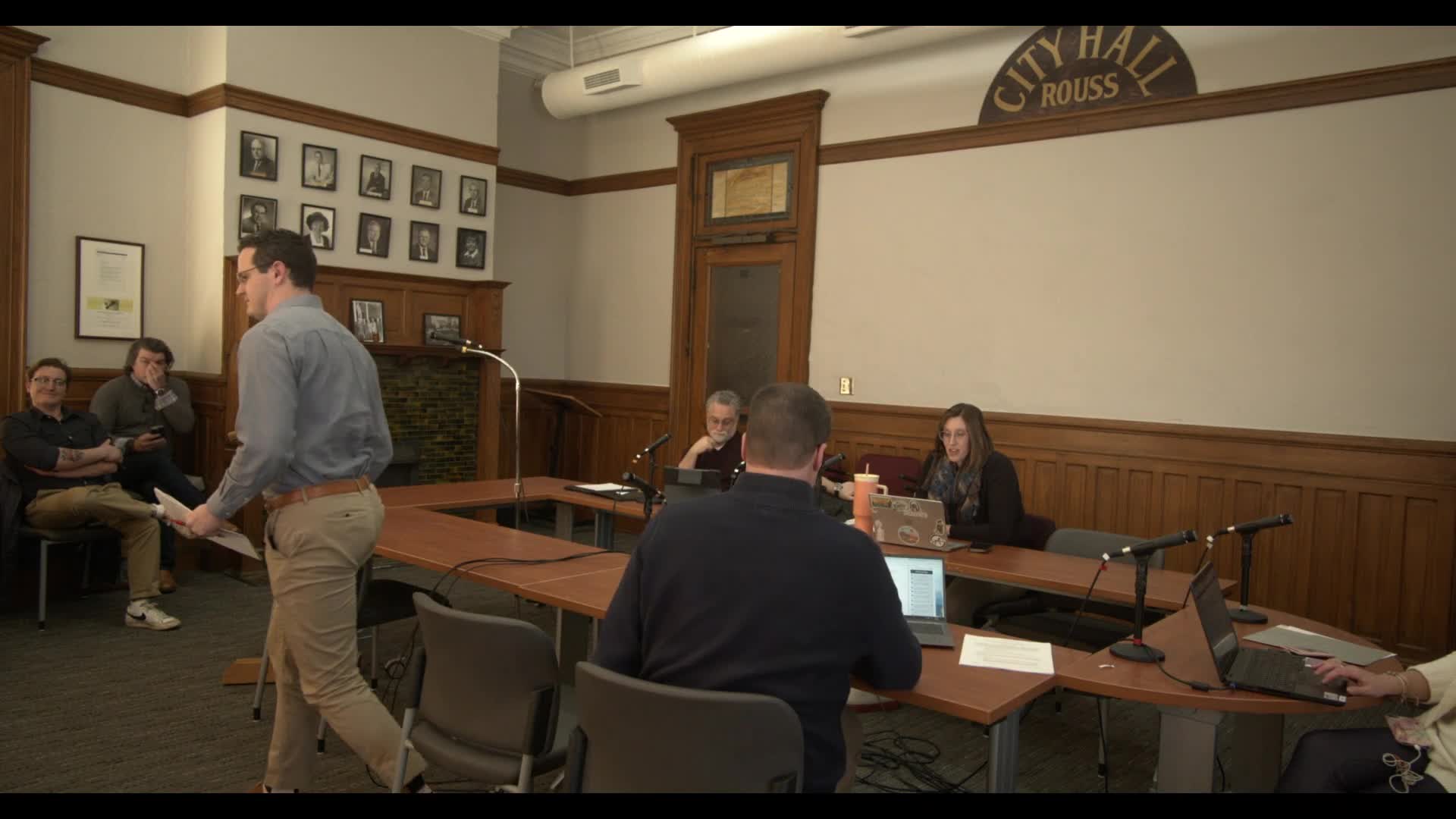
The Planning and Economic Development Committee on Jan. 30 voted to recommend approval of zoning text amendment TA‑24‑824, which would add Article 14.3 to Winchester’s zoning ordinance to establish Neighborhood Design Districts (NDDs).
Presenter Mike Ruddy described the ordinance as a form‑based zoning tool intended to implement concept plans in the city’s recently adopted comprehensive plan. Ruddy said the draft combines elements of existing B‑1 (central business), plan unit development (PUD) and corridor enhancement standards into a single, flexible district. Key features highlighted included a build‑to line (generally 10 to 40 feet), facade articulation and transparency requirements, a distinct core area with required uses and civic space, and a residential density allowance up to 50 units per acre.
Ruddy told the committee the ordinance includes reduced parking maximums in core areas (a maximum of 50 percent of the otherwise required parking in some core areas), an option for cash‑in‑lieu for small open‑space contributions, and recognition that recently approved PUDs remain permitted under their prior approvals. He also said an originally proposed NDD at the Federal Mogul site was removed from the current package because of environmental constraints; staff is pursuing other areas including Berryville Avenue and potential future downtown work.
Committee members asked questions about timing and implementation. Ruddy said the zoning text amendment itself is a separate step from rezoning properties to the NDD; once adopted by city council, staff expects the subsequent property rezoning process to take about two to three months, including Planning Commission and council hearings. Ruddy emphasized that existing uses and buildings can remain and that change of use would be the primary trigger for new development under the district standards.
A motion to recommend approval of TA‑24‑824 passed on a voice vote. The committee’s recommendation will be forwarded to city council for final consideration.