Get Full Government Meeting Transcripts, Videos, & Alerts Forever!
Get email alerts on the Farm Labor Housing topic
No spam. Unsubscribe anytime.
Committee asks staff to draft farm-labor housing options; short-term dorm size to drop from 200 to 100 sq. ft.
Summary
Stakeholders pushed for flexible on-farm housing—campground-style, tiny houses, shared kitchens—while county officials warned of building, health and fire-code limits. The committee directed staff to return with concrete proposals and agreed to lower the seasonal dormitory minimum to 100 square feet per laborer.
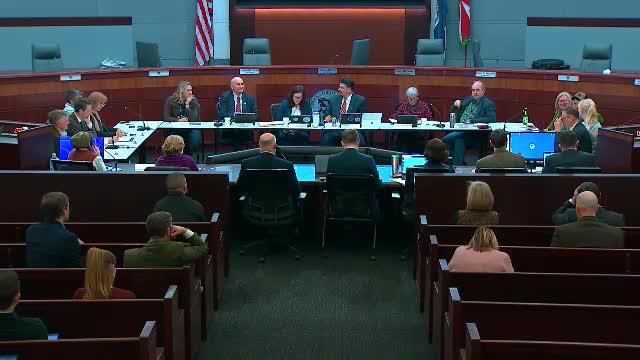
Loudoun County planners, building officials and farm operators spent much of the Transportation and Land Use Committee's Jan. 29 meeting examining how the zoning ordinance should accommodate farm labor housing, including seasonal dormitories, tenant dwellings, tiny homes and an "agrarian campground" model for shared lodging.
Committee members directed staff to return with detailed proposals that attempt to balance farm needs with building, fire and health code standards. As a near-term procedural change, the committee endorsed lowering the zoning's minimum area per seasonal laborer in dormitories from 200 square feet to 100 square feet.
Why housing is on the table Farm operators told the committee that lack of affordable, close-to-work housing forces workers to live far from farms, complicates recruitment and retention, and increases labor turnover. Stephen Bradford Rose of Potomac Vegetable Farms described an "agrarian campground zoning designation" as a flexible approach that could allow tiny homes, trailers, yurts and shared sanitary and dining facilities while meeting public-health and OSHA standards.
"This designation would allow for seasonal and long term housing options such as tiny homes, trailers, and yurts, and cabins," Rose said, arguing the model could be low-impact and scalable and help farms retain returning workers.
Regulatory constraints noted by county staff County staff and officials cautioned that many housing ideas intersect with state building codes, health rules and fire-rescue access requirements. Raymond Rinaldi, the county building official, said: "To build a building, there is a path in the code to get there for a lodging house, but it does limit you to 5 bedrooms and 10, occupants." He added that once units become permanent dwellings they trigger more stringent requirements.
The county attorney and health-department liaisons noted the existence of a permitted "migrant labor camp" model administered by the health department for seasonal worker housing; that option applies to seasonal occupants and invokes a separate set of sanitation and safety rules. Staff said seven migrant labor camps are currently permitted in the county under health-department oversight.
Safety, addressing and infrastructure Speakers and officials raised several recurring operational questions: how to provide street addresses for dispersed sleeping units so emergency responders can find them, whether rural access roads can support fire apparatus, how on-site water and septic requirements change with permanence of occupancy, and whether tiny homes set on foundations would be treated as permanent and therefore subject to the state building code.
Fire-rescue and addressing staff stressed public-safety priorities. Fire officials said smaller lodging formats (campground-type cabins, RVs) usually attract a different permitting regime than permanent dwellings, but also noted that water supply for firefighting and reliable access remains essential.
Committee direction and next steps The committee asked staff to draft multiple models for discussion at a future stakeholder meeting. Staff will: present a range of options (campground-type nonpermanent models; tenant-dwelling/ADU paths for more permanent arrangements; and code-compliant modular/industrialized housing options), evaluate addressing and emergency-access solutions, and consult with the health and fire marshals on operational standards. The committee also directed staff to change the seasonal labor dormitory minimum square footage requirement from 200 to 100 square feet per laborer.
No final ordinance changes were adopted at the meeting; staff will return with detailed proposals and examples for further public review.