Get Full Government Meeting Transcripts, Videos, & Alerts Forever!
Get email alerts on the Transportation Efficiency topic
No spam. Unsubscribe anytime.
Appropriations committee rejects $750,000 independent efficiency study for WYDOT tied to revenue bill
Summary
The committee voted 5–2 to reject a proposal to fund a $750,000 independent efficiency study of the Wyoming Department of Transportation that would have been triggered by passage of a separate $70 million revenue measure; supporters said a third‑party review could identify savings, while critics said the money would be better spent on roads.
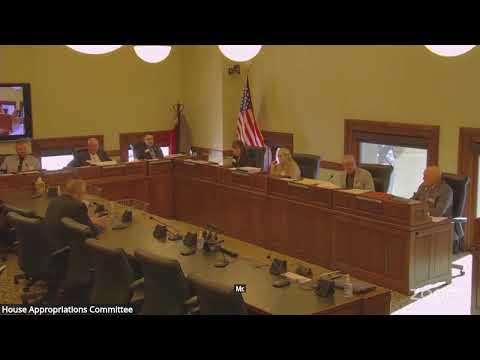
The House Appropriations Committee voted against a bill that would have authorized a $750,000 independent efficiency study of the Wyoming Department of Transportation (WYDOT), rejecting the measure 5–2 after extended debate about cost, timing and whether the work should be done internally.
Representative Brown, who presented the measure as an efficiency study tied to other revenue bills, said the contractor-funded study was intended to identify savings and operational improvements before larger funding changes take effect. The bill as drafted would have been triggered only if a companion revenue bill (House Bill 33) was enacted; earlier drafts also referenced House Bill 29, which did not pass the committee.
The committee discussion focused on the size and scope of the request — $750,000 from the highway (road) fund — and on whether an external, third-party review would yield actionable savings. Representative Brown said the committee and the department sought a broad scope to ensure an outside contractor could do the work, citing that prior external work (the Alvarez & Marsal report delivered in 2018) had informed earlier recommendations.
Wyoming Department of Transportation Director Westby told the committee WYDOT regularly pursues internal efficiency improvements and compiles suggestions from staff, but acknowledged the agency is large and faces resource shortfalls. Westby cited prior studies and a department estimate of a roughly $400 million shortfall that has driven prior funding proposals and said the agency manages about 7,000 miles of roads, 2,000 bridges, 42 airports and an annual budget approaching $1 billion.
Critics asked whether $750,000 is the best use of scarce highway funds when officials and committee members argued those dollars could instead support direct road work. Representative Aleman and others said they would prefer internal audits or that WYDOT include a narrative of implemented efficiencies in its next budget request. Director Westby said the department already maintains an internal review function and regularly seeks staff-sourced improvements; he expressed concern that an internal report might carry less perceived weight than an independent review.
Representative Pendergraft moved the motion to advance the bill but, unusually, recommended a “no” vote from the committee; after roll call the measure failed 5–2. The recorded roll call on the re-referral was: Representative Aleman — Aye; Representative Angelos — No; Representative Haroldson — No; Representative Pendergraft — No; Representative Sherwood — No; Representative Smith — Aye; Chairman Bair — No (two ayes, five noes). Committee members discussed whether the study should be funded from the highway fund or the general fund; Representative Brown said the committee had considered but did not move a change to charge the general fund.
Supporters argued a third-party contractor could bring new technical tools and an outside perspective that internal teams might overlook; opponents said recent external and internal studies (including Alvarez & Marsal, and a subsequent review referenced by committee members) have already identified major funding gaps and that the money would be better allocated to pavement and bridge work. Director Westby said WYDOT staff are “constantly having to be efficient” and that the agency has a standing internal list of process improvements; he offered to provide a summary of those internal efficiencies to the committee and to highlight them in the department’s budget request.
The committee closed public comment and rejected the bill 5–2; no further action on the study authorization was recorded in the committee minutes.