Get Full Government Meeting Transcripts, Videos, & Alerts Forever!
Get email alerts on the Israel Palestine Peace Process topic
No spam. Unsubscribe anytime.
Combatants for Peace tell U.N. briefing ceasefire has not held, urge political solution and international pressure
Summary
Representatives of Combatants for Peace told a United Nations briefing that Gaza is still being bombed and that a political agreement is needed across the region. U.N. staff outlined the agency's disarmament, demobilization and reintegration work and a film screening was announced at the International Peace Institute.
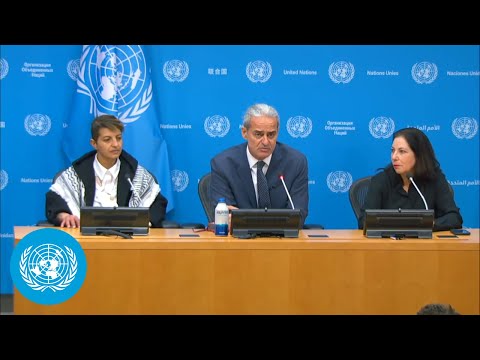
At a United Nations briefing, representatives of the binational group Combatants for Peace said Gaza was still being bombed and called for an international push toward a political agreement to end the cycles of violence in Israel and the occupied Palestinian territories.
The group's speakers, who described themselves as former combatants turned peace activists, told the briefing that grassroots organizing across Israeli and Palestinian communities shows the two peoples can work together to build stability. Thomas Contogorgos, head of the Disarmament, Demobilization and Reintegration section of the U.N. Department of Peace Operations, described the U.N. team's role supporting ex-combatants' transitions to civilian life and said the office operates in "more than 20 different contexts." Lee Woodyer of the Office of Rule of Law and Security Institutions introduced the session.
"The ceasefire is not yet a ceasefire. Gaza is still being bombed," said Mai Shaheen, a Palestinian activist and former combatant with Combatants for Peace, describing what she said were continued attacks in Gaza and increased violence in the West Bank. Shaheen said the movement aims to "dismantle all systems of domination so that no one rules over another," and urged international support to end what she described as occupation and apartheid laws.
Iris Go, an educator and former school principal who also represents Combatants for Peace, said her engagement with Palestinian communities changed her outlook and that she would not remain silent. "I feel ashamed. I feel ashamed every day. How is it that we, the Israelis, the Jewish, became from the victims to the killer?" Go said. She called for an end to weapons transfers and international financial support for military action: "You can stop send money to Israel. You can stop send weapons to Israel. You can do it."
During a question-and-answer period, Yvonne Murray of RT News, speaking for the United Nations Correspondents Association, asked the briefers to expand on their claim that the international community has not provided conditions that allow Israelis and Palestinians to meet and organize together, and she asked for the group's reaction to comments by U.S. President-elect Donald Trump suggesting relocating people from Gaza to Egypt or Jordan. Shaheen said the international community has, in her view, supported settlement expansion and the separation barrier and that relocation proposals are unacceptable. "We do not have an American dream nor do we have a European dream nor do we have an Egyptian dream nor do we have a Jordanian dream," she said, adding that Palestinians and Jewish Israelis share "one dream that is Palestine." Go said a political agreement that includes the whole region is necessary.
A reporter from the Azerbaijan News Agency asked about mine action in the Karabakh region. Lee Woodyer clarified that the United Nations Mine Action Service (UNMAS) and U.N. Development Programme (UNDP) lead mine-action coordination in that context and offered to provide further information after the briefing. Contogorgos declined to address mine-action operations at length during the session, noting his unit focuses on disarmament, demobilization, and reintegration.
Thomas Contogorgos briefly described the Disarmament, Demobilization and Reintegration section's work: "What we do as a team is to support the combatant from that role to a civilian to come back to civilian life," he said, adding that the section helps former fighters "leave their armed groups, hand over their weapons, and return back to some kind of normality." He said that work links with political, security and development processes aimed at stability.
Speakers also announced a follow-up public screening of a Combatants for Peace documentary at the International Peace Institute on Thursday, Jan. 30, from 4 p.m. to 6 p.m., followed by a panel discussion. Organizers invited attendees to register through the IPI website.
The briefing included first-person testimony from activists and a U.N. description of programmatic work; it did not record formal decisions, votes, or U.N. policy changes during the session.