Get Full Government Meeting Transcripts, Videos, & Alerts Forever!
Get email alerts on the Public Safety topic
No spam. Unsubscribe anytime.
Richland police propose alarm permits, verification and fines after 1,509 alarm responses in 2024
Summary
Chief Marty Pilcher told council the police department responded to 1,509 alarm calls in 2024, more than 98% of which were false. Staff outlined options including requiring alarm permits, enhanced call verification and a sliding fine schedule; council requested benchmarking, equity analysis and legal review.
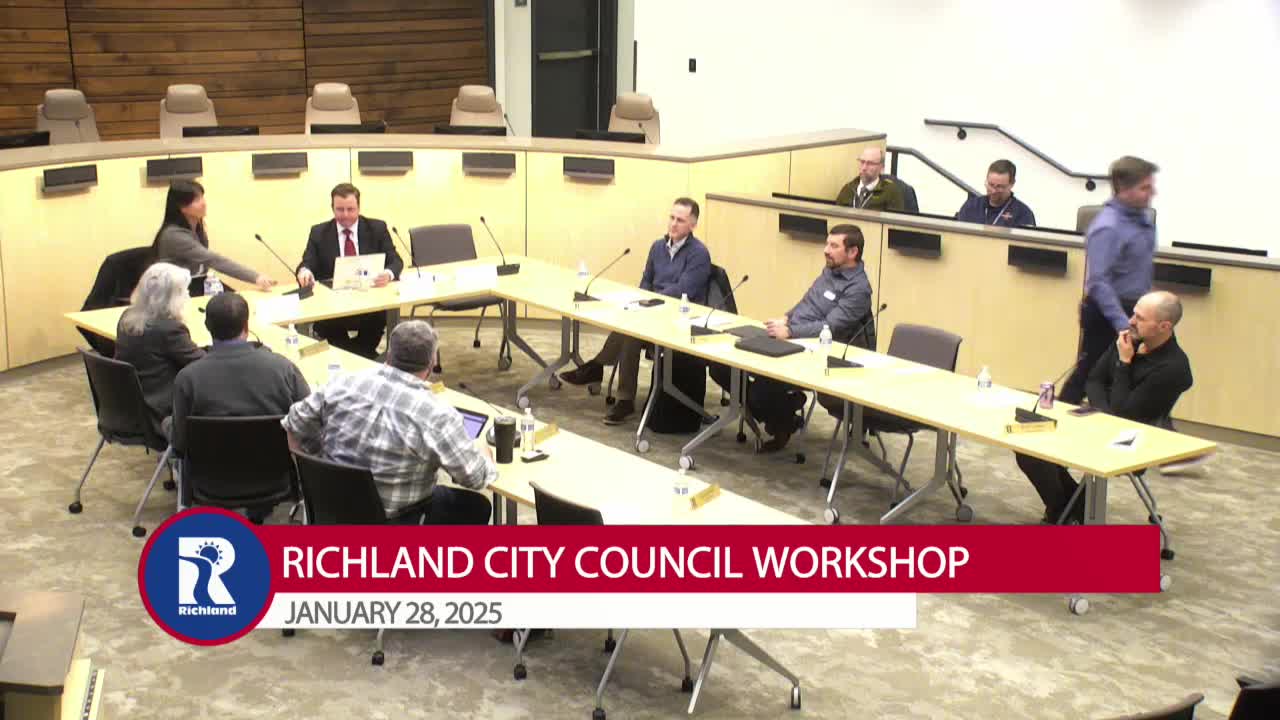
Richland Police Chief Marty Pilcher told the City Council on Jan. 28 that the department responded to 1,509 alarm calls in 2024 and that more than 98 percent of those calls were false alarms, and presented options to reduce responses and recover costs.
“Nationwide, statistics indicate regularly, and it certainly has been throughout my career, that 94 to 98% of alarms are false,” Chief Marty Pilcher said. He also said each alarm call typically requires “about 20 minutes of time from 2 officers” to travel, investigate and clear the call.
Chief Pilcher said the department’s top 10 most frequent false‑alarm locations were commercial sites and together produced 356 of the 1,509 calls in 2024. He presented an estimated monetary cost of roughly $145,000 per year when dispatch, equipment and staff time are rolled up; the presentation noted a more limited estimate of $48,000 if only median officer pay is counted in a simplified calculation.
City staff and the chief outlined policy options used by other Washington municipalities, including:
- Require alarm permits and annual renewal so the city has current subscriber contact information; - Require enhanced call verification by alarm companies (call the subscriber before dispatching officers); and - Implement a sliding fine schedule (example shown in presentation: a floating six‑month window where the first call may be exempt and fines escalate with repeat alarms).
Chief Pilcher said an outside vendor can administer permitting, tracking, fines and collections under contract, or the city could operate the program internally; staff noted outside providers typically require a multiyear contract and take a portion of collected fees.
Council members raised concerns about equity and enforcement. Council member Meyer said fines can disproportionately affect lower‑income residents and preferred call verification and permit suspension options over automatic fines. Council member Van Dyke and others said fines can motivate businesses and vendors to address recurring issues; several members recommended a two‑tier approach with higher penalties for habitual commercial offenders. Council members also asked about legal liability and whether revoking a permit would expose the city to risk if a subsequent emergency call required immediate response.
Staff took council feedback and said they would return with benchmarking on fee levels, options for permit suspension or revocation, and legal analysis of liability and enforcement mechanisms. Kennewick’s ordinance, cited in the presentation, was noted as an example — staff said Kennewick adopted a false‑alarm ordinance in 2018 and reduced false alarms by roughly a third afterward.
Council did not adopt an ordinance at the meeting; staff were asked to bring back a draft with comparative fine schedules, administration options (city‑run vs. third party), and an appeal process. Chief Pilcher said officers will continue to respond to alarm and 911 calls in the ordinary course until a policy change is adopted and implemented.