Get Full Government Meeting Transcripts, Videos, & Alerts Forever!
Get email alerts on the Transfer Station Fees topic
No spam. Unsubscribe anytime.
Hooksett advisory committee votes to seek market-based transfer-station fees after discussion of rising tipping costs and condo reimbursements
Summary
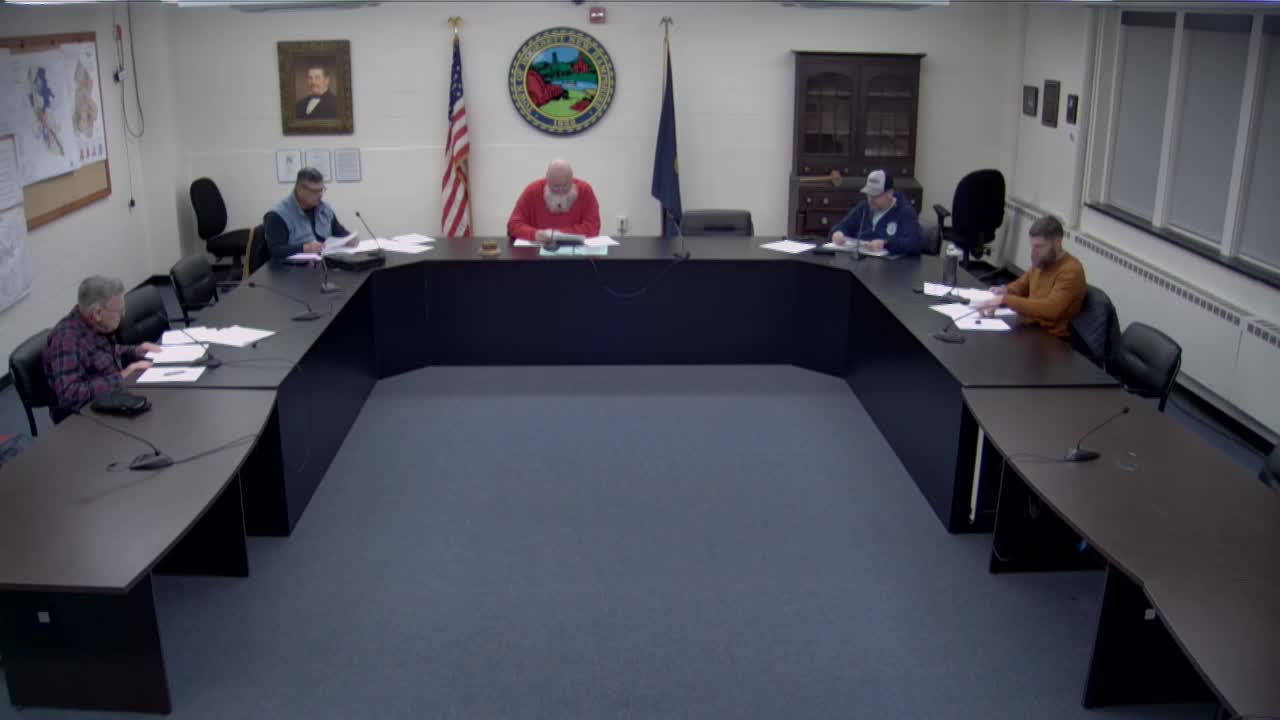
Hooksett’s Recycling Transfer Advisory Committee voted to recommend that the town set transfer-station fees at market value following a detailed discussion of rising disposal costs, revenue from recyclable materials and continued reimbursements to condominium associations.
Hooksett’s Recycling Transfer Advisory Committee voted to recommend that the town set transfer-station fees at market value following a detailed discussion of rising disposal costs, revenue from recyclable materials and continued reimbursements to condominium associations.
Committee members and staff discussed fiscal and operational figures — including roughly $580,000 to $600,000 in tipping fees paid last year, about 10,000 tons of total material handled, and $44,000 received from scrap metal sales — and agreed to ask town officials to update the fee schedule to avoid ongoing losses.
The issue reached a formal step when a committee member moved that “all of the fees reflect market value,” a motion seconded and approved by voice vote. Committee members said the committee will forward the recommendation to the director of public works and the town council, noting that changes to fees require approval under state law.
Why it matters: The committee’s recommendation aims to align the town’s posted rates with what the town actually pays to process and dispose of materials. Members flagged concrete disposal as a particular concern: the committee reported a quoted ERCO tipping fee of $34.50 per ton while the town currently charges residents $5 for a half truck or $10 for a whole truckload — rates members said are insufficient to cover the town’s disposal expense.
Discussion highlights
• Tipping fees and tonnage: Sean Dumont, committee member, summarized the overall figures presented to the committee: “So we roughly paid 580,000 in tipping fees with taking the trash out,” and a colleague later said the amount was “600 and change.” Committee discussion repeatedly returned to the gap between what the town collects at the gate and what it pays to haul and tip the material.
• Recycling markets and revenue volatility: Members noted price swings for cardboard and plastics. One participant said the committee currently receives $60–$85 per ton for cardboard and described efforts to maintain buyers even as some regions reportedly store rather than sell cardboard. For plastics, the group estimated that a tractor-trailer load fetches about $668 in revenue while the bailing wire used to bind bales costs $400-plus, leaving a modest margin.
• Concrete costs: Members cited concrete disposal as a persistent loss. The committee discussed that the town pays about $34.50 per ton to discard concrete but charges residents only a small flat fee for truckloads; multiple members urged correcting that disparity.
• Electronics and Freon fees: The committee reviewed other line items on the fee sheet, including electronics (fees varying by item) and an $8 charge per unit to remove Freon, both of which have increased in recent years.
• Condominium reimbursements: Members raised questions about reimbursements paid to condominium associations. Committee discussion cited $64,000 reimbursed to condos last year and noted a separate $32,000 check issued recently. Members said the history of those reimbursements dates to earlier council decisions and that some residents may not be aware their associations received payments.
• Ordinance and approval process: Committee members reviewed the amended Recycling and Transfer Ordinance (ordinance 0031) and the town’s fee sheet adopted 01/01/23. They noted the ordinance delegates fee-setting to the director of public works with approval by the town administrator and town council, and they cited New Hampshire RSA 41:9 regarding establishment of fees. That means the advisory committee’s recommendation must move up the chain for formal adoption.
Motion and next steps
A committee member moved that the advisory committee recommend that “all of the fees reflect market value.” The motion was seconded and approved by voice vote. The committee voted to forward the recommendation to the director of public works (Ben, referenced in discussion) for review and, ultimately, to the town council for approval under the ordinance and RSA 41:9. Members asked staff to confirm whether a previous council action (Oct. 26, 2022) already authorized fee updates and to bring final figures back at the committee’s next meeting; committee members identified Feb. 12 as the next target for review and further action.
Votes at a glance
• Motion to approve minutes of Nov. 26, 2024 — moved and seconded; voice vote in favor; outcome: approved.
• Motion that “all of the fees reflect market value” — moved and seconded; voice vote in favor; outcome: approved. The committee directed staff to notify the director of public works and pursue follow-up with town council as required by the ordinance and RSA 41:9.
• Motion to adjourn — moved and seconded; voice vote in favor; outcome: approved.
What’s next
The committee will prepare its recommendation and supporting cost data for the director of public works and the town council. Members tasked staff with locating the Oct. 26, 2022 council record that discussed fee changes and with presenting a detailed fee schedule that better reflects current tipping and transportation costs.