Get Full Government Meeting Transcripts, Videos, & Alerts Forever!
Get email alerts on the Litter Abatement topic
No spam. Unsubscribe anytime.
Cedar Hill officials unveil plan to increase litter pickups, add dedicated crew and community programs
Summary
City staff proposed a 40% increase in trash pickups on Highway 67, two new litter‑abatement positions and expanded community programs funded by a recently adopted trash rate, with the Beautification and Environmental Sustainability Board outlining school, business and trail initiatives.
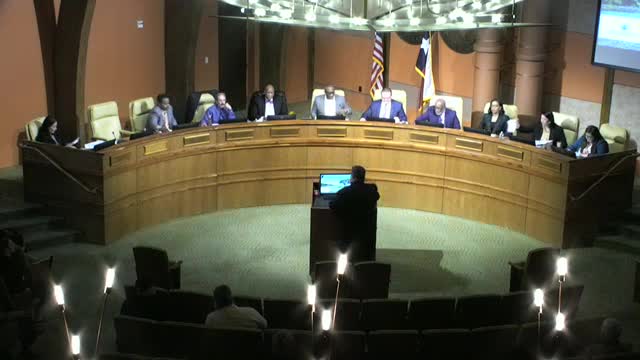
Cedar Hill city staff presented plans Jan. 28 to expand litter‑abatement operations, proposing to increase trash pickups on Highway 67 from 29 to 41 cycles per year, add a two‑person crew dedicated to litter removal and roll out school and business engagement programs through the Beautification and Environmental Sustainability (BEST) Board.
The proposal, presented by Ray Parks, director of parks and recreation, calls for a roughly 40% increase in pickups on Highway 67 — moving from an average of one pickup about every 15 days to approximately every 10 days — and creation of a crew equipped with trucks, trailers and warning signage to respond to hotspots across the city, including service roads and fringe areas where windblown trash accumulates. Parks said the city will not deploy crews into high‑speed travel lanes; those incidents would continue to be handled by TxDOT.
The proposal includes estimated costs of $170,560 annually for the enhanced program. That figure comprises a $19,800 increase for more frequent mowing/litter service on Highway 67 (raising that contract from $39,600 to $59,400) and the additional personnel and equipment for citywide litter response. Parks said the expense will be covered from the Landscape Beautification Fund, which is projected to receive about $193,000 annually from a recently adopted trash rate increase.
Parks told the council that Cedar Hill’s 2018 municipal agreement with the Texas Department of Transportation allows the city to perform more litter pickups along state roadways than cities without such an agreement; he said Cedar Hill’s contract provides 17 more pickups than the baseline TxDOT service. He also noted the city follows a local wildflower ordinance and state best practices that limit some mowing to protect pollinator habitat in certain medians.
Lauren Faust, environmental manager and staff liaison to the BEST Board, and Olatambra Gibson, chair of BEST, described complementary community efforts. BEST plans include a “Clean Cedar Hill Campus” program to recruit schools to pledge and run campus cleanups, a “green business of the quarter” recognition for businesses that improve exterior maintenance and recycling, expanded outreach to churches and neighborhood groups, continued twice‑yearly citywide cleanups and installation of an additional trail “plugging station” (a small supply station for trail litter pickup) along Red Oak Trail; the board currently maintains a plugging station at the Dogwood Canyon trailhead.
Councilmembers asked about operational details, including who will report or dispatch hotspots and whether police would flag hazards. Parks said staff will coordinate procedures across departments and asked residents to report problems to Parks and Recreation at the published city number. Councilmember Hayden asked whether the new crew would handle service‑road and 67 hotspots; Parks said the crew will work service roads and nontravel‑lane locations and TxDOT will be called for hazards in travel lanes. Mayor Pro Tem Sims and other councilmembers emphasized working with businesses, schools, churches and neighborhoods to reduce litter at the source and noted outreach and adoption programs are part of the BEST Board’s 2025 plan.
Timeline provided by staff calls for ordering equipment and related supplies immediately, increasing mowing/litter contracts in March without additional council action, and advertising and hiring the new litter‑abatement staff in March. Parks said staff will return with updates as the program is mobilized.
The council received the briefings and offered feedback; no formal council action on the specific staffing or contract changes was recorded in the Jan. 28 briefing session transcript.