Get Full Government Meeting Transcripts, Videos, & Alerts Forever!
Get email alerts on the Transportation topic
No spam. Unsubscribe anytime.
Georgetown staff outline 2021 road-bond project updates, cite utility conflicts and rising material costs
Summary
City staff presented an update on Georgetown’s 2021 road bond projects, telling the council that utility relocations and rising material costs have delayed multiple road and bridge projects and that staff will return with actual bid results after Rock Ride and Shell Road are advertised.
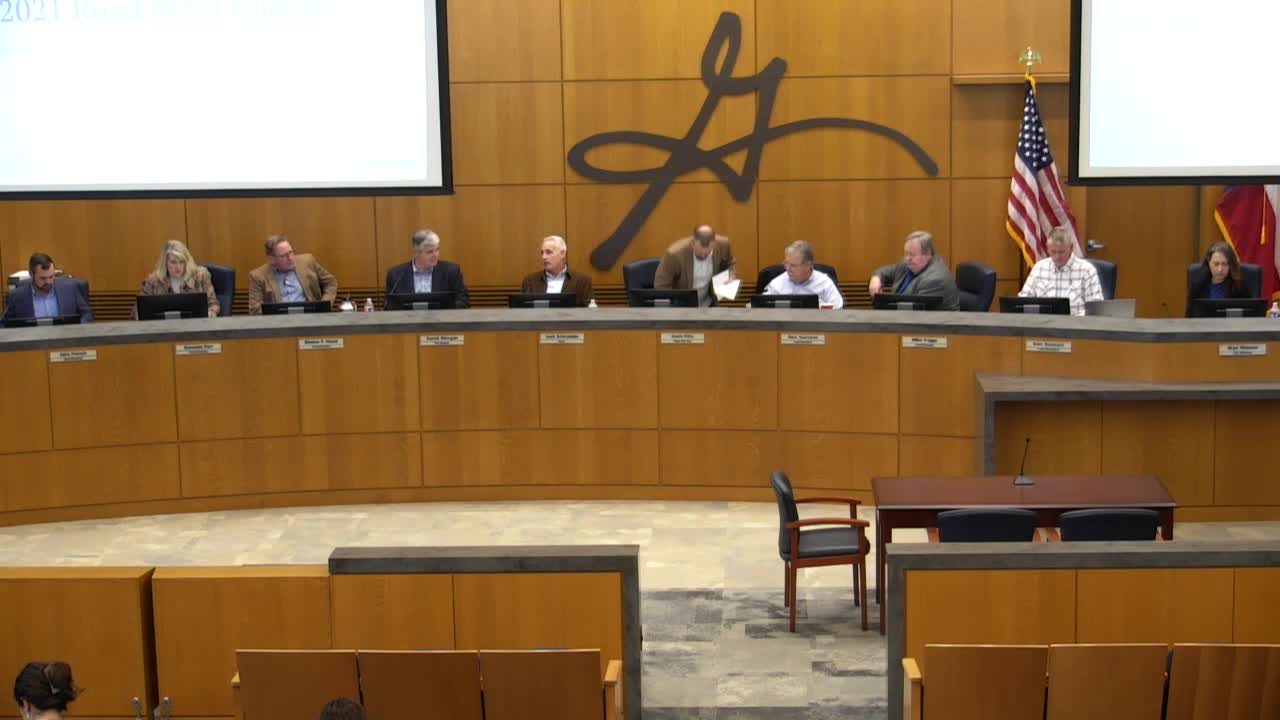
City staff delivered an update on projects funded through Georgetown’s 2021 road bond at the city council workshop, outlining schedules, funding sources and causes of delays for multiple corridor and bridge projects.
Lou (city staff) opened the presentation as the city’s 2021 road bond update and reviewed project scopes and recommended next steps. Staff emphasized that actual bid prices for Rock Ride and Shell Road will inform decisions about returning to council, and that grant decisions expected in June will affect funding plans.
The presentation covered individual projects in varying stages of design and right-of-way acquisition. For Williams Drive, staff described a phased approach focused on access management where driveway density and crash history are concentrated. Proposed improvements for the first phase (Serenata to I-35) include a 10-foot shared-use path on the north side, ADA ramp upgrades, illumination paid in part with highway safety lighting funds, raised medians and access controls. Lou said the corridor’s access-management work and lighting were estimated at about $3.78 million, excluding easements and right-of-way costs, and that the city has engaged about 60 property owners for the shared-use-path easements.
On intersections, staff and CIP manager Chris Busan described separate projects, including right-of-way negotiations and a federally funded land swap tied to parkland and a pool property that requires National Park Service review and appraisals. Busan estimated approximately a year for the federal process and said the city is roughly six months into that process.
The DB Wood bridge rehabilitation and adjacent projects were discussed as contingent on U.S. Army Corps of Engineers approvals; staff said the Corps’ review could add months. On the Southwest Bypass and other signal projects, staff said signal material costs and supply times have risen sharply. Lou told the council that a full traffic signal that previously cost roughly $300,000 can now cost in the mid-$600,000s and that increased steel prices and longer lead times for components are driving much of that increase. Council members also noted labor and land costs have increased since the bond was approved.
Staff framed several near-term actions: advertise lighting work for Williams Drive in August, continue easement acquisition for access management, and return to council in July after Rock Ride and Shell Road have been bid so that the city can compare actual prices to estimates. Staff also listed several grant applications under review, including TASA and other TxDOT safety funding requests, with awards expected in June.
Council members pressed staff on the common cause of project delays. City staff and consultants said utility conflicts are the principal driver: one Southeast Interloop example initially expected to involve seven utility relocations and instead showed 22 conflicts, including Atmos, Encore and AT&T. Staff explained that when utilities occupy the city’s right-of-way they are obligated under franchise agreements or state law to relocate, but relocation timing and cost depend on whether the asset is in an easement (the city may pay) or in the right-of-way (the utility must move but the city often funds relocations when it triggers roadway work).
Council members urged staff to pursue options to accelerate relocations where utilities are not meeting timelines, including using city funding to move infrastructure and then recovering costs per legal options. Staff said state law sets specific time requirements for utility relocations but that staff would provide more precise statutory timeframes and enforcement pathways in follow-up.
Council members also raised long-term capacity questions — particularly whether bridges would need replacement or widening to match planned future lanes near new schools — and asked whether the Army Corps would speed approvals if school openings were imminent. Staff replied the Corps’ schedule is unlikely to accelerate because of the school timetable.
Several council members signaled support for staff’s recommendation to return in July with updated bid results and to use that data to refine funding choices. Staff repeatedly noted that some decisions remain contingent on June grant outcomes and on completing easement and right-of-way work.
Ending: City staff urged patience while they complete right-of-way and easement work, obtain grant awards in June and return with firm bid data in July, and the council signaled general support for that schedule and for exploring options to reduce delays caused by utility relocations.