Get Full Government Meeting Transcripts, Videos, & Alerts Forever!
Get email alerts on the Utility Proceedings Stays topic
No spam. Unsubscribe anytime.
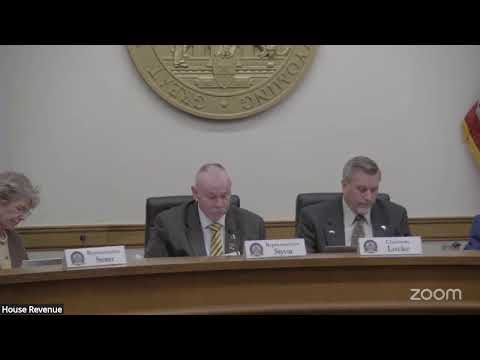
Committee approves bill allowing stays of certain utility proceedings while related lawsuits resolve; regulator and utilities warn of trade‑offs
Summary
House Bill 218 would allow stays of certain Public Service Commission proceedings while related litigation over the applicable statute, rule or procedure is resolved.
The House Revenue Committee voted to advance House Bill 218, which would permit stays of specified utility proceedings — including rate matters — when the underlying action or a closely related legal argument challenges the constitutionality or legality of a statute, rule or commission procedure that would need to be applied in the later proceeding.
Sponsor discussion emphasized the bill is narrowly targeted. Committee members were told the stay would apply when a utility sues challenging a statute or regulation and a later rate case or application would require the commission to apply that same statute, rule or procedure; the provision would not apply where a judicial review is about the commission's application of facts or the commission's factual findings.
The Public Service Commission raised concerns that an expansive or protracted stay could delay legitimate cost recovery and produce a "pancaking" or stacking of deferred costs that would later be passed to ratepayers. Mary Throne, chair of the Wyoming Public Service Commission, said she understood the bill's intent but warned of potential impacts on ratepayers: "My concern with this is that it may ultimately make it more difficult for the ratepayers," she told the committee, citing the risk of delayed cost recovery producing larger subsequent increases.
Representatives of Rocky Mountain Power also testified about potential operational consequences. Nathan Nicholas of the Cook Law Firm, representing Rocky Mountain Power, told the committee the typical tempo of appeals and litigation is slower than business needs and said a broad stay could "cause most proceedings involving a sealed utility to grind to a halt." He warned the result could be accumulated deferred costs and a later, larger rate adjustment for customers.
Supporters in public comment argued the bill protects ratepayers by preventing the commission from applying rules that are in active legal dispute. Tom Van Cleef, a Casper small-business owner, described the proposal as a limited measure to avoid applying rules that courts are reviewing and said he had confidence in the commission's ability to distinguish contested legal issues from factual disputes.
Committee members debated the bill's scope and exceptions. Multiple members asked for examples and clarification about when the stay would or would not apply; sponsor and witnesses repeatedly emphasized the bill is intended for "apple‑to‑apple" situations in which the same statute, rule or procedure is being litigated. The Public Service Commission suggested the committee could consider alternative tools or narrowly tailored language to reduce the risk of delay and cumulative rate impacts.
On final consideration the committee approved the bill by roll call, recorded as seven ayes, one no and one excused. The commission and several utilities indicated they will continue to work with the sponsor to refine language to limit unintended consequences.