Get Full Government Meeting Transcripts, Videos, & Alerts Forever!
Get email alerts on the Funeral Contracts Investment topic
No spam. Unsubscribe anytime.
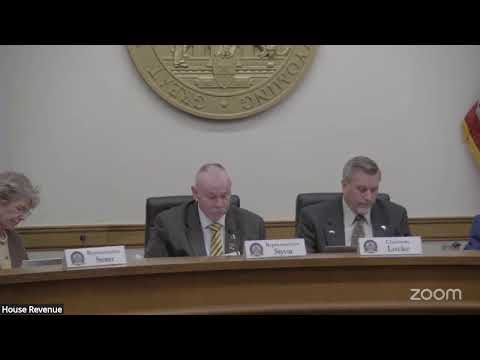
Committee advances bill letting funeral homes invest pre‑need funds in irrevocable trusts under Prudent Investor Act
Summary
House Bill 181 would let preneed funeral contract funds be deposited into an irrevocable preneed funeral trust invested under the state's prudent‑investor standards, and would require buyer disclosure of investment type and access.
Representative Larson presented House Bill 181, which would allow deposits made under prepaid (preneed) funeral contracts to be placed into an irrevocable preneed funeral trust and invested in compliance with Wyoming's prudent‑investor standards. The bill would add an option — in addition to currently authorized vehicles such as bank deposits, certificates of deposit and revocable trusts — and would direct that rules require notice to buyers about what investment vehicle will be used and whether they would retain any future access to the funds. Rules promulgated by the insurance commissioner would not require additional surety bond for funds in an irrevocable preneed trust.
Representative Larson told the committee the existing statutory framework governing preneed funeral arrangements dates to the 1970s and that investment options and regulatory practice have changed since then. He said the bill was drafted with input from the Legislative Service Office, the insurance commissioner and funeral directors to allow an additional tool that could help trusts earn returns that offset inflation while keeping consumer protections in place. "This type of investment of funds generated through the sale of a preneed funeral plan is allowed in other states and it continues to protect the public requiring disclosures and requiring the trust to be irrevocable," Representative Larson said.
Insurance Commissioner Jeff Roode told the committee his office reviewed the idea and supports allowing the irrevocable trust option with safeguards. He provided agency figures for the market: the office reports 31 funeral homes in the state, nine active in selling preneed contracts and five using a master trust. Commissioner Roode said the office monitors preneed activity and can audit master trusts under its authority. He told the committee he favors the change in part because it "locks in" funds. "What I like about this change is that the money's locked in," he said, adding that locking the funds in an irrevocable trust reduces the risk that earnings would be spent before they are needed.
Funeral home witnesses endorsed the bill. Jamie Kirkland, owner of Davis Funeral Home and director of the Wyoming Funeral Directors Association, said the change would help small funeral businesses and encourage participation in pooled trusts; he said current returns and price guarantees make the tool necessary for long-term prepayment. Cherilyn Kaiser, who said she was working with the Wyoming Funeral Directors Association on the bill, also said the association supports the measure.
Witnesses and legislators discussed consumer access and existing contracts. Representative Larson said the change would apply prospectively; existing contracts would not be retroactively converted. He and Commissioner Roode explained that funds placed into an irrevocable trust would not be available to the purchaser after deposit, but that in the event of provider failure the insurance commissioner has mechanisms to ensure payment for services or reimbursement to families. Committee members pressed for: definitions, clarity in rules, and confirmation that the insurance commissioner has oversight authority. The commissioner confirmed his office would examine master trust accounts in regular reviews and that rules would specify notice to buyers and the meaning of an "irrevocable" trust.
The committee considered one drafting cleanup amendment proposed by Representative Lucas to update archaic statutory language (replace "Federal Building and Loan Association" with "Federal Savings and Loan Association"); members adopted that amendment. On a roll-call vote the committee approved House Bill 181 as amended by a margin recorded as eight ayes and one excused.