Get Full Government Meeting Transcripts, Videos, & Alerts Forever!
Get email alerts on the Grant Management Audit topic
No spam. Unsubscribe anytime.
County auditors recommend centralized grant roles and updated procedures; committee votes to adopt audit resolution
Summary
A performance audit found gaps in Milwaukee County’s grant management policies, recommended 14 changes including clearer roles, updated AMOPS guidance and better grant coding in the financial system; the Committee on Audit voted 5‑0 to recommend adoption of the audit resolution.
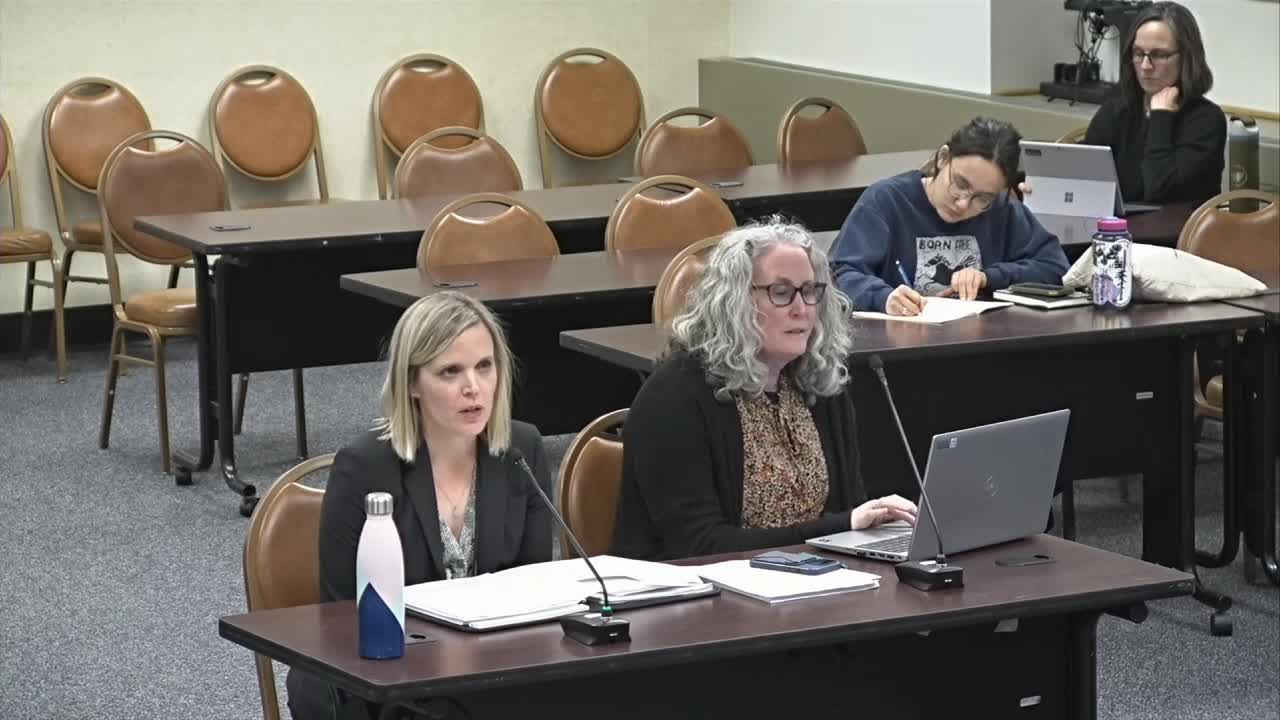
Milwaukee County’s director of audits presented a performance audit Jan. 27 that concluded the county “needs to establish clear roles, responsibilities and procedures for grant management,” and included 14 recommendations intended to strengthen compliance with federal “Uniform Guidance.”
Jennifer Folliard, director of audits in the Office of the Comptroller, told the Committee on Audit the audit sampled 64 Uniform Guidance requirements and found gaps arising in part from organizational change, decentralized processes and inconsistent documentation across multiple guidance sources, including AMOPS (Administrative Manual of Policies and Procedures), department procedures and legacy paper manuals.
The audit team recommended that centralized departments — the Office of the Comptroller, Department of Administrative Services (DAS) and Strategy, Budget and Performance (SBP) — align on written roles and responsibilities, consolidate guidance so employees have a single, accessible reference, and update county policies to reflect federal allowable cost rules, procurement and subrecipient monitoring requirements from the Uniform Guidance.
Folliard said the comptroller’s office had already issued new AMOPS entries related to federal grants and allowable costs and recommended additional updates and staff training over the next year. The audit also called for improved fixed‑asset reporting to include federal funding information, modernization of cash‑handling procedures, and steps to reduce risks in the county’s single audit process.
During committee discussion supervisors asked whether the gaps had produced any lost federal funding. Folliard answered that the audit found exposure and risk that could lead to findings in a federal review but did not identify instances in which federal funds were already lost due to the noted deficiencies.
Public comment came from Casey Serrano of the Milwaukee Alliance Against Racism and Political Repression, who praised the audit and urged the committee to pay particular attention to grants administered to law enforcement and the Sheriff’s Office, citing concerns raised in a separate jail audit about compliance with a consent decree and reliability of inmate counts.
After discussion, the committee voted to recommend adoption of the audit resolution. The clerk recorded five ayes and zero nos: Supervisors Martin, Rolland, Vincent, Capriollo and the chair (vote recorded as “Mr. Chairman”). The committee requested six‑month status updates on the 14 recommendations until they are completed.