Get Full Government Meeting Transcripts, Videos, & Alerts Forever!
Get email alerts on the Parental Rights Cause Of Action topic
No spam. Unsubscribe anytime.
Committee advances parental‑rights cause‑of‑action bill after contentious discussion over scope
Summary
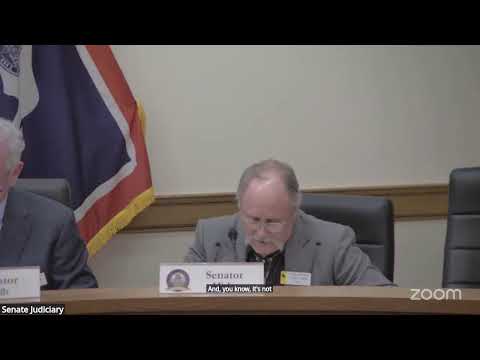
The Senate Judiciary Committee voted to advance Senate File 133, which would create a private cause of action for parents asserting violations of statutory parental rights, after a contentious hearing over whether the bill’s wording is overly broad and could invite counterclaims in child‑welfare proceedings.
The Senate Judiciary Committee voted to advance Senate File 133, which would create an explicit private cause of action for parents asserting violations of parental rights under existing Wyoming statute 14‑2‑206, but the measure passed amid significant debate over scope and unintended consequences.
Sponsor Senator Brennan said the bill’s core purpose is to give parents enforceable remedies when their parental rights are infringed by government action, including injunctive and declaratory relief and recovery of costs and attorney fees. The bill text, as drafted, would permit a person “whose parental rights as provided under this section has been infringed or will be infringed” to assert the violation “as a claim or defense in a judicial or administrative proceeding.”
Committee members raised repeated concerns that the language was overly broad. Senator Crago questioned whether the draft could allow parents to file counterclaims in Department of Family Services (DFS) abuse and neglect proceedings or even permit suits against judges or courts. The State Court Administrator, Lisa Butler, told the committee the draft is “incredibly broad” and warned it could expose judges making abuse and neglect decisions to collateral litigation; the court office also noted the Supreme Court’s 2020 decision in Johnson v. Johnson had limited the statute’s application in a divorce context.
Corinne Schmidt, director of the Department of Family Services, expressed practical concerns that forward‑looking language such as “will be infringed” could be invoked during investigations and make agencies subject to lawsuits while performing statutorily required child‑protective investigations.
Jordan Carpenter, legal counsel for Alliance Defending Freedom, which provided the draft language, said the bill’s ability to address impending violations is intended to give parents access to courts before their rights are actually violated; he cited similar language in religious‑freedom statutes in other states and argued that subsection (c) adopted last year explicitly recognizes school‑related disclosures and supports the broader reading. Carpenter said the intent is to provide broad protection for parental rights across government agencies, not to insulate agencies from legitimate child‑welfare investigations.
Public testimony included Patricia McCoy, who supported the bill as a parent, and Alan Thompson, executive director of the Wyoming Association of Sheriffs and Chiefs of Police, who told the committee law‑enforcement agencies are concerned the bill could create new liability and interfere with investigations.
Over the course of the hearing the committee adopted several amendments to narrow prospective language: members voted to strike the phrases “or will be infringed” and “impending violation,” and removed several references that would allow asserting the right “as a defense” in certain lines. Despite continued concern from multiple witnesses and committee members that the revised language still could allow counterclaims by parents in DFS proceedings, several senators said they supported moving the bill to the floor so sponsors could work on the drafting and address the outstanding issues.
A roll call vote recorded three ayes, one no and one excused; the committee reported the bill out to the Senate floor.