Get Full Government Meeting Transcripts, Videos, & Alerts Forever!
Get email alerts on the Religious Liberty topic
No spam. Unsubscribe anytime.
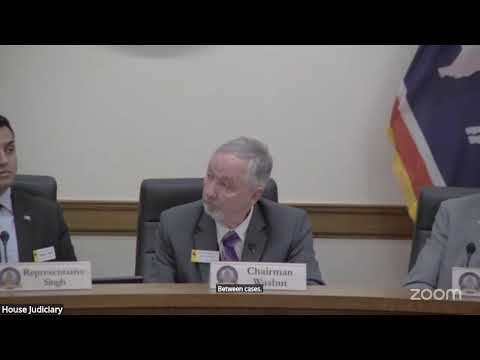
Judiciary Committee advances Wyoming Religious Freedom Restoration Act after lengthy debate
Summary
The Judiciary Committee advanced House Bill 207, the Wyoming Religious Freedom Restoration Act, on a roll call of 8 ayes and 1 no after extended testimony and questioning about scope, remedies and potential effects on other rights.
The Judiciary Committee advanced House Bill 207, the Wyoming Religious Freedom Restoration Act, on a voice roll call of 8 ayes and 1 no after more than two hours of testimony and questions that ranged from constitutional history to practical effects on state government operations.
Representative Wausch, the bill’s lead sponsor, opened the committee presentation by reading from the Wyoming Constitution and describing the bill as restoring the strict‑scrutiny standard courts historically applied to government burdens on religious exercise. "The free exercise and enjoyment of religious profession and worship without discrimination or preference shall forever be guaranteed in this state," he read aloud and said that ‘‘that’s why we’re here today. That’s what this bill pertains to." Representative Wausch walked the committee through the bill’s text, noting it would define "burden," "compelling governmental interest," and "state action," and that remedies under the bill would include injunctive and declaratory relief, compensatory damages, costs, and attorney’s fees. The bill lists an effective date of July 1, 2025.
Supporters said the measure restores a higher judicial review standard that Congress adopted in 1993 and that about 28 states (and additional states by judicial decision) have adopted in some form. Nathan Winters, president of the Wyoming Family Alliance, told the committee the legislation is "nonpartisan" and said it would empower individuals to seek a fair judicial process when they believe government action has burdened their religious exercise. Lance Kinzer of the First Amendment Partnership and other witnesses described examples that proponents said show the practical stakes of judicial standards for religious‑exercise claims.
Opponents urged caution and asked for safeguards. Sarah Burlingame, executive director of Wyoming Equality, said her organization registered "qualified opposition," arguing RFRA‑style laws have been used to try to justify discrimination. She recommended an amendment that would explicitly state that "nothing in this bill shall be used to discriminate on the basis of gender identity or sexual orientation." Representative Chastyck spoke at length in opposition, saying the bill risks using the free‑exercise clause "as a sword" that could undermine other constitutional protections; he explained he would vote no for that reason.
Committee members asked detailed legal questions about federal‑state preemption, the bill’s scope of "state action" (which the bill defines to include state and local laws, ordinances, rules, regulations and policies), whether corporations qualify as "persons" entitled to protection, and how the proposal would interact with statutes such as the federal Controlled Substances Act in cases involving sincere religious practices. Witnesses and counsel referenced seminal Supreme Court decisions—Sherbert v. Verner, Employment Division v. Smith, City of Boerne v. Flores—and the federal Religious Freedom Restoration Act enacted by Congress, to explain the legal background and how similar statutes operate in other jurisdictions.
The committee received public comment from citizens and organizations on both sides. Steve Melia of Cheyenne described pandemic restrictions on worship services as an example of government action that burdened religious practice. Lance Kinzer recounted the Kansas case of Mary Steinmetz (described to the committee as an example of the stakes in a strict‑scrutiny standard) to argue for clarity in the law. Sarah Burlingame reiterated concerns about how the law could be used absent a state nondiscrimination framework.
After public comment and additional questioning, Representative Kelly moved the bill; Representative Lee seconded. A roll call followed. The chief clerk recorded 8 ayes and 1 no; the motion carried and the bill was advanced from committee.
What the bill would do and outstanding clarifications The bill, as presented to the committee, would: define "burden" and "exercise of religion" consistent with many RFRA statutes; define "state action" to include state and local laws and actions by public officials; allow a person who is burdened or likely to be burdened to assert a claim or defense in a judicial or administrative proceeding; and provide relief including injunctive and declaratory relief, compensatory damages, costs and attorney’s fees. The committee discussion clarified that the sponsor intends the law to operate alongside the federal RFRA (where applicable) and that Wyoming would join other states that have adopted similar statutes. The bill text, however, does not include an explicit nondiscrimination carve‑out; witnesses and at least one public commenter suggested such language as an amendment.
Votes at a glance - House Bill 207 (Wyoming Religious Freedom Restoration Act): Moved by Representative Kelly; seconded by Representative Lee. Committee roll call: 8 ayes, 1 no. Outcome: advanced from committee. Relief and remedies listed in bill include injunctive relief, declaratory relief, compensatory damages, costs, and attorney’s fees. Effective date in the bill: July 1, 2025.
Next steps and context Because the bill was advanced, it will proceed to the full House for further consideration according to the legislative calendar. Committee deliberations focused heavily on legal definitions and on questions committee members raised about conflicts with federal requirements, corporate status, and protection of other constitutional rights such as marriage and nondiscrimination rights.