Get Full Government Meeting Transcripts, Videos, & Alerts Forever!
Get email alerts on the Tax Policy Electricity topic
No spam. Unsubscribe anytime.
Revenue Committee advances repeal of sales tax on electricity after split testimony on economic effects
Summary
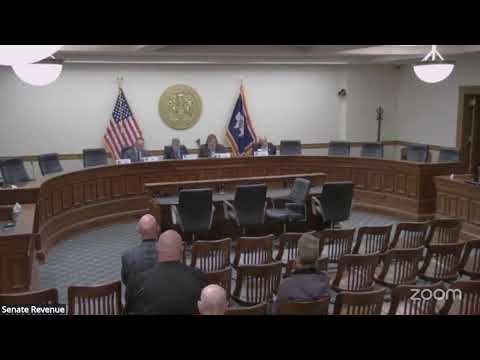
Senate File 128, which would repeal the state sales tax on electricity, passed the Revenue Committee 3–2 after hours of testimony from industry groups, municipal leaders and rural utilities about economic benefits and revenue impacts for local governments.
The Revenue Committee advanced Senate File 128, a bill that would repeal the state sales tax on electricity, by a 3–2 roll‑call vote following extensive testimony from energy producers, industrial users, municipal officials and rural utilities.
Proponents, including representatives of Wyoming’s mining, trona, petroleum and farming sectors, argued the repeal would reduce operating costs for energy‑intensive industries and agricultural irrigators. “Next to labor costs, electricity is their second highest expense,” said Pete Obermueller, president of the Petroleum Association of Wyoming. The Wyoming Rural Electric Association’s executive director Sean Taylor said cooperatives support the change “to keep the lights on and keep it as affordable as we possibly can.” Brett Moline of the Wyoming Farm Bureau Federation said the repeal would help members who spend tens of thousands of dollars on electricity for irrigation.
Municipal officials and local government associations opposed the measure, citing projected revenue losses. Patrick Collins, mayor of Cheyenne, told the committee that Cheyenne’s electricity load is growing rapidly and estimated the city would lose about $4.4 million in annual revenue under today’s consumption; he said the lost revenue would hinder public safety and other services. “If we take the sales tax off electricity, that will be lost revenue that will double in the next few years,” Collins said, adding that data‑center growth in Cheyenne is expected to increase electrical demand substantially through 2030.
Other municipal and county witnesses warned smaller towns and public safety services could be disproportionately affected. Chief Mike Thompson of Evansville said his town receives roughly $265,000 per year from sales tax on electricity and that combined with other proposed property tax changes the loss could total more than $600,000 for Evansville — funding he said supports full‑time fire and police staffing.
Committee members discussed possible ways to pair the sales‑tax repeal with alternative taxes on electricity production. Senator Case described prior committee work on a complementary approach: removing the sales tax while imposing a production‑based or gross‑receipts tax on electricity generation so Wyoming could collect revenue from exports. “The impact of the sales tax reduction lowers cost to Wyoming customers, and putting in an alternative cost on the production of electricity raises cost to everybody,” Case said; he recommended the approach as a way to preserve state revenue while encouraging in‑state consumption benefits.
Supporters argued the change would make Wyoming more competitive for power‑intensive industry and data‑center investment; opponents emphasized the immediate local revenue loss and the risk that consumption exemptions would primarily benefit large industrial consumers with limited local employment. Several witnesses said the Senate is also considering a bill to change sales‑tax distribution to local governments that could offset some losses, and senators suggested timing or pairing mechanisms (delayed effective date or linked enactment) to preserve leverage for broader tax reform.
On the roll call, the committee recorded votes as follows: Senator Case — No; Senator French — Aye; Senator Eyde — Aye; Senator Pappas — No; Chairman McEwen — Aye. The committee reported the bill as approved, 3 ayes and 2 nays.
The measure will proceed from the Revenue Committee; recorded testimony and discussion indicated substantial stakeholder disagreement over local revenue impacts and statewide tax strategy.