
Panel tables geoengineering ban after debate over cloud seeding, monitoring and costs
Get AI-powered insights, summaries, and transcripts
Sign Up Free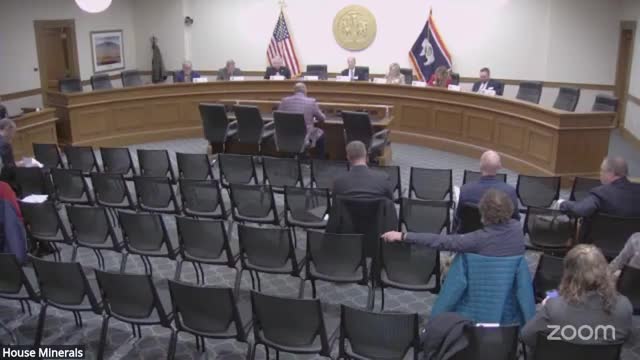
Summary
House Bill 208, which would prohibit atmospheric geoengineering and impose monitoring requirements, was tabled after testimony showed it would conflict with Wyoming's long-running cloud seeding program, raise monitoring and jurisdictional questions, and carry substantial sampling costs.
The Minerals, Business & Economic Development Committee took testimony on House Bill 208, a proposal to prohibit atmospheric geoengineering and require state testing of sites subject to geoengineering, and ultimately tabled the bill pending further study.
Vice Chair Ruben Tarver, who introduced the bill, said it reflects constituent concern about spraying particles into the atmosphere to alter temperature or precipitation and that the measure was modeled on recently enacted legislation in another state. “It just puts in place testing requirements so we can at least get a benchmark and start the measuring process,” Tarver said.
Several state officials and technical witnesses told the committee the bill, as drafted, would curtail or conflict with existing cloud seeding programs and that the state lacks the monitoring network and agreed methodologies called for in the text.
Jason Meade, director of the Water Development Office, and Barry Lawrence, deputy director for planning, summarized Wyoming’s cloud seeding operations and defended the program as a long-running tool for snowpack augmentation. Lawrence said the state’s cloud seeding program has run in various forms for nearly 20 years and targets three mountain ranges — the Medicine Bowes, Sierra Madres and Wind River Range — during a November-to-April season. He said evaluations conducted as part of the program, including independent analysis by the National Center for Atmospheric Research (NCAR) and testing by the Desert Research Institute, showed “a positive seeding effect in the order of 5 to 15 percent for precipitation on seedable storms” and negligible environmental impacts in baseline sampling.
Lawrence also presented benefit and cost estimates from a hydrologic assessment: simulated seeding in one analyzed winter routed to streams produced additional flow that the study aggregated to roughly 7,100 acre‑feet of additional water for the basins studied, and program costs per acre‑foot in the analysis ranged from about $56 to $124, with a median near $81 per acre‑foot.
Nancy Veer, administrator of the DEQ Air Quality Division, told the committee the state’s air monitoring network is ground‑based and that the EPA supports a chemical speciation sampler in Cheyenne; DEQ does not maintain instrumentation or protocols to sample air at higher altitudes or to identify mobile aerial sources. “We do not have any monitors that go up higher than [five to] 10 meters,” Veer said. She outlined practical challenges for enforcement and tracing any airborne constituent to a specific aircraft or operator and warned that the bill’s sampling methods (including references to transmission electron microscopy) would be costly.
Todd Parfitt, DEQ director, and DEQ staff detailed the likely fiscal consequences: the bill’s laboratory and sample‑analysis language would require expensive equipment and outside laboratory services. DEQ and Water Development Office staff suggested adjusting the bill to exempt permitted weather‑modification activities conducted under the state engineer’s authority; the state engineer’s office provided a draft amendment to that effect.
Chris Brown of the attorney general’s office flagged compact and basin implications: cloud seeding is part of a suite of tools used by upper‑basin states to augment flows and address Colorado River obligations, and partners in the lower basin help fund upstream programs.
Jeff French, atmospheric scientist at the University of Wyoming, told the committee cloud seeding is a narrow subset of geoengineering and that scientific advances in the last two decades have improved understanding and performance; he said cloud seeding can be effective under limited, specific atmospheric conditions and that separate solar‑radiation‑management proposals (for example, marine cloud brightening) are a different category.
Public comments were mixed: industry and water users (including the Wyoming Mining Association and trona producers) defended the state cloud seeding program as a tool for water supply; private citizens urged prohibition or independent testing and raised health concerns. After public testimony, a committee member moved to table HB 208 and send it to interim study for further work on monitoring methods, authority conflicts and health questions. Committee members voted by voice to table the bill.
Ending: Committee members asked for revised language that would preserve permitted cloud seeding under the state engineer while addressing constituent concerns and the feasibility of statewide monitoring.