Get Full Government Meeting Transcripts, Videos, & Alerts Forever!
Get email alerts on the Privacy Gender Policy topic
No spam. Unsubscribe anytime.
House committee approves bill to define women's privacy in schools, correctional facilities and public buildings
Summary
The House Education Committee unanimously advanced House Bill 72 on Jan. 24, which defines male and female for purposes of access to restrooms, locker rooms, sleeping quarters and sets civil remedies; the committee adopted a clarifying amendment about staff entering changing areas.
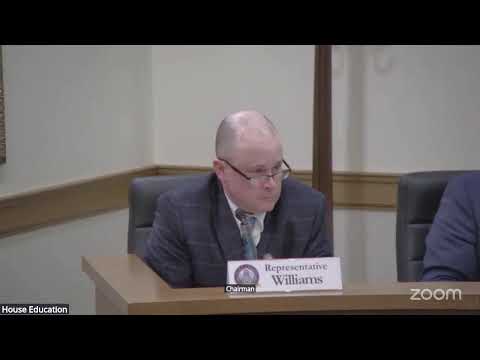
CHEYENNE, Wyo. — The House Education Committee on Jan. 24 passed House Bill 72, a measure that would set state standards for access to sex‑segregated facilities in public buildings, schools, higher‑education institutions and correctional facilities and create causes of action when those standards are violated.
Vice Chair Representative Lawley, sponsor of HB72, told the committee the bill "ensures that women and girls are safe and respected in places where privacy is essential" and said it provides clarity for school boards and other public institutions that have sought legislative guidance.
HB72 defines terms such as "restroom," "sleeping quarters," "single‑use" and the statutory definitions of male and female used elsewhere in the draft. The bill separates general public‑facility provisions from education‑specific provisions; Lawley said the education causes of action include a longer statute of limitations (four years) to account for delayed reporting by children, while the public‑facility statute of limitations is two years.
The bill includes two principal bases for relief: that an institution provided permission for a person of the opposite sex to use a private facility, or that the institution failed to take reasonable steps to prohibit such use after notice. Lawley said the legislation includes exceptions for emergencies, accommodations for people with disabilities and single‑use facilities as preferred accommodations.
The committee adopted an amendment, offered by Representative Volley and seconded by Representative Strock, that clarifies school officials and employees may enter changing areas, restrooms or sleeping quarters while performing official duties provided they "take reasonable steps to ensure that no person in the room is in a state of undress." The amendment passed without recorded opposition.
State Superintendent Megan Degenfelder testified in support of both HB60 and HB72, saying the measures align with protections and the sponsor's goals to preserve Title IX opportunities. The Department of Corrections' Deputy Director Heather Babat said the bill is "in line with our current policies and practices" and that the department does not house male and female inmates together.
Attorney testimony raised implementation concerns. James Worthen, a Casper attorney who represents school districts, warned the "reasonable steps" standard is ambiguous and could make civil liability and insurance coverage uncertain for districts and higher‑education institutions. Worthen told the committee the uncertainty could expose districts to litigation costs and make enforcement inconsistent across districts.
Civil‑rights and LGBTQ advocates opposed the bills. Sarah Burlingame, executive director of Wyoming Equality, urged lawmakers to consider the effects on transgender and intersex students and said many individuals in the state who might be affected would not be able or willing to bring a lawsuit.
The committee approved HB72 on a 9–0 roll call. Representative Strock moved the bill; Representative Guggenmas seconded.
What happens next: HB72 will proceed to the full House. Sponsors said the bill attempts to provide statutory guidance to schools and other public institutions that have requested direction.