Get Full Government Meeting Transcripts, Videos, & Alerts Forever!
Get email alerts on the Abortion Regulation topic
No spam. Unsubscribe anytime.
Wyoming panel advances bill to regulate surgical abortion facilities after public testimony
Summary
The House Labor, Health & Social Services Committee voted to pass House Bill 42 as amended, a measure to apply ambulatory surgical standards to abortion providers. The bill drew hours of public testimony both for and against, an unsuccessful amendment to reduce fines and a successful technical correction to a penalty amount.
The House Labor, Health & Social Services Committee on a voice-and-show-of-hands vote passed House Bill 42, a measure to classify and regulate surgical abortions under ambulatory surgical facility rules and to require state-licensed physicians performing abortions to hold Wyoming admitting privileges.
Supporters and opponents filled the committee room and the online hearing to testify about safety, medical practice and the moral status of abortion. The bill’s sponsor and committee members said the measure is intended to set minimum facility and practitioner standards for sites that offer surgical abortion services.
The bill drew sharply divided testimony from residents, medical professionals and former legislators. Susan Loan, a Laramie County resident, told the committee she opposed the bill because she sees abortion as murder: “Abortion isn’t healthcare. Abortion causes the demise of a living human being,” she said. Candace Machado, mayor of Evansville and a social worker, testified in opposition on the grounds of personal autonomy and professional ethics: she said the proposal is “government overreach” and risks deterring medical and mental-health providers from practicing in Wyoming.
Other witnesses urged oversight and inspection of abortion facilities. Jeanette Ward, a former state representative, said operators of the state’s abortion provider had refused to call 911 in an emergency and argued the bill would improve safety, calling abortion “death care.” Dr. Dean Bartholomew, a family physician from Powell, urged the committee to consider second-trimester procedures and said larger procedures typically require operating-room equipment and resuscitation capacity.
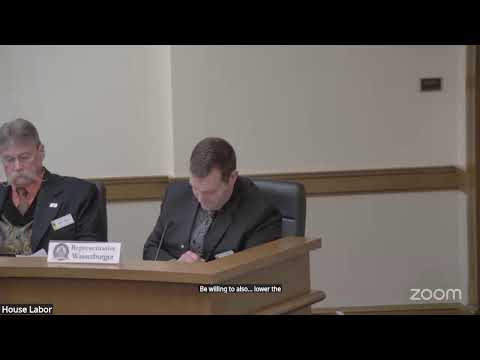
Committee discussion focused on two amendments. Representative Wasserburger proposed lowering fines in two sections to $7.50; that amendment failed on a 3–5 show-of-hands. Members then moved a technical amendment from legislative services to correct a numeric error in the draft: deleting “$1,000,000” and inserting “$1,000.” That amendment passed. The bill was moved out of committee by Representative McCann and seconded by Representative Clauston. The roll-call recorded seven ayes and one no; the chair announced the bill had passed the committee and would be carried to the floor.
The committee chair prefaced the hearing by limiting public comment and asking speakers to address the chair rather than members. Several witnesses asked the committee either to table the bill or to move cautiously; others urged adoption to require parity between abortion providers and other ambulatory surgical facilities.
The measure now moves to the full House; committee members did not schedule further amendments in the hearing. The committee record shows both substantive public testimony and a brief legislative exchange about penalty amounts and the proper statutory language.