Get Full Government Meeting Transcripts, Videos, & Alerts Forever!
Get email alerts on the Citizen Initiatives topic
No spam. Unsubscribe anytime.
Senate approves bill requiring citizen initiatives to identify funding sources; allows Lt. Gov. to coordinate fiscal review
Summary
The Utah State Senate voted to pass First Substitute Senate Bill 73, a measure that would require organizers of citizen initiatives to identify funding sources and permit the lieutenant governor’s office to coordinate fiscal review with the Legislative Fiscal Analyst.
The Utah State Senate voted to pass First Substitute Senate Bill 73, a measure that would require organizers of citizen initiatives to identify funding sources and, in the sponsor’s first substitute language, allow the lieutenant governor’s office to coordinate with the Legislative Fiscal Analyst (LFA) on fiscal review.
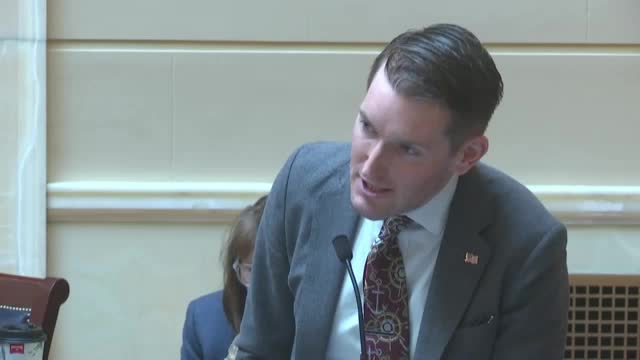
Sponsor Senator Fillmore said the change is intended to give voters clearer information about the budgetary consequences of initiatives. “In the legislature, we cannot pass any bill that costs more than $25,000 to implement without identifying a funding source and where it fits in the budget,” Fillmore said on the Senate floor. “This just puts the same in place for citizen initiatives.”
Supporters said the requirement would help voters understand trade-offs. Senator Owens argued the rule would produce “informed initiative[s]” and compared the proposal to fiscal notes the legislature receives for bills. Opponents said the requirement risks making the initiative process more onerous for grassroots groups. Senator Escamilla said the proposal could be “an encroachment upon the people’s ability to do the work that they ask us to do” and worried it would disadvantage ordinary citizens.
The bill’s text, as discussed on the floor, directs initiative filers to identify where money would come from to pay for a measure, including whether the measure would increase taxes and, if so, by how much; if the funding is proposed from existing state budget lines, filers must identify which items would be reduced. The sponsor described that change as a single additional step for filers: “The answer to that question is 1.”
Senators asked whether the funding statement in an initiative would be binding on a future legislature or on the state budget. Fillmore said that ultimately the effect of an initiative on future legislative budgets can depend on how courts interpret whether an initiative “alters or reforms government,” and he noted that recent court decisions have changed the legal landscape. He also said the lieutenant governor’s office can decline to place an initiative on the ballot if it appears unconstitutional.
The first substitute includes explicit permission for the lieutenant governor’s office to consult with the Legislative Fiscal Analyst on initiative fiscal information. The sponsor described that arrangement as a “funnel”: initiatives that reach a certain point could be routed through the lieutenant governor to LFA for analysis, rather than allowing unlimited direct LFA involvement with every draft initiative.
Several senators said they supported the concept of transparency but not the bill as written. Senator Pitcher said he supported the idea in principle but could not vote for the current form without further discussion and improvements to ensure accuracy and fairness. Senator Kwan and others raised concerns that the requirement could set a higher threshold for citizen initiatives than exists for legislative bills.
Senator Fillmore moved final passage of the first substitute to Senate Bill 73. The Senate adopted the motion on a roll call, approving the measure 21 yeas, 7 nays, 1 absent. The bill will be sent to the Utah House of Representatives for consideration.
Votes at a glance: First Substitute Senate Bill 73 — Motion to pass moved by Senator Fillmore; no seconder recorded on the floor transcript. Outcome: approved. Tally: yes 21, no 7, absent 1. Sent to the House for consideration.