Get Full Government Meeting Transcripts, Videos, & Alerts Forever!
Get email alerts on the Municipal Revenue Options topic
No spam. Unsubscribe anytime.
Redding council asks staff to study fees, keeps Visit Redding contract unchanged through 2026
Summary
Councilors heard a presentation from Visit Redding on its marketing work and revenue impact, declined to reopen the $1 million annual contract before 2026 and directed city staff to research a range of fee and revenue options including cannabis tax changes, rental-car fees and special-event ticket surcharges.
The Redding City Council on Jan. 23 heard presentations and discussed a range of near‑term revenue options staff could pursue to help close the city’s budget gap.
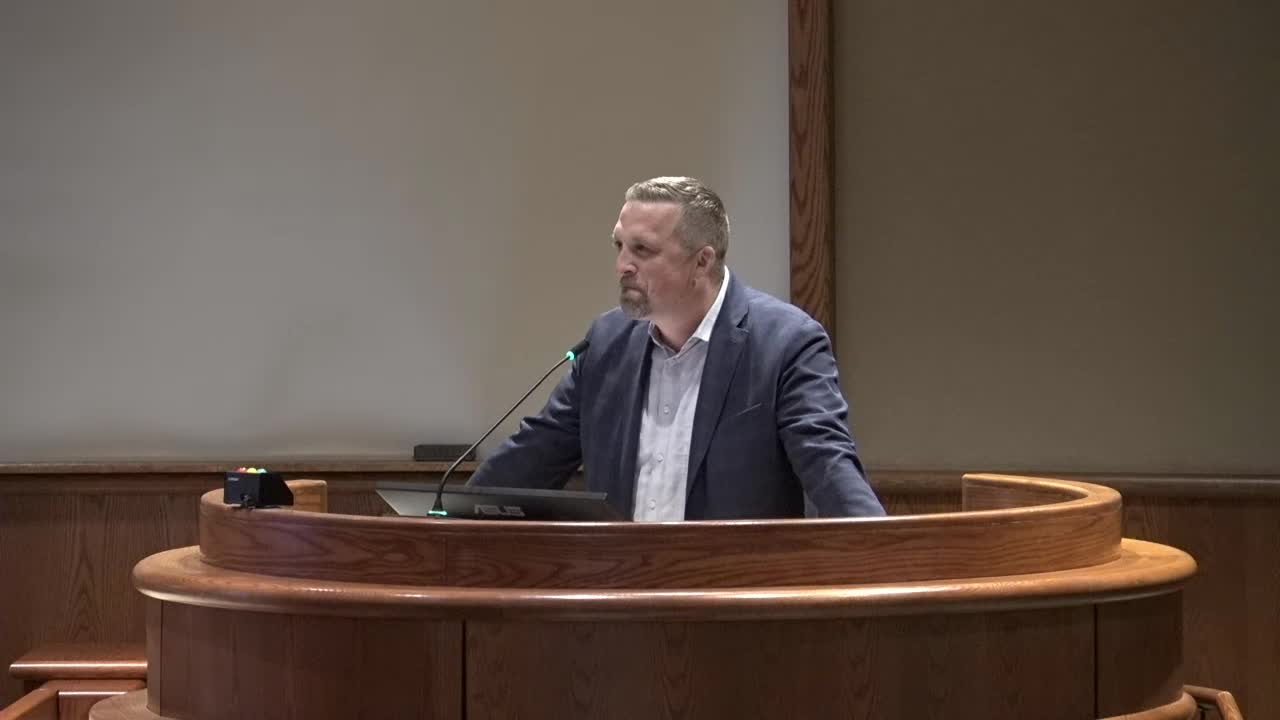
Todd, identified in the meeting as the chamber/Visit Redding representative, told the council Visit Redding’s contract — $1 million per year — coincided with an increase in transient-occupancy tax (TOT) collections. “Since then, the average income has been about $7,000,000 a little over $7,000,000 a year with that $1,000,000 per year,” he said, describing staff and marketing expenditures the organization uses to promote the city and region. He said roughly $300,000 of the Visit Redding budget covers four staff positions; about $250,000 is direct ad spending and roughly $85,000 goes to a PR firm.
Councilors discussed whether to renegotiate or cut the Visit Redding agreement. Multiple council members urged retaining the contract to support marketing and tourism, with one member saying marketing “allows growth” and warning that cutting promotion can have long-term negative effects. After discussion the council indicated it did not want to renegotiate the Visit Redding contract before the five‑year term ends in mid‑2026; a council member stated: “I'm gonna make a recommendation to staff that, at this point in time, we don't touch that renegotiating of the contract prior to 2026.”
Staff presented several revenue and fee avenues for council consideration and asked for direction about which to research further. Those options included:
- Public-safety and other city fees: staff proposed a targeted review to ensure fees recover allowable costs (subject to Proposition 26 and other legal constraints). Examples cited included DUI/crash response fees and fire‑inspections.
- Recreation fees and subsidies: staff noted the city subsidizes rec programs and can review adult versus youth pricing, scholarship options, and potential merchandise or fundraising mechanisms.
- Development, building-plan and permitting fees: staff said the general fund currently subsidizes development services by roughly $1.5–2 million annually; council asked staff to provide sample fee adjustments and impacts before making decisions.
- Special-event and ticket surcharges: staff described a potential per‑ticket surcharge for exclusive, ticketed events held on city property; council members estimated that, if broadly applied and self-reported by event organizers, such a surcharge could generate material revenue (staff estimated rough potential around $1 million if widely applied) but requested further analysis and legal review.
- Airport/rental-car fees: council asked staff to research a possible rental‑car charge tied to airport operations and the legal and FAA constraints that could apply.
- Cannabis taxation: staff outlined current rates (a $3-per-square-foot cultivation charge and a 5% retail gross‑receipts tax, per the transcript) and noted the voter-approved measure allows higher maximums. Council asked staff to research how Redding’s rates compare with peer cities and the likely revenue and business impacts of possible increases.
Councilors also asked staff to look into cost-allocation adjustments so utilities and other funds appropriately pay for city planning and permit review work done on their behalf, which could reduce the general-fund subsidy for development services.
Ending: Council directed staff to return with data and legal analyses on the fee options, cannabis-tax comparisons, rental-car fee mechanics, and permit-cost allocations; it agreed not to reopen the Visit Redding contract before 2026 and requested Visit Redding and other tourism partners present more detailed impact metrics in future meetings.