Lifetime Citizen Portal Access — AI Briefings, Alerts & Unlimited Follows
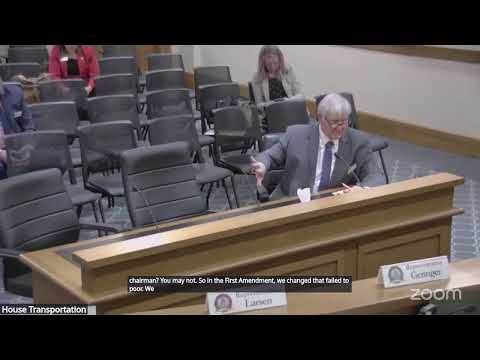
House panel advances bill to tax electricity at DC fast chargers, sets 3¢ per kWh rate
Loading...
Summary
The House Transportation, Highways & Military Affairs Committee on Jan. 23 advanced House Bill 24 to extend Wyoming''s fuel-tax framework to electricity used at DC fast chargers, adopting amendments that set the per-kilowatt-hour rate at 3 cents and reduce an annual decal fee.
The House Transportation, Highways & Military Affairs Committee advanced House Bill 24 on Jan. 23, a measure that gives the Wyoming Department of Transportation (WYDOT) authority to collect a fuel-equivalent tax on electricity sold at DC fast chargers, and sets a per-kilowatt-hour rate of 3 cents and an annual decal fee of $100.
The bill, as amended by the committee, changes the existing alternative fuels statute to identify DC fast chargers as the taxable customer for electricity and standardizes the unit of measurement to kilowatt-hours for tax administration. The committee approved several technical and substantive amendments before voting 9-0 to move the bill out of committee.
Committee members said the bill does not create a new tax vehicle so much as it provides WYDOT a mechanism to collect a tax the existing statute already contemplated. Wayne Hassinger, fuel tax administration, WYDOT, said the measure "gives legs to the already existing language that requires us to collect the fuel tax on electricity." Hassinger and Kimberly Peters, also with WYDOT fuel tax administration, answered questions from committee members about implementation.
Lawmakers and witnesses debated fairness and how to equate electricity taxation with the gasoline tax. Representative Yen, sponsor of a proposed amendment that reduced an annual decal from $200 to $100, said the change makes the fee more comparable to the treatment of plug-in hybrids and recognizes many EV drivers charge at home. Yen said the amendment "puts it on the same level as the plug-in hybrids" by reducing the upfront annual charge.
Public witnesses included Emily Parvacini, Sublette County treasurer, who testified in favor of a hybrid fee to recover lost gas tax revenue; Brett Moline of Wyoming Farm Bureau, who said his membership supports the bill as a road-funding equivalent; and Alicia Cox of Yellowstone Clean Cities, who urged parity and supported Yen''s $100 change and recommended an exemption for EV owners without home charging.
Industry witnesses focused on how the per-kilowatt-hour rate affects heavy vehicles. Travis McNevin told committee members that electric heavy trucks could face a much higher per-mile tax at four cents per kWh, and recommended a lower rate (2.5''2.5 cents) for larger vehicles; the committee instead settled on 3 cents per kWh after discussion with WYDOT and industry representatives.
Committee action included adopting WYDOT technical language changes, replacing the word "tank" with "system" to reflect electrified vehicles, changing the statutory measurement language to "unit of measurement" (kilowatt-hour), and voting to set the per-kilowatt-hour levy at 3 cents. Representative Nicholas moved the bill from committee; Representative Banks seconded. The committee''s roll call on HB 24 as amended recorded nine ayes and no nays.
The committee made the bill effective in part July 1, 2025 for statutory changes enumerated in the bill and left some implementation details to WYDOT rulemaking. WYDOT staff said they will coordinate with national reporting frameworks (IFTA) where relevant. Questions the committee flagged for follow-up included whether other states'' rates and collection approaches could inform Wyoming''s final design and how to distinguish fast-charger usage by trucks versus passenger vehicles for collection.
Votes at a glance: the committee adopted multiple technical and substantive amendments (department technical language, measurement standardization, signage/display language) and approved setting the per-kWh rate at 3 cents. Final committee disposition: moved out of committee, roll-call 9-0.
The bill will next be placed on the House floor for further debate and possible additional amendments.