Get Full Government Meeting Transcripts, Videos, & Alerts Forever!
Get email alerts on the Charter Review topic
No spam. Unsubscribe anytime.
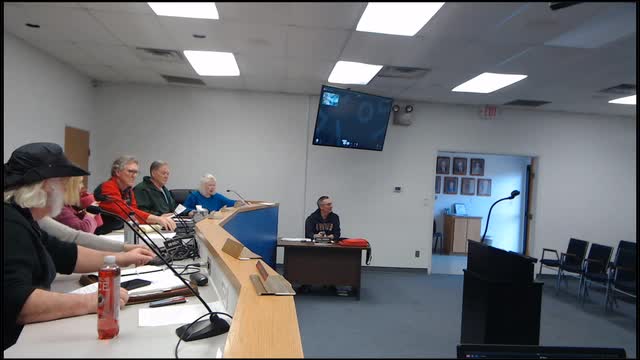
Lago Vista charter review committee agrees to start with editorial cleanup, set next meeting for Feb. 5
Summary
The Lago Vista Charter Review Committee voted unanimously to focus first on non‑substantive, editorial cleanup of the city charter and to prepare a cleaned, version‑controlled draft for subsequent substantive amendments; staff will set up shared document access and a single incoming email for public feedback.
The Lago Vista Charter Review Committee voted to begin its work with an editorial cleanup of the city charter and to review Articles 1 and 2 at its next meeting on Feb. 5.
Committee members decided the initial effort will focus on standardizing language, adding a definitions section, fixing typographical and formatting inconsistencies, and establishing a single, version‑controlled draft the group can use as a baseline for later substantive proposals.
Why it matters: committee members and the city attorney said inconsistencies in wording and undefined terms across the charter — for example, multiple ways of referring to residents and different labels for meeting types — make the document harder for voters and officials to read and may create confusion when drafting ballot propositions. Members argued an early pass to correct non‑substantive issues will make later, substantive debates more productive.
At the meeting the city attorney reviewed how past charter review efforts were presented publicly and flagged relevant state law: amendments put before voters after the initial charter typically must be presented as single‑subject propositions consistent with Texas law (discussed in the meeting as Tex. Gov't Code §9.004). The committee noted an inconsistency in the current charter’s Section 11.18 and agreed to ask the city attorney for a legal determination on how the charter language aligns with state requirements.
Committee process and next steps: members agreed the person who volunteers to prepare a consolidated redline will circulate it to the group and that Tracy (committee member) will serve as the central recipient for edits so a single master document can be maintained. The committee expressed a preference that one e‑mail address receive public feedback so all members and the two liaisons receive the same communications simultaneously. Staff said the city can support shared documents through its Microsoft cloud services (OneDrive/SharePoint) and will pursue a collaboration workflow with IT.
Version control and ballot planning: the group agreed on a two‑stage approach. First, publish and lock a cleaned, annotated draft that corrects scrivener’s errors and standardizes defined terms (the committee views that as a single subject for voters). Second, prepare separate, subject‑specific amendments for substantive issues (residency definitions, budget procedure, whistleblower provisions and other items), so each may stand alone on the ballot if required by state rules. Committee members asked staff to confirm with the city attorney whether multiple changes to the same Article may be combined under one proposition or must be separated into single subjects.
Transparency measures: members asked that the consolidated redline include change comments explaining the rationale and source of each edit (for example, “suggested by council member X” or “technical cleanup”). The committee also discussed keeping all historic versions accessible for public review while using the latest master copy for active drafting.
Meeting cadence and public engagement: the committee affirmed a regular meeting cadence of the first and third Wednesdays and scheduled the next meeting for Feb. 5 to review non‑substantive changes in Articles 1 and 2. Members agreed to solicit public input via the single email address and the council message board; staff will report back on whether the council message board or the new email will be the preferred public channel for citizen feedback.
Votes at a glance: the committee made one formal motion that was approved: to focus the Feb. 5 meeting on non‑substantive cleanup and on Articles 1 and 2. (See Actions below for motion details.)
Ending: committee members and staff said they will circulate the consolidated redline as it is developed, bring legal questions about single‑subject requirements back from the city attorney, and prepare a publicly accessible change log for council and voters as the committee moves from cleanup to substantive proposals.