Get Full Government Meeting Transcripts, Videos, & Alerts Forever!
Get email alerts on the Workforce Health topic
No spam. Unsubscribe anytime.
SFFD expands recruitment and wellness programs; pilots nutrition and station‑environment studies
Summary
Deputy administration staff reported new recruitment outreach, a switch to the FCTC test for candidates, an annual wellness‑exam program, a nutrition trial and a pilot to place environmental sensors in two stations to study cancer risk factors.
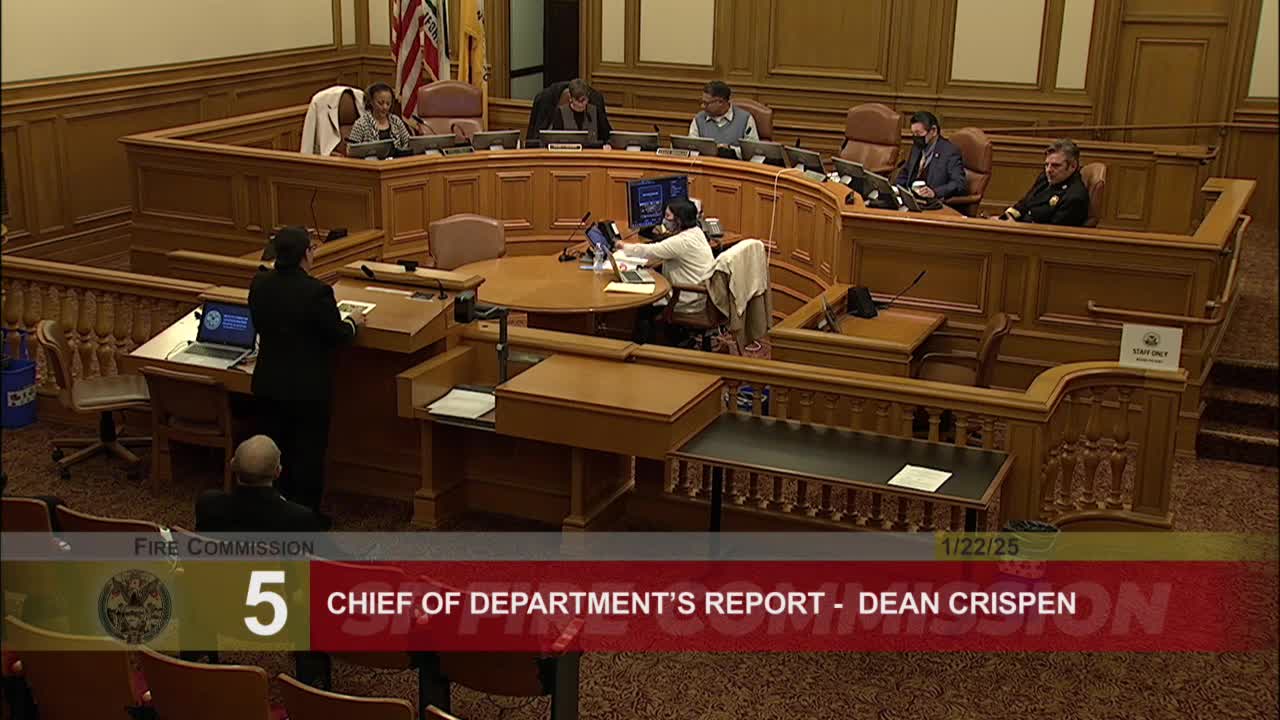
Deputy Chief of Administration (presentation recorded by department staff) reported on administrative activities including recruitment, training, health and safety and facilities at the Jan. 22 Fire Commission meeting.
The department has transitioned candidate testing to the FCTC exam and is offering preparatory classes and outreach through City College, affinity groups and community committees; the department reported that 54 recruits began the latest academy. Recruitment efforts included career fairs and targeted outreach to affinity groups, including a United Fire Service Women program.
On wellness, Battalion Chief Matt Alba and the Health & Safety Unit are piloting two studies: (1) a randomized nutrition study enrolling volunteer firefighters to compare a meat‑and‑dairy diet with a plant‑based diet, and (2) a station environmental study deploying six sensors in each of two pilot stations (Station 2 in Chinatown and Station 5 on Webster) to measure indoor environmental quality and develop interventions to reduce cancer risk. Alba also presented a new annual wellness exam program (effective Jan. 1, 2025) that allows members to have a confidential physical with their primary care provider and upload verification via the department portal; the program includes a December 31, 2025 completion target for participants.
The behavioral health unit rolled out a wellness app with growing usage and reported 440 contacts and about 850 hours of service in the first year of tracking. Other efforts included melanoma checks, discounted full‑body MRI screening access for some members and an occupational health coordination effort with ZSFG. Investigative Services Bureau and Support Services updates noted background checks for the 135th class and improvements to station facilities, including completed generator installations and a security gate at Station 35.
Commissioners asked for anonymized outcomes data from health screenings and pilot programs; department staff said they would return information as it becomes available. The department emphasized incentive and outreach strategies to increase participation in wellness services.