Get Full Government Meeting Transcripts, Videos, & Alerts Forever!
Get email alerts on the Groundwater Protection topic
No spam. Unsubscribe anytime.
Tacoma staff give progress report on South Tacoma Groundwater Protection District code update
Summary
City planning staff and consultants reported technical findings and next steps for updating the South Tacoma Groundwater Protection District overlay, stressing continued protections for the district, alignment with state CARA mapping, and upcoming community engagement and review milestones.
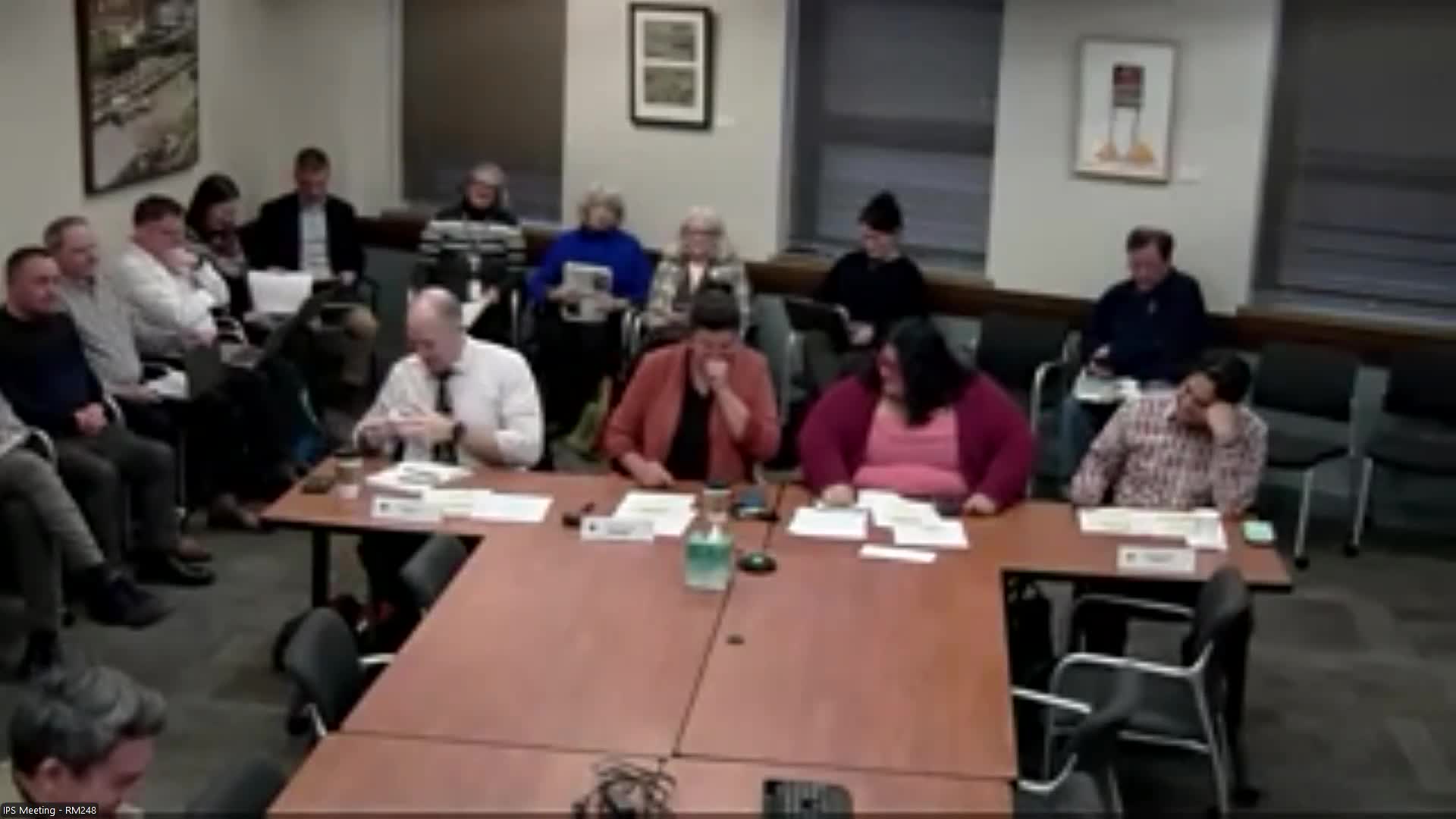
City planning staff on Wednesday presented a progress report to the Infrastructure Planning and Sustainability Committee on proposed updates to the South Tacoma Groundwater Protection District (STGPD) code, a critical-area overlay created to protect Tacoma’s drinking water sources.
The presentation, led by Miriam Moynihan of the Long Range Planning team with technical detail from HDR and TerraPhase consultants, outlined initial findings, recommended refinements to district boundaries and protections, and a timeline for public outreach and formal review. Staff said the work is driven by state requirements to periodically review critical-area regulations and by local technical studies including best-available science reviews.
Moynihan said the STGPD — established in 1988 — is one of Tacoma’s designated critical aquifer recharge areas and that state law requires jurisdictions to review critical areas regulations at least every 10 years. Jeff Hanson, project manager for HDR, summarized regulatory drivers including the Growth Management Act and wellhead protection guidance and said the update must be grounded in best-available science. John Hildenbrand of TerraPhase described geological mapping and contamination history that informed the team’s recommendations.
Consultants reported three key technical conclusions: (1) the current STGPD overlay remains an effective protective tool for Tacoma’s primary well field and should be retained; (2) the city’s critical-aquifer-recharge-area mapping should be adjusted so municipal CARA boundaries align with broader sole-source aquifer and well-protection area mapping; and (3) the code should better differentiate protections and allowed uses based on geologic vulnerability within and beyond the overlay.
Hildenbrand and Hanson explained that the STGPD covers a small portion of the larger Chambers–Clover Creek sole-source aquifer and that recharge and contamination risks cross municipal boundaries. They recommended coordination with neighboring jurisdictions and water utilities to address shared risks. Consultants also benchmarked Tacoma’s prohibited and conditional “high-impact” uses — such as scrap metal and salvage yards and certain storage tanks — against other jurisdictions and found Tacoma’s standards largely in line with peers but suggested refinements in light of updated mapping and vulnerability classifications.
Stormwater infiltration and impervious-surface rules were highlighted as a central technical area. Steve Hitch of HDR reviewed treatment and infiltration approaches, including treatment levels tied to land-use risk (residential vs. industrial), and noted trade-offs between protecting groundwater quality and maintaining recharge. The team advised that enhanced treatment practices be considered for higher-risk areas and that decisions be informed by localized hydrogeologic mapping.
Moynihan outlined outreach to date — including more than 50 meetings last year with the city, advisory committees, neighborhood groups, businesses and the public — and a schedule that anticipates additional public events between Feb. 20 and March 1, planning commission review in March, and a planning-commission public hearing in May. Staff aims to return to city council with a draft code and planning commission recommendation by June and to seek adoption by September, contingent on the moratorium-extension process discussed separately.
Public commenters raised groundwater protection concerns before the staff presentation. Jennifer Adams asked about protection from external influences and climate change; Tom (a resident) and Esther Day urged stronger protections for the South Tacoma groundwater area, including limiting dumping and underground storage tanks. Moynihan and consultants acknowledged those concerns and said they informed outreach and the health-impact assessment now underway with Tacoma–Pierce County Health Department.
Next steps identified by staff include finalizing the health-impact-assessment recommendations, refining CARA mapping to align with state guidance and the Chambers–Clover Creek sole-source aquifer boundary, and drafting code amendments that preserve the STGPD overlay while tailoring standards to geologic vulnerability and land-use risk. Staff said they will seek additional technical analyses where needed and will coordinate with water utilities, the health department and neighboring jurisdictions.
The committee did not take formal action on the draft code at the meeting; members asked technical questions and directed staff to continue outreach and return with the draft code and planning-commission recommendation later in the spring.