Get Full Government Meeting Transcripts, Videos, & Alerts Forever!
Get email alerts on the Cte Funding topic
No spam. Unsubscribe anytime.
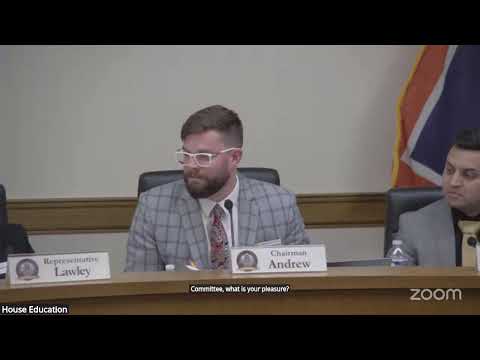
Education committee narrows CTE funds to supplies and makes grant automatic; districts urge caution
Summary
House Bill 235 was advanced with amendments that make high‑school CTE supplies and materials a categorical automatic grant; district finance officers warned the change could reduce flexibility for equipment cycles and middle‑school CTE.
The House Education Committee on Jan. 22 advanced House Bill 235, which makes funds intended for high‑school career and technical education (CTE) supplies and materials a categorical appropriation and, by amendment, converts the current block‑grant allocation into an automatic grant to districts.
The bill's sponsor told the committee the measure moves the CTE supplies component out of a broader block grant and clarifies that the funding is to be spent only on CTE supplies and materials for grades 9–12. Two amendments were adopted and explained to the committee: one incorporates language from House Bill 18 regarding additional small‑district funding and the other makes the supplies/materials grant automatic so districts do not need to apply each year. The bill as amended also allows districts to carry funds forward to save for larger purchases rather than requiring immediate expenditure.
School finance officials and district representatives urged caution. Brian Farmer of the Wyoming School Boards Association and Jed Ciccarelli, chief financial officer for Laramie County School District No. 1, told the committee that the current block grant model provides helpful flexibility. Ciccarelli said many CTE programs have cyclical costs — for example, saving for a high‑cost welding plasma cutter or electrical upgrades — and some costs are recorded as purchase services or maintenance rather than "supplies" in accounting terms, which could be excluded under a narrow definition. Farmer warned that narrowing the allowed uses and restricting middle‑school CTE (the statute and this bill focus on grades 9–12) could unintentionally eliminate funding for important junior‑high programs.
Representatives from community colleges and business groups voiced support for strengthening CTE funding. Erin Taylor of the Wyoming Association of Community College Trustees said the association supports the bill's focus on CTE; Renny McKay of the Wyoming Business Alliance and Dan Benford of the Associated General Contractors told the committee that workforce needs create strong demand for better CTE resources and that business leaders want clarity about how CTE funds are used.
The Department of Education told the committee it supported the bill with the amendments, saying the changes clarified intent and removed application burden for districts. After debate the committee voted to report HB235 do pass as amended. The roll call recorded eight ayes and one no (Representative Singh), and the bill will proceed to the next legislative steps.