Get Full Government Meeting Transcripts, Videos, & Alerts Forever!
Get email alerts on the Education Savings Accounts topic
No spam. Unsubscribe anytime.
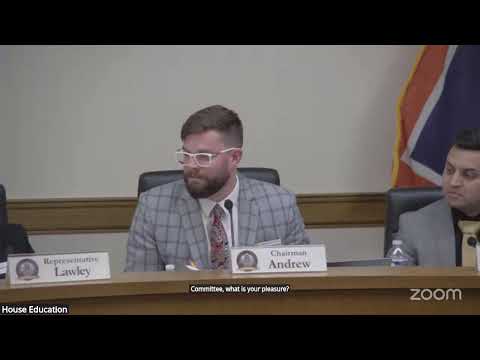
Committee advances bill to expand education savings accounts, debate centers on funding and accountability
Summary
House Bill 199 would expand Wyoming's Education Savings Account program to universal eligibility, create a dedicated funding mechanism using mineral royalties and seek a $50 million initial appropriation; the Education Committee advanced the bill after extensive public comment and debate over fiscal impact and accountability measures.
House Bill 199, the Wyoming Freedom Scholarship Act, received committee approval Jan. 22 after extended testimony and debate over funding sources, accountability and program design.
The bill's sponsor told the House Education Committee the proposal would make the state's Education Savings Account (ESA) program universal for K–12 students, change the funding mechanism to divert a portion of federal mineral royalty revenue into a dedicated Freedom Scholarship account, and authorize an initial appropriation of $50 million to seed the account. The sponsor said the bill would remove the program's previous income cap (150% of the federal poverty level), eliminate the current kindergarten eligibility carve‑out, make provider registration voluntary rather than mandatory, and remove a statutory requirement for nationally normed student assessments.
Officials from the Department of Education, speaking on behalf of State Superintendent Megan Degenfelder, said the superintendent supports school choice and making the program more meaningful with higher per‑student allowances. The department urged the committee to retain an assessment requirement to allow future evaluation of student outcomes, to preserve a targeted pre‑K component for low‑income families, and to keep some form of provider certification for consumer protection and to support an online vendor marketplace the department is building.
Public testimony was sharply divided. Opponents — including teachers, local school board officials and the Wyoming Education Association — warned the proposal would siphon tens of millions of dollars from the School Foundation Program, threaten programs such as CTE, arts and services for students with special needs and English learners, and increase the risk of waste, fraud and abuse. Brian Farmer of the Wyoming School Boards Association pointed to the bill's fiscal note and testified the program could cost about $44–45 million per year, which would reduce the School Foundation Program balance and could create a structural deficit when combined with other revenue reductions.
Supporters, including national and state education‑choice advocates, said ESAs increase parental control, create options for families in rural and urban areas, and cited research and polling indicating public support. Aaron Gillum of EdChoice presented polling results showing a majority of Wyoming respondents favor ESAs and argued that states with active choice programs have not experienced the budget crises critics predicted.
Committee members debated amendments. A motion to reinsert a statutory requirement that ESA students take a nationally normed assessment was offered and debated; the transcript records that the amendment failed on a tie vote. The Department of Education had urged the committee to retain assessment and certification language; some committee members said including those provisions would help address constituent concerns about accountability. Members also discussed provider certification language; the committee considered a motion to reinstate certification requirements, which was moved and seconded during the hearing (the transcript shows the motion on the record but does not include a roll‑call result for that amendment before the committee advanced the bill).
The committee voted to recommend House Bill 199 do pass. The motion to report the bill out of committee was made by Representative Strausch and seconded by Representative Kelly. The roll call recorded nine ayes and the bill advanced from committee. The bill will be referred to the appropriations process for the proposed seed appropriation and any ongoing fiscal effects.