Get Full Government Meeting Transcripts, Videos, & Alerts Forever!
Get email alerts on the Water Infrastructure topic
No spam. Unsubscribe anytime.
Tamarac approves citywide smart‑meter program to detect leaks, automate billing
Summary
The City Commission voted 5–0 to award a roughly $8.9 million contract for an advanced metering infrastructure project, citing estimated annual savings from reduced water loss and a required leak‑detection program for the region. Staff said a budget amendment will be needed to cover contingency and implementation costs.
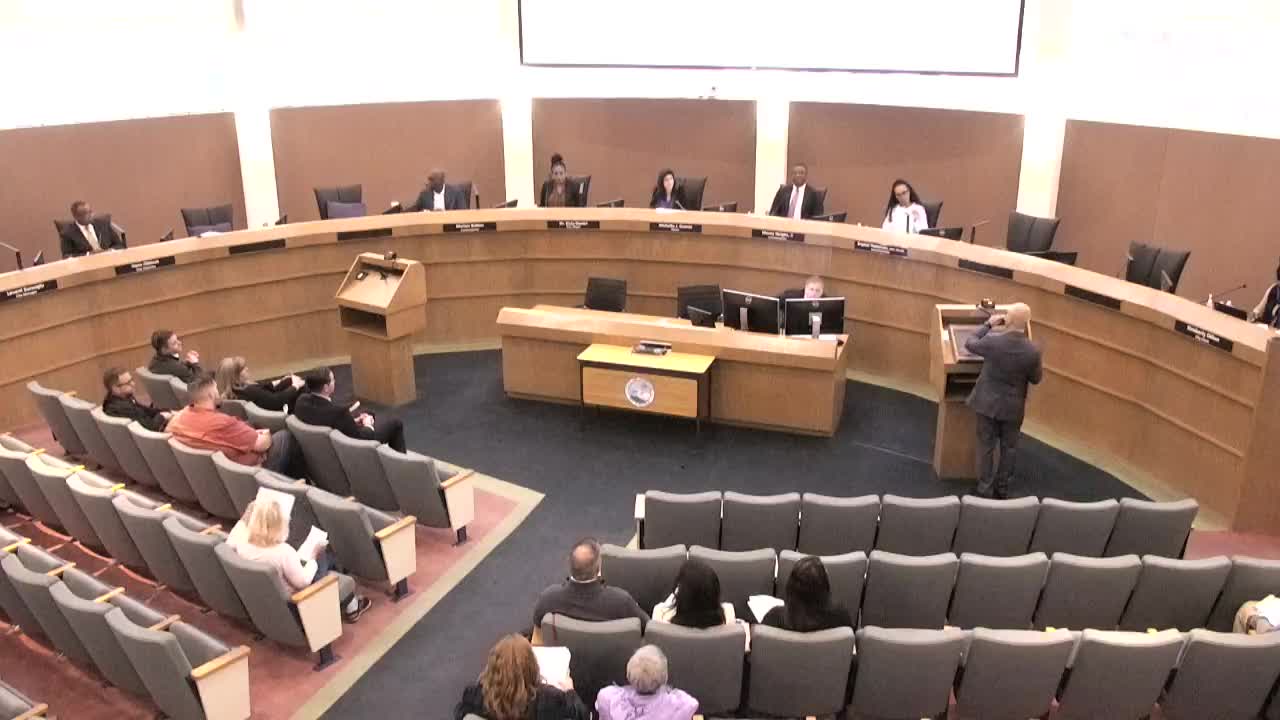
The Tamarac City Commission voted 5–0 on Jan. 22 to approve a contract for a citywide advanced metering infrastructure (AMI) program from Fortiline Waterworks and Camstrup meters, a project staff said will replace about 21,000 mechanical water meters, add automated reads and leak detection, and provide a customer portal for real‑time usage data.
City staff said the agreement will modernize the utility system and help the city find and stop water losses the city currently estimates at 9–10% of distributed water. "We're estimating about 9 to 10% loss of water, on average per month. That's equates to 200,000,000 gallons per year," Public Services Director Mustafa Alpilsam said during the presentation. He also gave an overall project timeline of about 774 calendar days.
Why it matters: Staff told the commission the meters will provide more accurate billing, faster identification of household and distribution leaks, and a web/smartphone portal for customers. The city manager said the project could also free or repurpose staff who now read meters manually. The city is in a region regulated by the South Florida Management District; staff told commissioners that reaching or exceeding a 10% loss threshold creates regulatory obligations for leak‑detection systems.
Project scope and cost: The city attorney read the resolution title as authorizing expenditures not to exceed $8,975,352.60 and adding 3% contingency to reach a figure the attorney read as $9,244,613.18. Staff described the core project cost as about $8.9 million, said $8.5 million is currently budgeted in the utilities CIP and that a budget amendment would be presented to cover the shortfall. Alpilsam said staff initially estimated requesting about $475,000 in additional funding but later told the commission that, including the 3% contingency, the amendment would be larger — "if you add the 3% contingency, it will be 700 and $7.40. $7.44," he said, and that staff would present the final amendment to finance for approval.
Annual operating and software costs: Assistant Director of Utilities Earl Henry broke down recurring service costs staff expects to pay after installation: a customer portal fee of $26,945 per year, AMI hosting at about $34,000 per year, and leak‑detection software at roughly $87,000 per year. Henry said staff will work with IT to integrate the AMI hosting and portal with the city billing system.
Accuracy and vendor information: Richie Dixon, East Coast sales director for Camstrup, the meter manufacturer, described meter accuracy and field performance: "The accuracy that we have at Camstrup is 0.01 gallons," he said, adding Camstrup's national return rate is about 0.05% across more than 2 million deployed meters. Staff said the city intends to piggyback under a Town of Malone contract with Fortiline as the distributor and Camstrup as the meter manufacturer.
Timeline and rollout: Staff described a phased deployment: vendor and city pre‑deployment checks, a limited deployment to validate antennas and communications, followed by mass meter installation, final testing and project closeout. Alpilsam told the commission the full project will take roughly two years.
Funding source and next steps: Staff told the commission the project is funded from the Utilities enterprise fund, not the general fund. The commission passed the resolution 5–0 (motion by Commissioner Wright; second by Commissioner Patterson). City staff said they will return with a formal budget amendment to cover the difference between existing CIP funds and the total project cost including contingency, and will begin vendor pre‑deployment and public outreach if the amendment is approved.
What commissioners asked: Commissioners pressed staff on whether the meters would resolve resident overbilling complaints and on recurring costs. Alpilsam said automation will reduce estimated reads and billing corrections that occur when crews must estimate usage; Henry provided the annual software/hosting figures. Commissioners also asked about customer notification, public education and how residents would opt into alerts; staff said the portal will integrate with existing billing contact information and that the vendor and city will prepare a communications toolkit and door‑tag/notification program.
Ending: The project team and vendor told the commission they will work with the city's communications staff on an outreach plan and integrate the AMI portal with current billing data so residents can receive alerts. The commission's approval authorizes staff to execute the agreement and start implementation steps; the requested budget amendment will come back to commission for formal approval before full deployment.