Get Full Government Meeting Transcripts, Videos, & Alerts Forever!
Get email alerts on the Procurement Water Sewer topic
No spam. Unsubscribe anytime.
Committee raises bid threshold for water and sewer districts to $75,000 to streamline small construction projects
Summary
Senate File 46 would increase the statutory competitive-bid threshold for water and sewer districts from $30,000 to $75,000. The committee approved the change after testimony from the Wyoming Association of Rural Water Systems, which said many district projects fall within the raised threshold.
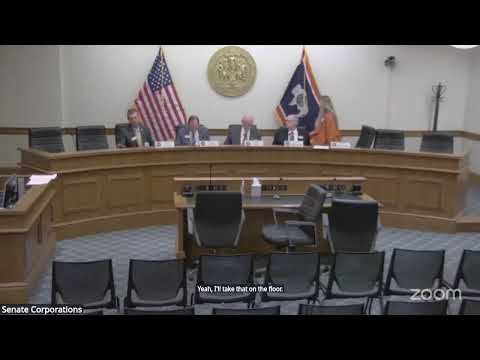
The Senate Corporations, Elections & Political Subdivisions Committee voted to approve Senate File 46, a bill that raises the construction bid threshold for water and sewer districts from $30,000 to $75,000, following testimony that inflation and administrative timeframes make the current level onerous for small infrastructure projects.
Senator Landon, a co-sponsor, and Senator Bonar introduced the measure and said it mirrors a recent municipal adjustment and would help special districts complete a larger number of small projects without the delay and expense of formal bids. Mark Pepper, executive director of the Wyoming Association of Rural Water Systems, told the committee that the association represents more than 220 special districts and that many necessary projects fall into the $30,000–$75,000 range. "Raising it to $75,000 will reduce administrative delay and allow timely work on small construction projects," Pepper said.
Committee members noted the measure aligns local procurement limits with changing construction costs and the experience of municipalities that saw similar changes in recent years. No opposition testimony was recorded at the hearing. Senator Bonar moved the bill; the committee recorded four ayes and one no in roll call and reported the bill to the floor.
The change would reduce the number of projects that must be advertised and bid formally and is intended to accelerate small repair and improvement projects for systems serving rural areas.