Get Full Government Meeting Transcripts, Videos, & Alerts Forever!
Get email alerts on the Negligent Investigation topic
No spam. Unsubscribe anytime.
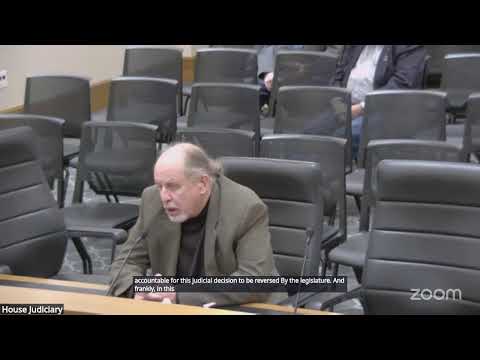
Judiciary hears bill to abrogate Wyoming Supreme Court ruling that recognized duty in negligent investigations
Summary
House Bill 53 would overturn a recent Wyoming Supreme Court ruling (the Briggs decision) that recognized a common-law duty for investigating officers to suspects; law enforcement and civil-rights attorneys testified with sharply different views; no committee vote was taken.
CHEYENNE — The House Judiciary Committee on Monday heard testimony on House Bill 53, which would abrogate a 2024 Wyoming Supreme Court ruling known in committee discussion as the Briggs decision. The decision, the committee was told, recognized a common-law duty for investigating peace officers to investigate non-negligently in a way that the bill’s backers say should be set by the legislature rather than created by the courts.
Chairman Wieschmidt summarized the legal concern: the supreme court’s split ruling created a duty between an investigating officer and a suspect that some committee members and law enforcement officials say is unique among states and raises practical concerns for investigators and prosecutors.
Alan Thompson, executive director of the Wyoming Association of Sheriffs and Chiefs of Police, told the committee the ruling “puts law enforcement into a situation that we are just not familiar with and haven't been familiar with in the past,” arguing the decision could chill investigations and expose officers to novel lawsuits. Thompson said the shift has already appeared in litigation filings and warned of consequences for small or rural agencies.
Opposing speakers argued HB 53 would remove an important accountability avenue for people harmed by negligent police investigation. Mark Aronowitz, director of Lawyers and Advocates for Wyoming, described the Governmental Claims Act’s purpose as balancing citizens’ rights and taxpayers and said the Briggs decision preserved a manageable path for claims: allowing negligent-investigation claims does not guarantee plaintiffs win but permits courts to address whether officers breached a reasonable standard. “There shouldn't be a pass given here for negligent investigating,” Aronowitz told the committee.
Attorney Robert Moxley told a detailed story of a client he said was wrongly arrested after investigators used a stolen ID and failed to review available video evidence; Moxley said officers brought charges, the client was arrested later, and her mugshot was publicly released, harming her reputation and causing post-traumatic stress. “My client’s life has been ruined,” Moxley said, citing the sequence he described as gross negligence.
Committee members probed legal doctrine, foreseeability and the practical interplay among investigative actions, prosecutors’ charging decisions and judicial outcomes. Witnesses discussed qualified immunity, statutory limits under the Wyoming Governmental Claims Act and the difference between criminal liability, civil torts and internal agency remedies.
No committee vote was taken on House Bill 53 at the hearing. Chairman Wieschmidt closed public comment and indicated the committee would reconvene on Friday, leaving the bill’s future undecided pending further review and possible drafting work.
Key points: HB 53 seeks to abrogate the Wyoming Supreme Court decision that recognized a duty for investigating officers; law enforcement warned of chilling effects on investigations and litigation burdens; civil-justice advocates and private attorneys urged retaining court-created accountability for negligent investigative conduct.