Get Full Government Meeting Transcripts, Videos, & Alerts Forever!
Get email alerts on the Blood Supply Directed Donations topic
No spam. Unsubscribe anytime.
Committee advances bill to codify autologous and directed blood donations after mixed testimony
Summary
The House Labor, Health & Social Services Committee advanced House Bill 135, which would codify autologous and directed blood donations in state law; hospitals and the American Red Cross testified about logistical, safety and supply concerns.
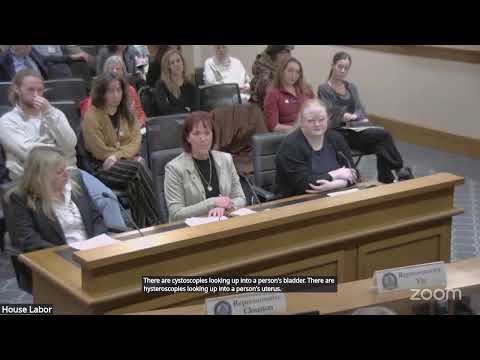
The House Labor, Health & Social Services Committee voted to advance House Bill 135, a measure to codify autologous (self-donated) and directed blood donations, after hearing testimony from hospital representatives and blood‑supply professionals.
Supporters and opponents agreed the practice already occurs in Wyoming but differed over whether a statute is necessary. Representative Heft moved the bill; Representative Guggenmoss seconded. The committee clerk recorded the committee result as "6 I to no and 1 excused," and the chair announced the bill passed out of committee.
Proponents, including Eric Boley of the Wyoming Hospital Association, told the committee hospitals generally permit directed donations but said the practice is uncommon and logistically difficult. Boley said smaller hospitals often lack the equipment and cited a hospital estimate that setting up in‑house directed donation capability could run "at least $60,000." He also emphasized that most hospitals rely on external blood suppliers such as Vitalant for inventory and that units collected for one patient can go unused.
"We already allow direct blood donation for oneself in our facilities," Boley told the committee, adding that the supply chain and equipment are the main constraints.
Representatives of blood‑collection organizations urged caution. Doctor Cole Elliott, medical director for Wyoming for the American Red Cross, told the committee he opposes the bill not because he opposes autologous or directed donations but because the measure is unnecessary and could interfere with existing safeguards. Elliott said directed units are not inherently safer than volunteer donations and that hospital blood banks must independently verify compatibility and safety before transfusion. He also warned that directed donations from close relatives sometimes must be irradiated to prevent graft‑versus‑host disease and that smaller hospitals may not be equipped to receive, process or safely use such units.
"The bill is not needed to provide these blood products," Elliott said, adding that "directed donations are not safer than those from the volunteer donor community."
Committee discussion noted the practice is already occurring under hospital policies and that blood suppliers are central to making directed donations available. No amendments were adopted during the committee consideration. The sponsor was instructed to carry the bill to the floor when the legislature next convenes.
The committee's action leaves the practice available in statute but does not change hospital operational reliance on external suppliers or address the equipment and clinical staffing gaps named by witnesses.
Votes at a glance: House Bill 135 — Committee motion moved by Representative Heft, seconded by Representative Guggenmoss; clerk recorded the committee result as "6 I to no and 1 excused."