Get Full Government Meeting Transcripts, Videos, & Alerts Forever!
Get email alerts on the Traffic Safety Speed Cameras topic
No spam. Unsubscribe anytime.
Richmond committee approves ordinance allowing photo speed monitoring; study of additional sites continued to March
Summary
The Land Use, Housing and Transportation Standing Committee voted to forward an ordinance changing city code to allow photo speed monitoring devices in work zones and school crossings and recommended a separate resolution asking the administration to study additional high-risk locations be continued to the March meeting for a fuller report.
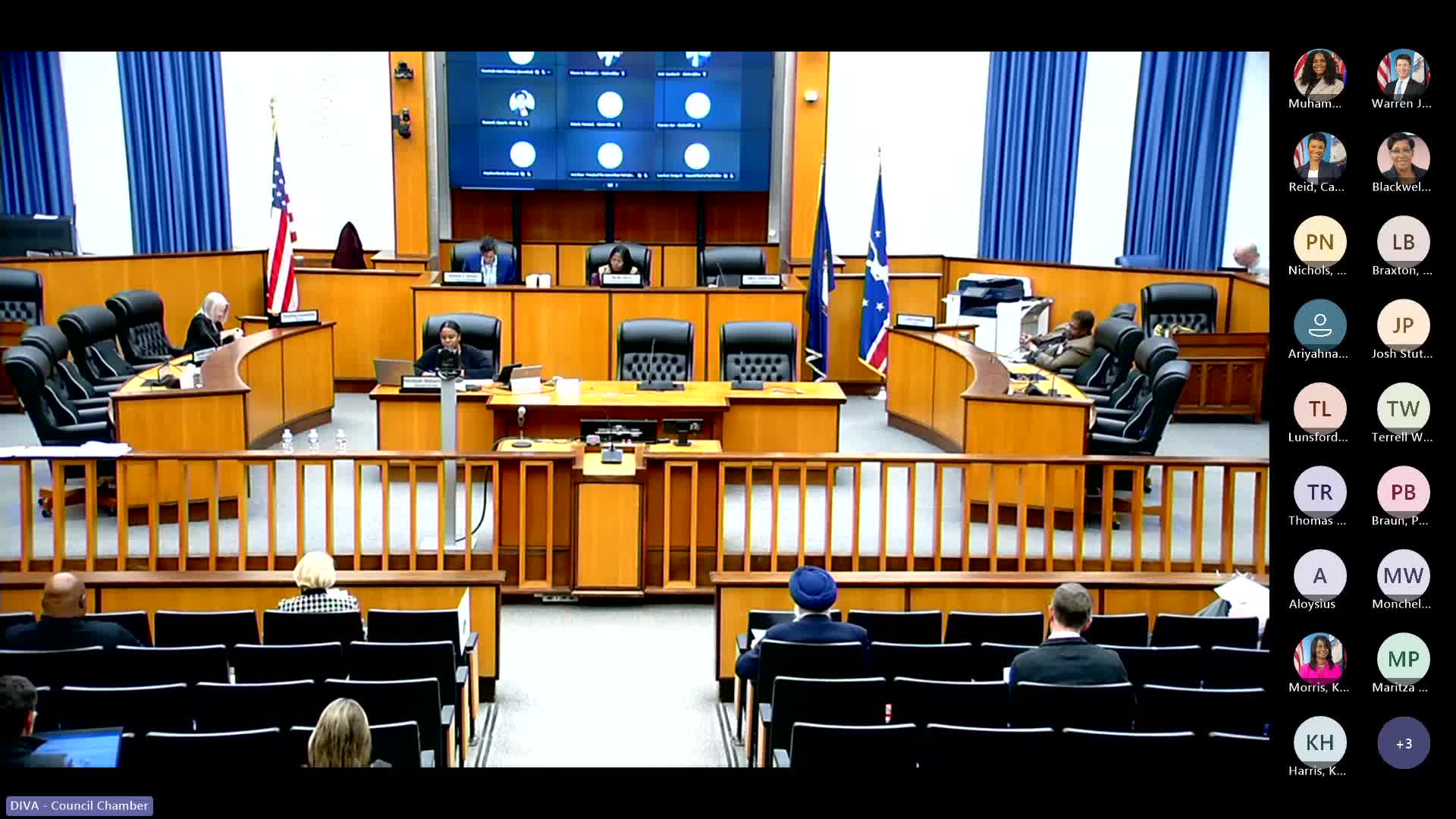
The Richmond City Land Use, Housing and Transportation Standing Committee on a voice vote recommended approval of an ordinance to amend city code to allow use of photo speed monitoring devices in highway work zones and school crossing zones and forwarded a resolution asking the administration to study additional locations for such devices to a March meeting for more detail.
The ordinance, numbered 2024-317, would add high-risk intersection segments authorized by the Virginia Code to the places where the city can install automated speed enforcement. Councilor Liz Lynch, who sponsored the papers, said the resolution is intended to "be thoughtful and planful" about placement and public engagement after changes in state law allowed cameras within 1,000 feet of a fatality on the high injury network.
The nut of the measure was procedural: the ordinance would amend City Code to permit the devices; the companion resolution would ask the CAO and departments to identify and study additional candidate locations, including the 600 and 700 blocks of South Belvedere Street, and report back to council. Lynch said the study would include criteria such as fatalities, high-injury intersections and proximity to schools.
Public commenters and staff highlighted operational constraints. Ronnie Armstead, speaking during the public hearing as a commenter, urged caution about workforce implications and said the police unit currently managing automated enforcement is limited. "We got 1 full time officer and 4 part time officers working 26 cameras," Armstead said, adding the unit has processed about "almost 65,000 tickets and violations and warnings" to date and that enforcement workload would grow with more cameras. He added, "Some of these cameras pay for themselves. They just don't pay the manpower." The committee asked staff to include manpower and cost estimates in the study for upcoming budget discussions.
Bobby Vincent, director of public works, told the committee the city and VDOT already maintain crash and high-injury-network data and could assemble prioritization recommendations quickly. "We do have the data," Vincent said, and he offered a target timeline of about 30 to 45 days to produce recommended locations and a prioritized list the committee could review.
On the motions, the committee voted to forward ordinance 2024-317 to counsel with a recommendation to approve (Mr. Brenton — Aye; Vice Chair Robertson — Aye; Chair Jones — Aye). For resolution 2024 R041, the committee voted to continue consideration to the March Land Use committee meeting and requested an administration report to accompany that presentation (Mr. Brenton — Aye; Vice Chair Robertson — Aye; Chair Jones — Aye).
The committee emphasized the distinction between directing a study and mandating installation: passage of the resolution would not automatically authorize cameras at any specific site. Council members repeatedly noted that a study could help ensure equitable and data-driven placement of devices and asked that any report include cost and staffing implications for the police department.
Committee members said they expect the administration to return in March with prioritized candidate locations, cost estimates and community engagement recommendations so council can consider funding during the budget process.
Votes at the committee stage do not themselves install cameras; they forward the ordinance and set expectations for the study and budgeting steps that would follow if council and the administration proceed.