Get Full Government Meeting Transcripts, Videos, & Alerts Forever!
Get email alerts on the Working Connections topic
No spam. Unsubscribe anytime.
Childcare subsidy enrollment climbs after eligibility and rate reforms; agency outlines shift to cost‑of‑quality rates
Summary
DCYF told the Senate Ways & Means Committee that Working Connections Child Care participation is near recent highs after eligibility expansions and reduced family co‑pays; DCYF described efforts to move from a market‑rate subsidy to a true cost‑of‑quality model and to expand provider participation in the Early Achievers quality system.
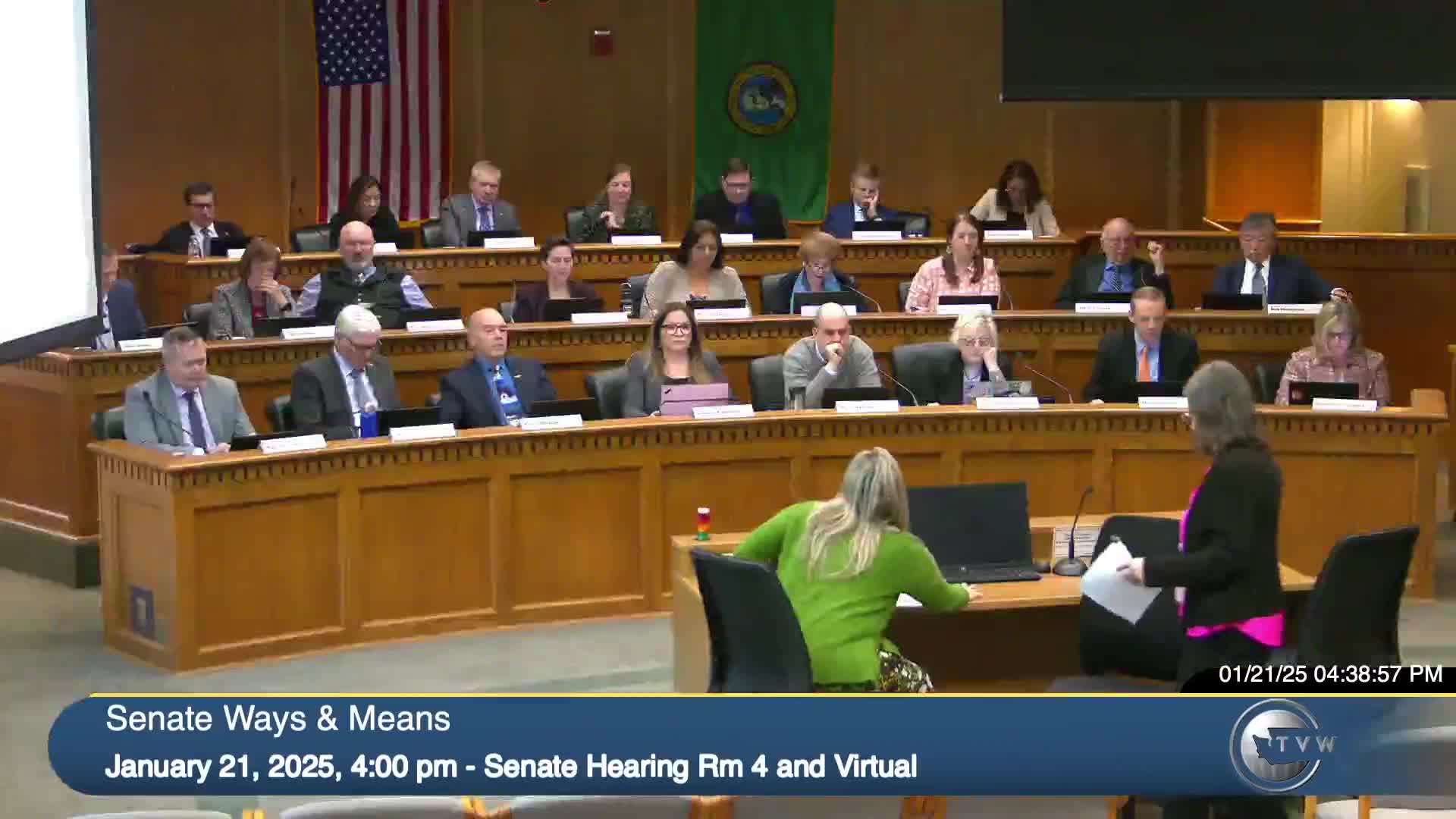
DCYF staff on Jan. 21 told the Senate Ways & Means Committee that the state’s Working Connections Child Care (WCC) subsidy caseload and paid‑case counts are at their highest levels in recent years following eligibility expansions and reduced family co‑payments enacted under the Fair Start for Kids Act.
Assistant Secretary Nicole Rose and Director Alison Kreutzinger said WCC currently serves more than 54,000 children in paid cases per month and that statewide subsidy utilization (the share of potentially eligible families receiving subsidy) has risen from under 12% in 2021 to nearly 17.5% more recently. DCYF attributed the increase to expanded eligibility (currently up to 60% of state median income, with a planned income expansion to 75% in July 2025), more generous reimbursement rates and lower family co‑pays (now targeted at 0–6% of income under state policy, meeting federal rules that families pay no more than 7%).
DCYF also outlined quality and provider supports. Participation in Early Achievers, the state quality‑rating and improvement system, has increased; DCYF said nearly 5,000 providers participate and most participating programs are rated at level 3 or higher. DCYF noted tiered‑reimbursement structures and quality improvement awards are available to help providers upgrade quality, and that participation or minimum ratings are required to receive state subsidies or ECAP contracts.
On rate methodology, DCYF described ongoing work to replace a market‑rate survey approach with a true cost‑of‑quality model that builds rates from provider cost inputs (wages, utilities, curriculum, etc.). Officials said a comparative cost‑of‑quality model was completed in 2024 and that a small number of other jurisdictions nationally have federal approval to move from market‑rate surveys to cost‑of‑quality rate setting; DCYF said it is developing an implementation plan as contemplated by state law.
DCYF acknowledged remaining operational challenges. Officials said licensed provider counts and licensed capacity have grown modestly since 2020 but that licensed capacity is a different measure than daily enrollment or vacancy; state data captures licensed capacity but not daily vacancies. DCYF also reported under‑utilization in ECAP contracted slots in some areas and cited staffing and rate realities as contributing factors.
Senators asked practical questions: whether families can hold dual enrollments in ECAP and WCC (DCYF said dual enrollment sometimes occurs, for example to extend hours beyond a part‑day ECAP slot), and whether the programs have a centralized eligibility system (agencies said systems do not currently interoperate to provide a single eligibility verification for all programs). DCYF and OSPI agreed to provide additional data (for example, on dual‑enrollment counts and regional slot utilization) in follow‑up materials.