Get Full Government Meeting Transcripts, Videos, & Alerts Forever!
Get email alerts on the Public Safety topic
No spam. Unsubscribe anytime.
Police describe loud-music response as priority-3 calls; emergency alerts streamlined but residents urged to update contact info
Summary
The Garland City Council received an update on Jan. 21 that loud-music complaints are handled as priority‑3 calls, with a typical police response time of 13–15 minutes and about 5,000 calls a year.
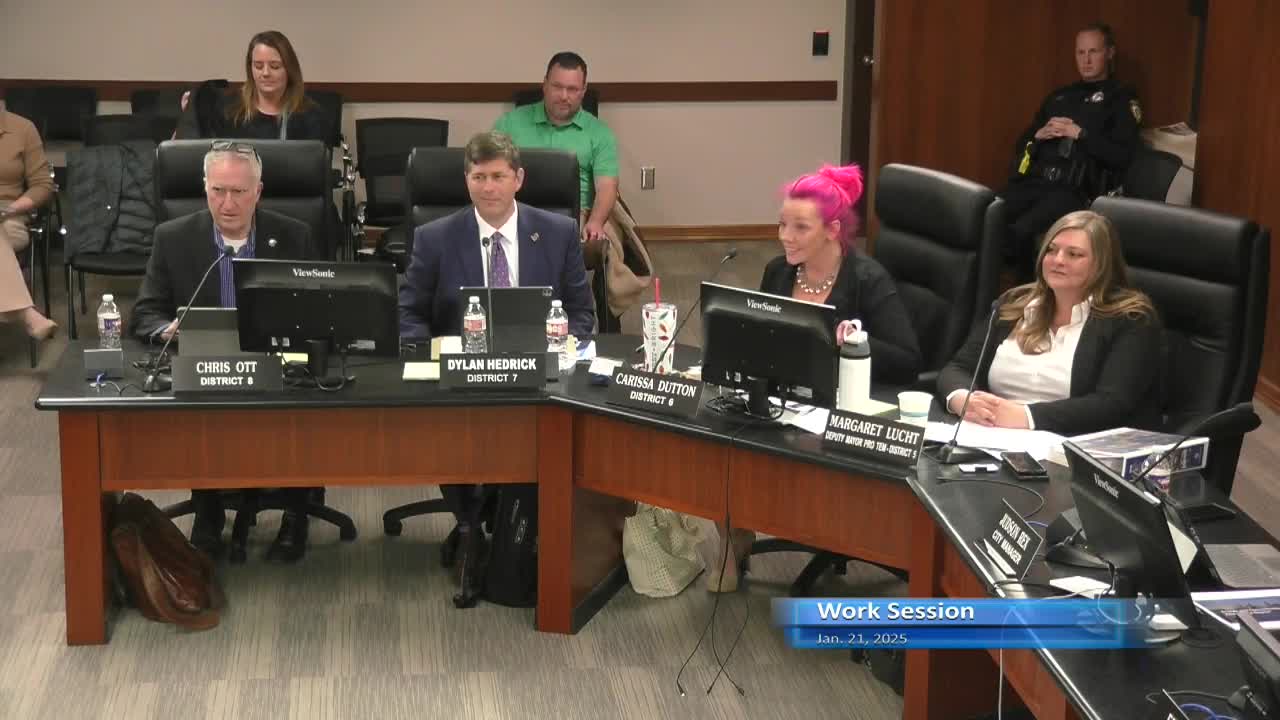
The Garland City Council received an update on public-safety response to loud-music complaints and on emergency communications during a Jan. 21 work session.
The police chief told the council that loud-music calls are classified as priority‑3, dispatched after life-safety priorities, and generally see response times of about 13–15 minutes. The department receives about 5,000 loud-music calls a year, the chief said. Officers who arrive and hear a violation may issue a citation without the complainant needing to sign; alternatively, the complainant may sign if they choose.
"Our loud music calls are priority 3 calls," the chief said. He told council the department will focus on repeat locations and noted that monthly internal memos identify repeat addresses for follow-up by neighborhood police officers. Council members and the chief discussed citation frequency; staff reported a modest increase (about 5%) in written citations year over year but emphasized that enforcement decisions are at officers' discretion.
On emergency communications, emergency-management staff said the city has streamlined its process for sending alerts through the Everbridge system and improved coordination with public information staff. They also said many delivery delays result from outdated contact records: when bulk notification attempts hit many invalid phone numbers the system slows. Staff asked council members to remind residents to update contact details in the alert system.
Why it matters: loud-music enforcement is a recurring quality-of-life issue for residents; repeat locations can create concentrated neighborhood impacts. Emergency alerts are a primary way residents learn about imminent threats; accurate contact information affects system performance.
Details and next steps: public-safety staff will prioritize repeat loud-music locations for neighborhood-officer follow-up; staff will continue to refine notification procedures and encourage residents to update Everbridge contact information.