Get Full Government Meeting Transcripts, Videos, & Alerts Forever!
Get email alerts on the Digital Services topic
No spam. Unsubscribe anytime.
Garland plans full audio-visual replacement for council rooms; PEG funds to cover cost, installation by late spring
Summary
City staff presented a plan to replace audio-visual systems in three council/meeting rooms with integrated cameras, commercial displays, Teams-enabled rooms and new microphones; presenters said PEG funds will pay the project and the city will return to council for a vote within two weeks.
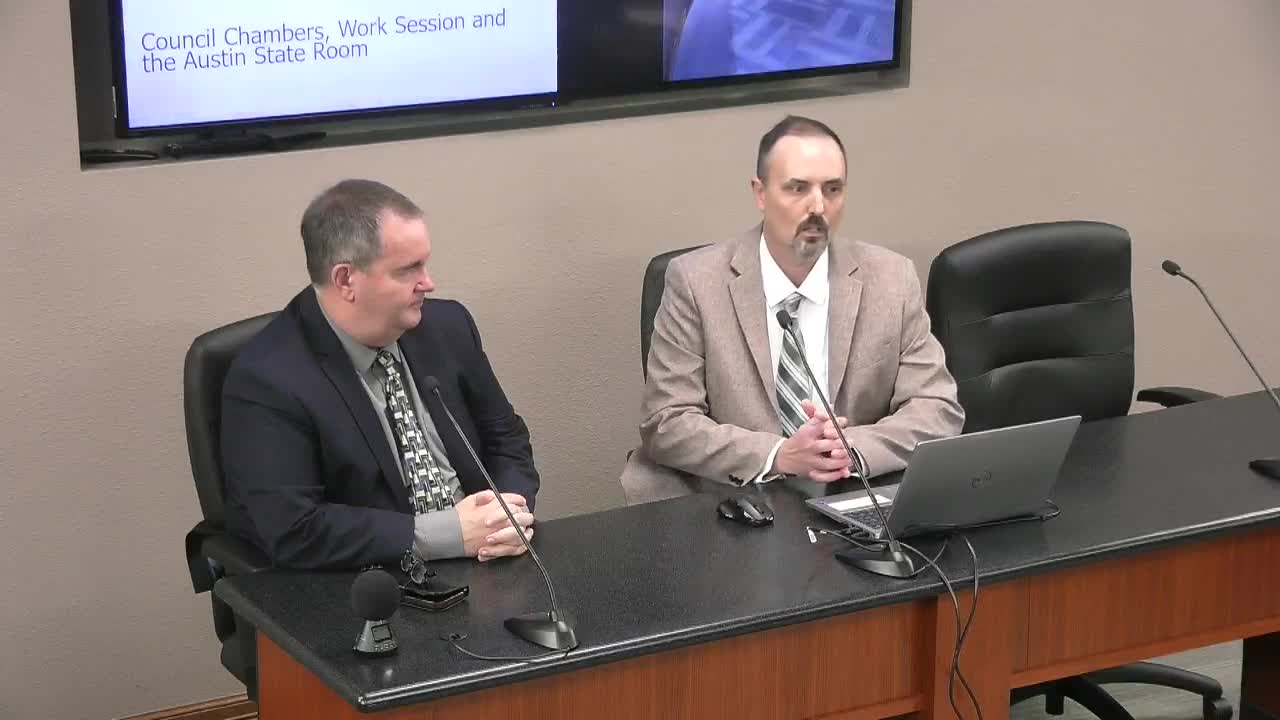
City technology staff told the Garland City Council on Jan. 21 that the city plans a complete replacement of audio-visual systems in the council chamber, the work session room and the Austin Stateroom to modernize broadcasts and support remote participation.
Jonathan and Mike Betts, the presenters, said the package includes new production-style cameras, commercial‑grade televisions, touchscreen monitors at the mayor and city secretary positions, desk microphones with LED rings indicating mute status, recording equipment in a control room and Microsoft Teams room capability for remote participation. Jonathan said the new microphones will "have the they'll have a ring, like a LED ring around the tip of the microphone, so you can actually see if you're on mute or not." He said the Austin Stateroom will receive a ceiling-mounted AI-enabled camera that tracks speakers.
The presenters told council the project will be procured through a Texas DIR partner and paid with PEG (public educational and governmental) funds. "This total cost here will be per, using PEG funds," Jonathan said. They estimated the installation would be 100% complete by late spring and said staff will return with a formal item for council vote in two weeks.
Why it matters: the current system has experienced repeated failures, closed‑caption latency and a patchwork of equipment accumulated over years. The integrated replacement is intended to stabilize meeting broadcasts, reduce on‑site troubleshooting and enable better remote participation.
Details and next steps: staff said the city has budgeted for vendor training and ongoing support, will assign dedicated AV personnel at meetings after installation, and will bring the formal contract for council approval at an upcoming meeting.