Get Full Government Meeting Transcripts, Videos, & Alerts Forever!
Get email alerts on the Curriculum Procurement topic
No spam. Unsubscribe anytime.
Wake County Schools outlines six‑phase curriculum procurement process with expanded partner engagement
Summary
District staff presented a six‑phase framework to review, develop and procure curriculum aligned to the state's 10‑year standards cycle, including broader teacher and community input via expanded committees and district roadshows.
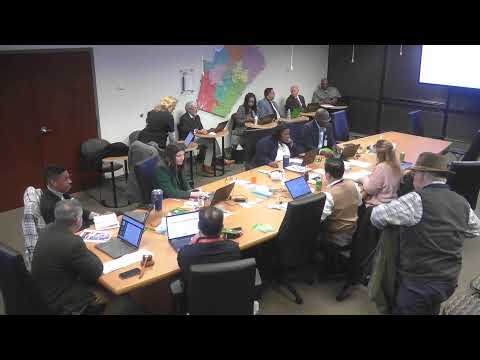
At a Wake County Schools Board work session, district academic staff presented a six‑phase curriculum review and procurement framework designed to align local materials with the state's 10‑year standards update cycle and increase early partner engagement.
District leaders said the process is intended to ensure instructional materials align with newly adopted State Board of Education standards and to build a longer planning horizon for budgeting, training and technology integration. "Number 1, we want to outline the steps, the purpose, and also the rationale behind our district's curriculum procurement process," said Drew Cook, a member of the district academics team.
The presentation, led by Doctor Wilson Norman, Cook and Doctor Kendra King, outlined goals to expand participation from teachers, families and students; to plan multi‑year budgets for adoption and sustained implementation; and to allow extended preparation and training for educators before new materials are used daily in classrooms. "Our process will begin when our State Board of Education releases new or revised standards," King said, describing the trigger that starts the district review.
The district described six phases: phase 0 (strategic planning and budget assessment), phase 1 (identify instructional priorities and engage essential partners), phase 2 (research and evaluate curriculum options), phase 3 (select and secure approvals), phase 4 (initial implementation and training), and phase 5 (ongoing implementation and feedback). Officials used science as an example, noting the installation year for science standards was 2023–24 and that a paused request for proposal would now resume with work beginning in a later quarter.
Staff detailed specific enhancements to the process: expanding the curriculum committee to add five to seven members from each of the district's nine geographic areas; holding formal vendor presentations and using rubrics to evaluate options; and staging at least three roadshows in each area (27 roadshows total) so teachers, families and community members can review materials and provide feedback before final selections.
Officials emphasized lessons learned from past procurements, including the need for clearer, earlier communication and longer implementation lead times. Cook and King said the district will use prior evaluations from the data, research and accountability office to inform rubrics and reviewer selection, and will coordinate curriculum work with a separate technology evaluation to ensure appropriate digital integration.
Board members asked how and when families and community members would be able to provide input. In response, staff said surveys would be distributed in phase 1 and that roadshows would occur before final decisions. Miss Rice, a board member, asked whether community members could be involved "before the roadshow," and staff replied the roadshows will happen prior to the final decision and that phase 1 includes early surveys to gather needs and suggestions.
Several board members urged care in how roadshows and vendor presentations are used in public engagement, warning that promotional techniques can be persuasive and that evaluation rubrics and professional review must remain central to selection decisions. One board member said evaluators should prioritize curriculum that allows a teacher from out of state to teach with minimal retraining; staff acknowledged that rubric design and professional development needs are key evaluation criteria.
No formal vote or action was taken on the procurement framework at the work session. Staff said they will proceed with the published phases, recruit committee members via area superintendents and return with recommended language and timelines for board consideration.
The presentation included references to district policy and the statewide standards timeline; staff said they will seek board approval for specific procurements as required by the district's procurement rules.