Get Full Government Meeting Transcripts, Videos, & Alerts Forever!
Get email alerts on the Guided Fishing Regulation topic
No spam. Unsubscribe anytime.
Committee hears House Bill 5 to require registration, possible limits on commercial guided fishing
Summary
Representative Dan Byron presented House Bill 5, which would require registration of commercially guided fishing boats and allow the Game and Fish Commission to promulgate rules limiting commercial use on designated river sections.
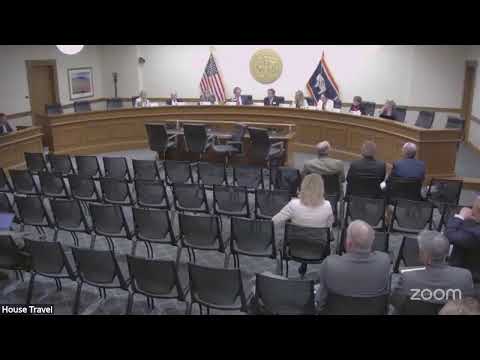
Representative Dan Byron, chairman of the House Travel, Recreation, Wildlife & Cultural Resources Committee, presented House Bill 5 in a committee hearing in Cheyenne that would authorize registration of commercially guided fishing boats and give the Wyoming Game and Fish Commission the option to promulgate rules limiting commercial use on designated sections of rivers.
The bill’s stated goal, Byron said, is “to protect the quality of the fishing experience” by collecting data on how many commercial guided boats operate on Wyoming waters and by providing the commission the authority to regulate launches or set area authorizations where necessary.
Supporters and agency officials told the committee they view the measure as a first step to address crowding, safety and local economic impacts. Alan Osterland, chief of fisheries for the Wyoming Game and Fish Department, told members: “This statute gives us the regulatory authority to do it. … No, we could not do it without this bill. We could not do those things,” referring to limiting numbers of commercial launches or creating permit systems for particular river stretches.
Guides and local business owners described rapid growth in commercial guide activity in several basins and urged action. Paul Ulrich, a professional fly-fishing guide from Sublette County, said the industry is currently unregulated by the state: “We are 100% unregulated by the State of Wyoming. We don't have to have first aid, we don't have to know how to row a boat.” Chris Hayes, an Upper Green River Valley guide, said, “Wyoming is the last best place in the continental United States for trout fishing. But that is changing,” and warned that crowding is reducing fishery quality and visitor demand.
Several legislators pressed details about how the bill would be implemented and funded. The bill would require registration stickers to be displayed on boats and trailers and allows for an annual fee; committee discussion noted prior estimates ranging from $10–$25 as comparable fees, while a $50 figure had been floated in committee work. Representatives and witnesses also pointed to a fiscal note mentioning costs to develop online portals and applications for permits. Representative Byron said the intent was not to create a revenue stream but to “cover the cost of implementing the system.”
A recurring point in committee debate was whether the measure should use “may” or “shall” language for commission action. Representative Wharfe questioned why the bill was necessary if the department already collects some use data and has regulatory tools, saying he “struggle[d] to see why we need to do it,” and urging the committee to consider whether the commission already has authority. Osterland replied that while the department has collected snapshots of use, it does not currently have the statutory authority to set permit limits or require statewide registration that would enable area authorizations, permitting and enforcement.
Some witnesses and legislators urged provisions to protect local, small-business outfitters. Representative Jamie Lean cited Wyoming Constitution, Article 2, Section 39 — which she read as guaranteeing an individual’s right to hunt and fish — and urged protections so in‑state small operators would not be disadvantaged by large out‑of‑state companies. Colby Spencer, a Pinedale outfitter, said, “This bill absolutely needs to be pushed through,” and argued counties should be able to prioritize local operators.
The Wyoming Outfitters and Guides Association, represented by Johnson County Commissioner Bill Lavani, supported the bill as a necessary first step to quantify commercial activity. Lavani said the association views registration as the appropriate initial action and that area authorizations could follow once officials know how many outfitters operate on specific waters.
Nonprofit and agency testimony urged attention to fiscal and administrative capacity. Jess Johnson of the Wyoming Wildlife Federation supported the bill as an initial measure but said the state should identify a long‑term governance model — for example, whether an expanded or separate board should oversee outfitting — and ensure stable funding so Game and Fish are not repeatedly asked to absorb new duties without offsetting resources. Dave Glenn, director of Wyoming State Parks and Cultural Resources, told the committee that parks already permit concessionaires and that tracking commercial use “can be done,” citing western precedents for limits and user‑day accounting.
Committee members heard a range of proposed next steps: require registration first to establish counts in targeted waters; then, if warranted, use the commission’s rulemaking to set area authorizations, permit limits or resident‑preference allocation. The committee did not take a final vote; Chairman Byron said the hearing would continue on Thursday to allow additional public testimony and time for the agency to provide more details on costs and implementation.
No formal action on House Bill 5 was recorded at the hearing.