Get Full Government Meeting Transcripts, Videos, & Alerts Forever!
Coconino County flood-control work moves to construction for Switchback neighborhood; major storm drain, detention basin and forest restoration planned
Summary
Coconino County Flood Control District staff said construction is starting on a long‑planned flood‑mitigation system for the Switchback area northeast of Flagstaff that pairs on‑forest watershed restoration with a new neighborhood storm drain and a 77 acre‑foot detention basin.
Coconino County Flood Control District staff said construction is starting on a long‑planned flood‑mitigation system for the Switchback area northeast of Flagstaff that pairs on‑forest watershed restoration with a new neighborhood storm drain and a 77 acre‑foot detention basin.
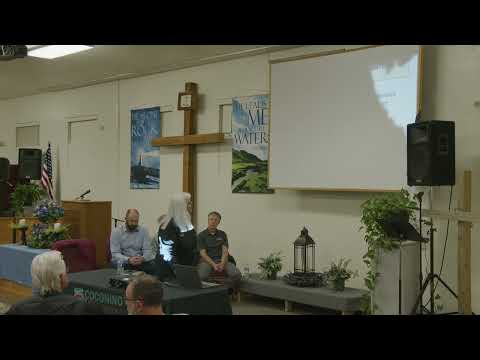
District staff and project engineers told about 60 residents at a Jan. 16 public meeting that much of the design is complete, funding is in place and contractors are scheduled to begin work this month and into spring. “We’re here tonight and very good news that we’re moving into construction,” a district presenter said.
The work responds to heavy post‑wildfire runoff and the major 2022 flood season, when the corridor suffered among the largest storm impacts recorded by the district. Engineers said the combined program is intended to reduce peak flows that reached neighborhoods and Highway 89 and to restore sediment‑holding functions higher in the watershed.
What’s being built
Remel Consulting engineer Eli Reisner said the neighborhood measures include a large, buried storm drain about 3,000 feet long and 10 feet in diameter that runs down Switchback, crosses Highway 89 by tunneling and outlets to a detention basin on the 17‑acre “Tract A” parcel. “The storm drain is a 3000 feet long and a 10 foot diameter storm drain ... and outlets into the large detention basin,” Reisner said.
Reisner said the system is sized to capture a 10‑year design storm defined for the project as 1.6 inches of rain in 45 minutes; during that event the pipe would convey roughly 1,900 cubic feet per second from the on‑forest transition channel into the basin. The basin is designed to route most flows north onto National Forest Service lands across berms and to meter smaller flows south through the existing Johnson Ranch channel. The detention basin’s capacity was given as 77 acre‑feet.
On‑forest measures and sediment control
Alan Hayden of Natural Channel Design Engineering described the on‑forest work uphill of the neighborhood: rock “grade control”…
Already have an account? Log in
Subscribe to keep reading
Unlock the rest of this article — and every article on Citizen Portal.
- Unlimited articles
- AI-powered breakdowns of topics, speakers, decisions, and budgets
- Instant alerts when your location has a new meeting
- Follow topics and more locations
- 1,000 AI Insights / month, plus AI Chat