Get Full Government Meeting Transcripts, Videos, & Alerts Forever!
Get email alerts on the Pension Investment Policy topic
No spam. Unsubscribe anytime.
Committee approves broad amendment limiting non‑pecuniary investment factors in HB80
Summary
Lawmakers adopted an amendment to House Bill 80 that narrows definitions related to fiduciary investment decisions, excludes non‑pecuniary factors such as ESG from pecuniary determinations, and clarifies Attorney General investigatory language; the bill passed the committee as amended.
The Minerals, Business & Economic Development Committee on Monday approved a substantive amendment to House Bill 80 that tightens statutory language on fiduciary investment standards and blocks use of non‑pecuniary factors such as environmental, social and governance (ESG) considerations when making investment decisions for state funds.
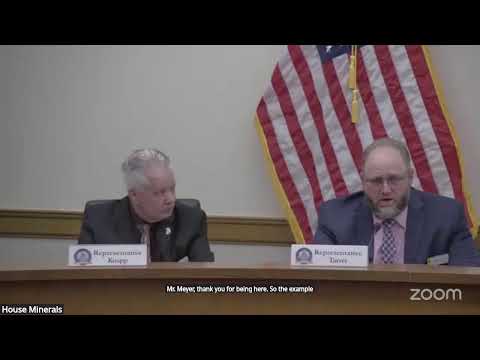
Representative Knapp, who sponsored the amendment, told the committee the changes were intended to codify the state’s current Investment Policy Statement and to keep fiduciary decisions focused on financially material considerations. "This bill is not to drill down into separate individual corporations for ESG stances," Knapp said, adding the amendment borrows wording from the state's existing IPS and removes language that would list ideological reasons for investment choices.
Under the amendment, the committee struck language that had attempted to define non‑pecuniary objectives and inserted provisions clarifying that "pecuniary factors mean prudently determined fiduciary decisions based on appropriate investment horizons consistent with the Fund's objectives and investment policies," while defining non‑pecuniary factors as those that do not provide confidence in increased returns or lower risk.
Committee members debated procedure and transparency. Representative JT Larson and Representative Lawley urged a public review of the revised text; Larson suggested reopening public comment or providing a clean substitute so stakeholders could review the revised bill language. "This is quite a large change in the bill," Larson said, noting the scope of edits and asking that the public get an opportunity to review a clean copy. Lawley likewise requested more time for public review and testimony on the new language.
The committee adopted Representative Knapp's amendment on a voice vote after it was moved by Representative Tarver and seconded by Representative Campbell. A subsequent motion by Representative Lawley to table the bill failed. The committee then voted to pass HB80 as amended by roll call; named votes in the transcript record included Campbell (aye), Knapp (aye), Larson (no), Lawley (aye), Schmidt (aye), Tarver (aye) and Chairman Heiner (aye). Committee leaders said they would prepare a consolidated draft of the bill and amendments for members to review before later floor action.
The amendment also changes enforcement language, replacing discretionary language with a mandatory investigatory trigger for the Attorney General's office in certain circumstances (changing may to shall investigate in the proposed text). The measure will advance to the House floor with the committee's edits; the committee record shows extensive discussion among members and multiple requests for a clean, consolidated version for transparency prior to further action.