Get Full Government Meeting Transcripts, Videos, & Alerts Forever!
Get email alerts on the Taxation Severance Coal topic
No spam. Unsubscribe anytime.
Minerals committee approves cut to coal severance tax, moves HB75 to House floor
Summary
The Minerals, Business & Economic Development Committee voted to lower Wyoming's surface coal severance tax from 6.5% to 6%, passing House Bill 75 after testimony from industry groups, county officials and business advocates.
The Minerals, Business & Economic Development Committee on Monday voted to approve House Bill 75, a one‑page measure that reduces the severance tax on surface coal from 6.5% to 6%, and sent the bill to the House floor.
The change would bring the coal severance rate into parity with oil and gas, supporters said, and is projected in the bill's fiscal note to reduce general revenues by about $9.7 million in the first year with an estimated decline of roughly $1 million a year thereafter as production falls.
Ken Clauston, the bill sponsor and the House representative for District 32, told the committee the proposal is meant to “make it fair” between coal and oil and gas and to encourage reinvestment by coal companies. "Decreasing this tax from 6.5 to 6% shows Wyoming and shows the world that we're still willing to invest in coal," Clauston said during his presentation.
Industry witnesses said the reduction could be reinvested locally. Travis Detay of the Wyoming Mining Association described it as "a very important bill for the Wyoming coal industry," and said companies used recent tax savings to rehire workers, raise wages and purchase equipment. Renny McKay, president of the Wyoming Business Alliance, called coal’s competitiveness with natural gas a key driver and said higher coal production could help local businesses and services in mining communities.
Hank Coversland, president of the Wyoming Taxpayers Association, said his organization judged the reduction against its principles of tax policy and endorsed the bill as justified, equitable, stable and transparent, in part because it aligns surface coal with natural gas severance treatment.
Committee members asked about the fiscal tradeoffs. Clauston acknowledged the fiscal note and framed the reduction as an investment in preserving jobs and industry capacity: "Nine‑point‑seven million is a large number, but maybe in the scope of things, it's not," he said, adding that for individual companies the change could add "one to $3,000,000 per company on their bottom line." Representatives also noted long‑term declines in coal production and asked how the state should handle forecasted deficits in future school and general funds.
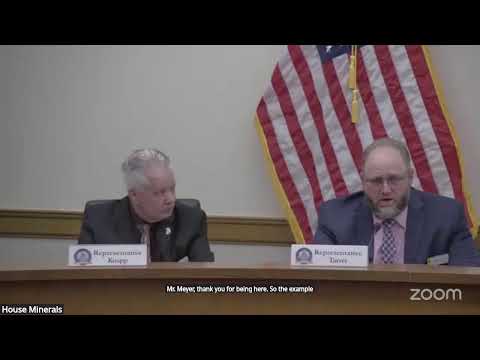
After closing public testimony, Representative Lalley moved the bill with Representative Tarver seconding. The committee voted by roll call; named ayes included Representative Campbell, Representative Knapp, Representative Larson, Representative Lolli, Representative Schmidt, Representative Tarver and Chairman Heiner. The committee chair announced the bill passed and would be carried to the House floor by Representative Clauston.
The bill does not change other tax code provisions or administrative rules; the committee record includes the bill sponsor’s handouts and a fiscal note estimating the near‑term revenue reduction. Implementation, including any effect on county reserves or budget reserves that receive portions of severance receipts, would follow existing revenue distribution formulas.