Get Full Government Meeting Transcripts, Videos, & Alerts Forever!
Get email alerts on the Quarry Reclamation topic
No spam. Unsubscribe anytime.
Planning Commission accepts Lehigh Southwest quarry status report as reclamation plan review advances
Summary
The Santa Clara County Planning Commission voted to accept Lehigh Southwest Cement Company's annual status report covering July 1, 2023–June 30, 2024, hearing staff updates on monitoring, a proposed reclamation plan amendment that would import roughly 30 million cubic yards of clean fill, and a bond increase to about $77 million.
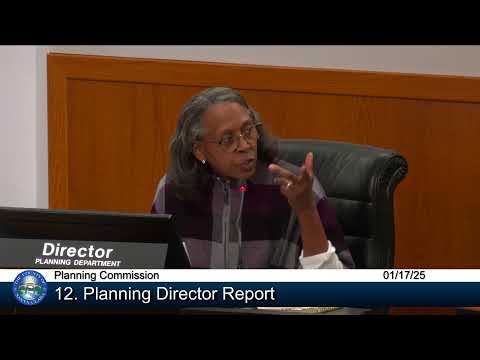
The Santa Clara County Planning Commission on Jan. 17 accepted the annual status report from Lehigh Southwest Cement Company covering compliance with the 2012 reclamation plan amendment conditions of approval and related monitoring for July 1, 2023, through June 30, 2024.
County staff told the commission the quarry operation has been largely mothballed and is selling small volumes from existing stockpiles while continuing required water‑quality monitoring and monthly inspections. "They have more or less mothballed the facility," said Rob Salisbury, the county's principal planner for SMARA compliance.
The report and subsequent discussion focused on a Lehigh proposed reclamation plan amendment that staff expects to deem complete and begin CEQA review on next week’s schedule. Under the proposed plan, Salisbury said, Lehigh would not open new mining areas but would import approximately "30,000,000 cubic yards of clean fill" to backfill the main pit rather than using on‑site overburden.
Staff described the projected timeline for reclamation as phased. Salisbury said that, under the proposal, reclamation of areas other than the main pit could occur in about 10 years; importing the necessary fill would take roughly 30 years; and the final contouring and revegetation of the main pit would occupy about 10 years — a total on the order of 40 years.
Salisbury also gave a daily‑truck estimate tied to the import plan: "it's about 600 truck trips per day" five days a week over the multi‑decade fill period. He said the county's financial assurance cost estimate rose substantially in the most recent review and that the county now holds a bond of approximately $77,000,000 to ensure reclamation if the operator cannot complete it.
Staff briefed the commission on related restoration work: the Permanente Creek restoration project, which stems from the 2012 reclamation plan EIR and a settlement agreement with the Sierra Club, and another restoration area tied to mitigation for a regional water quality control board violation. Salisbury said Lehigh has applied for grading approvals and is pursuing other jurisdictional permits for those projects.
Commissioners pressed staff on the reasoning for importing off‑site clean fill rather than reusing on‑site materials. Salisbury said the regional water quality control board designated much of the on‑site material as mining waste that could contact the groundwater table and thus carry long‑term monitoring and water‑quality obligations; he added that Lehigh could also view importing clean fill as a revenue opportunity because the company could charge for receiving material now sent to landfills.
During public comment, Rhoda Frey of the community expressed concerns about viewshed protection, landslide risk, past spills and reporting, wildfire risk, and truck traffic. Frey said the community has a 1970 viewshed easement and urged the commission to "please protect our viewshed" and raised safety concerns tied to past spills and a documented landslide hazard downstream of the quarry.
After discussion the commission voted to accept the annual status report. The motion was made by Vice Chair Rausser and seconded by Commissioner Cohen; the roll call recorded unanimous affirmative votes from Commissioners Cohen, Balska, O'Donohue, Beebe, Vice Chair Rausser and Chair Escobar.
The staff presentation noted the next procedural step: issuance of a completeness letter for the reclamation plan amendment that will allow the county to start CEQA review; staff estimated the EIR process for the larger reclamation plan could take a couple of years given the complexity. Any final approvals for the proposed import program, grading permits or restoration projects will require separate permit actions and additional jurisdictional approvals.